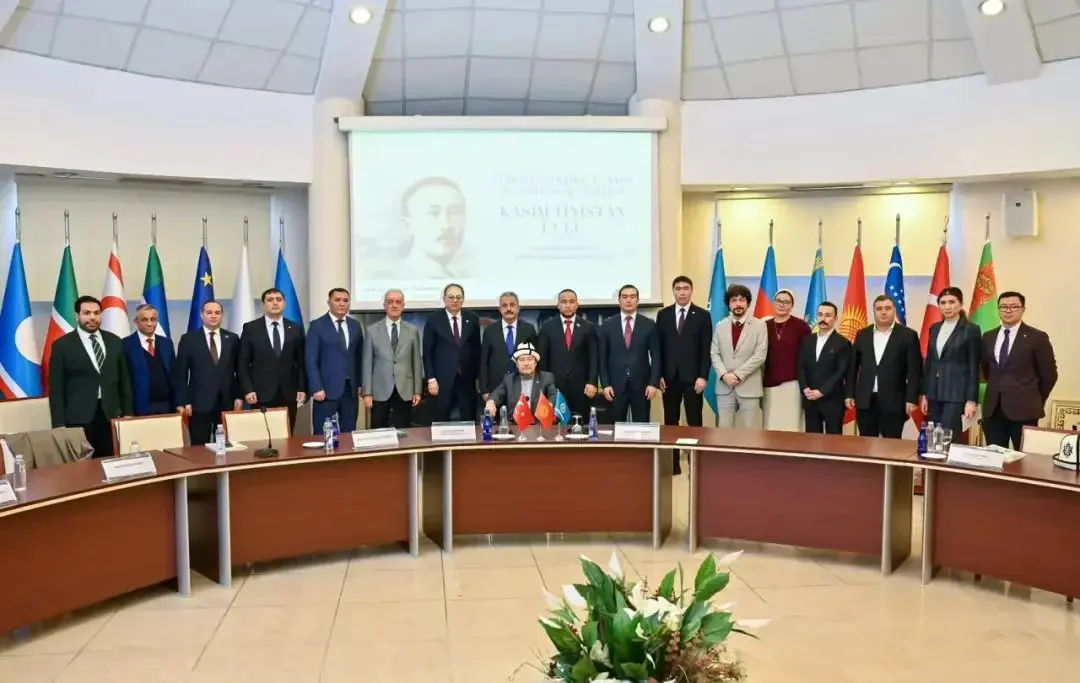
Ankara played host to an international commemoration marking 125 years since the birth of Kasym Tynystanov, the Kyrgyz scholar, poet and statesman widely credited as a founding father of Kyrgyz linguistics and written literature. The event was held at the headquarters of TURKSOY, the International Organization of Turkic Culture, and drew a mix of diplomats, academics and cultural figures from Turkey and Kyrgyzstan.
The guest list reflected the cross-border respect Tynystanov still commands across the Turkic world. Speakers included TURKSOY Deputy Secretary General Sayit Yusuf, Ilyas Topsakal of the Chingiz Aitmatov Institute and Turkey's Nationalist Movement Party, Kyrgyz parliament member Bolot Sagynaev, and Kyrgyzstan's own representative to TURKSOY, Marat Tagaev. Ufuk Tuzman, who heads the Eurasian Writers' Union, was also among those presenting papers and reflections.
So who was Tynystanov, and why does he matter? Born in 1901, he essentially built the foundations of Kyrgyz as a written, standardised language: he authored the first Kyrgyz-language textbooks, developed an early grammar, and worked to establish scientific terminology in the language. In 1927 he became People's Commissar of Education of the Kyrgyz ASSR, placing him at the heart of building the young republic's school system and, by extension, its emerging statehood. He was also a poet in his own right — his poem Zhashtarga, addressed to the young generation, was read aloud at the Ankara event.
His story ends darkly. In 1938, at the height of Stalin's purges, Tynystanov was executed. Though later rehabilitated, his name and works stayed effectively suppressed for decades. Much of the Ankara programme circled this legacy: a short film on his life and politics, a photo exhibition dedicated to participants of the Baku Turkological Congress and the educators of Turkestan, and academic papers on his contributions. Speakers urged that his work be studied, translated and passed on.
For travellers, this is a useful lens on Kyrgyzstan itself. The country's cultural identity — its language, literature and sense of nationhood — is a story barely a century old, shaped by figures like Tynystanov who worked in impossibly difficult circumstances. Visitors to Bishkek will find his name on streets, institutions and monuments, and understanding who he was adds real depth to any trip through the Kyrgyz capital or the wider country's Soviet-era and pre-Soviet heritage. Events like this one, staged jointly by Turkish and Kyrgyz institutions, also signal how actively the Turkic world is investing in shared cultural memory — something travellers interested in heritage routes between Turkey and Central Asia should keep an eye on.
If a trip to Kyrgyzstan is on your radar, treat Tynystanov as an entry point: read a little about the early Soviet language reforms, then go and see the country that grew out of them — a place where a nomadic oral tradition became a national literature within a single generation.
Kyrgyzstan: 24.kg