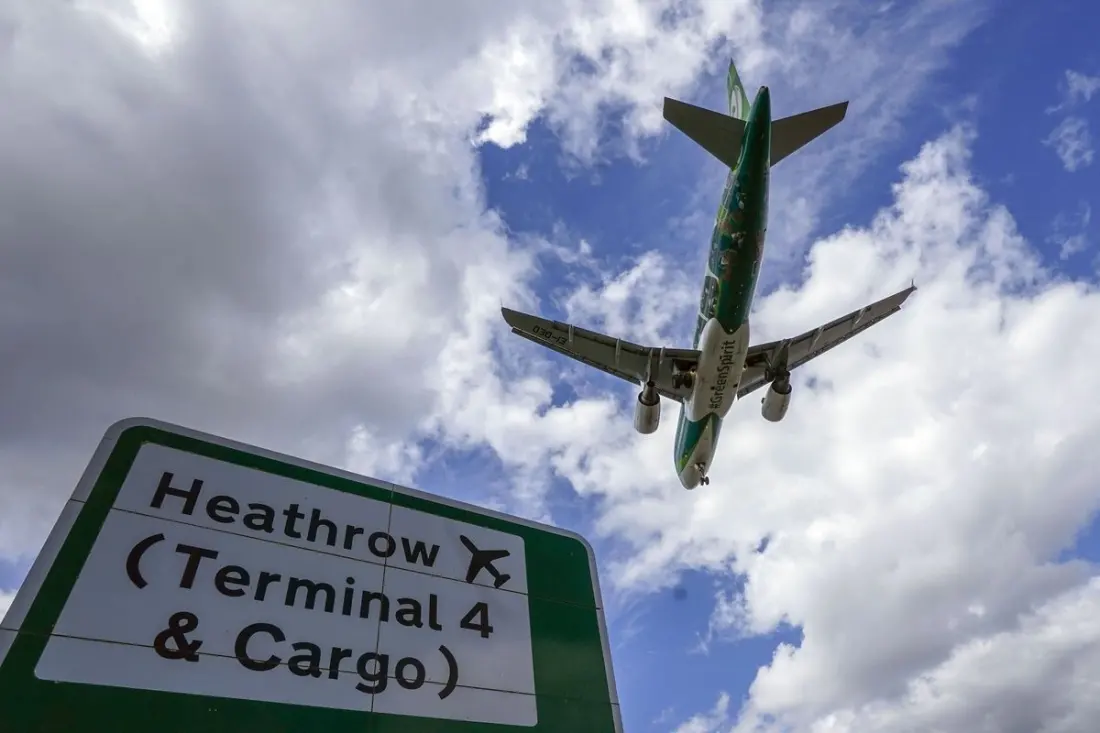
Heathrow's chief executive Thomas Woldbye has issued a pointed warning to Prime Minister Andy Burnham: the airport's investors are patient, but not infinitely so. Speaking to the Financial Times, Woldbye said the shareholders behind the £33 billion expansion scheme could review their involvement unless the government commits to the project, adding that "at some point in time we need a level of certainty" and that by the end of the year the airport will "take stock" of where things stand.
The money behind the plan is substantial and international. Backers reportedly include the Qatar Investment Authority, Saudi Arabia's Public Investment Fund and China Investment Corp, and they are expected to decide in the new year whether to submit a formal planning application. The project itself is enormous: an estimated £33 billion, of which £1.5 billion alone goes on moving the M25 motorway to make room for the new runway. Fully privately financed, it would lift Heathrow to 756,000 flights and 150 million passengers a year.
Politics is the sticking point. Labour's support for a third runway was laid out by then-chancellor Rachel Reeves in January 2025, but Burnham has so far refused to confirm his backing, saying the scheme must first pass a consultation and the planning process. Meanwhile the timetable is already slipping. Reeves suggested the runway could open by 2035, but Heathrow has told ministers that date looks impossible. The airport now aims for planning permission by 2029, with a decade of construction afterwards considered a reasonable goal.
Woldbye is due before the Transport Select Committee as it scrutinises the plans, and his argument is blunt: the question of whether the UK needs more hub capacity "has been settled", with airlines, trade unions, regional airports and businesses all on side. He frames the runway not as an airport project but as a bet on the country's trade and global connectivity.
There is also a softer demand picture to factor in. Heathrow handled 7.2 million passengers in September, down 2.3 per cent year-on-year, with traffic from the Middle East falling more than 20 per cent amid the Iran war and UK passenger numbers down 4 per cent. Even so, Woldbye insists demand still exceeds the airport's capacity — the core case for building.
Why should holidaymakers care? Because hub capacity shapes what flights exist and what they cost. If expansion stalls or investors walk, the pressure on slots and connections only grows; if it proceeds, expect more long-haul routes from Heathrow over the next decade — though realistically not before the mid-2030s.