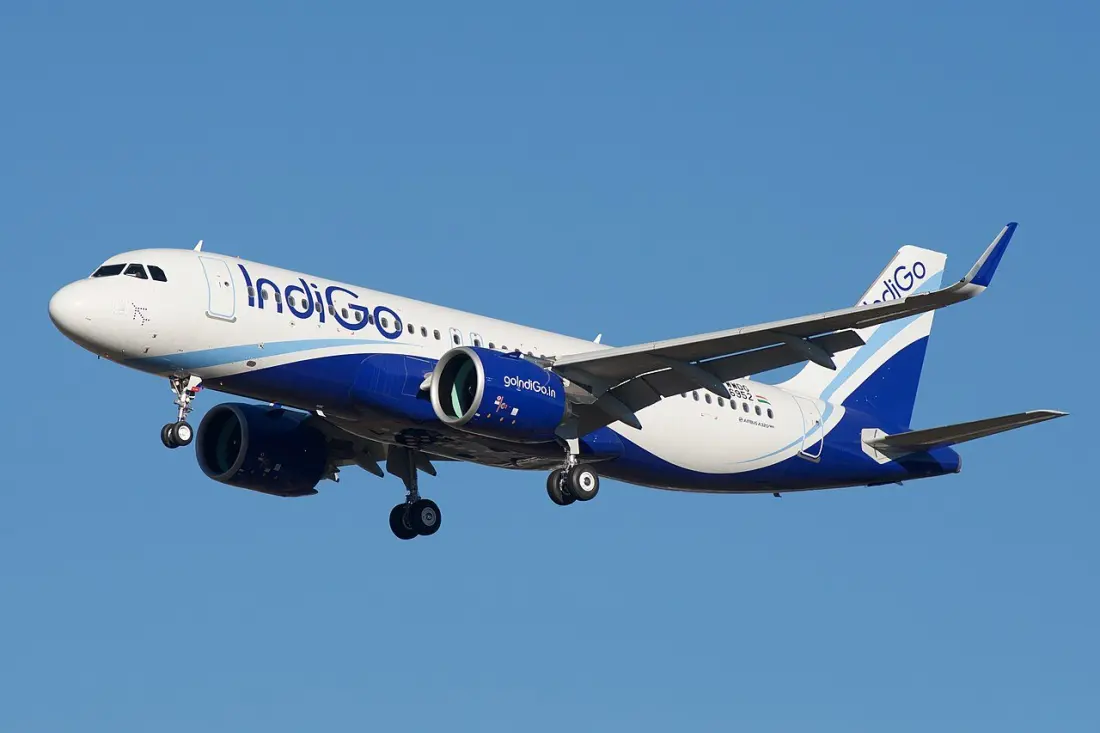
A flight between two Indian metros turned into an emergency landing on Sunday, 11 October 2026, when a passenger's power bank caught fire at 35,000 feet. IndiGo flight 6E6115, an Airbus A321neo flying from Delhi to Chennai, diverted to Hyderabad's Rajiv Gandhi International Airport after smoke was spotted coming from an overhead locker.
The aircraft had left Delhi at 1:30 pm and was due in Chennai at 4:00 pm. Roughly ninety minutes in, a fire broke out in the overhead compartment, reportedly triggered by an exploding power bank. Video shared online showed several passengers rushing to put out the flames. Tracking data from FlightAware shows the plane descending to 3,700 feet before touching down in Hyderabad at 3:30 pm.
The airline confirmed the diversion in a statement, saying cabin crew responded promptly and brought the situation under control, and that pilots landed safely in line with established protocols. Everyone disembarked unharmed — no passengers or crew were injured — and a replacement aircraft later completed the leg to Chennai. IndiGo apologised for the disruption, noting it offered refreshments and updates to affected travellers.
If this sounds like a one-off, it isn't. Lithium-ion batteries, the kind inside every power bank, can overheat or ignite when damaged or faulty, and a fire at cruising altitude is one of the scariest scenarios in aviation. That's why regulators have been tightening the rules. The FAA, TSA and IATA all require spare batteries and power banks to travel in hand luggage only — never in checked bags — and more airlines are going further. Charging devices from power banks during a flight is increasingly prohibited, since charging is when these batteries are most likely to fail.
Some carriers spell it out in detail. Virgin Australia allows a maximum of two battery-powered devices per person, capped at 160Wh combined, with prior approval needed for anything between 100Wh and 160Wh. Emirates lets you carry a power bank but insists you keep it within reach, and using it onboard is banned outright. China has gone a step further and refuses uncertified power banks on domestic flights altogether.
The practical takeaway for any flyer: check your airline's specific policy before you pack, keep the power bank in your cabin bag rather than the hold, don't charge devices mid-flight if your carrier forbids it, and make sure the battery capacity is within the allowed limits. A cheap, uncertified power bank could cost you a lot more than a diverted afternoon.
Story via Travel Tomorrow.