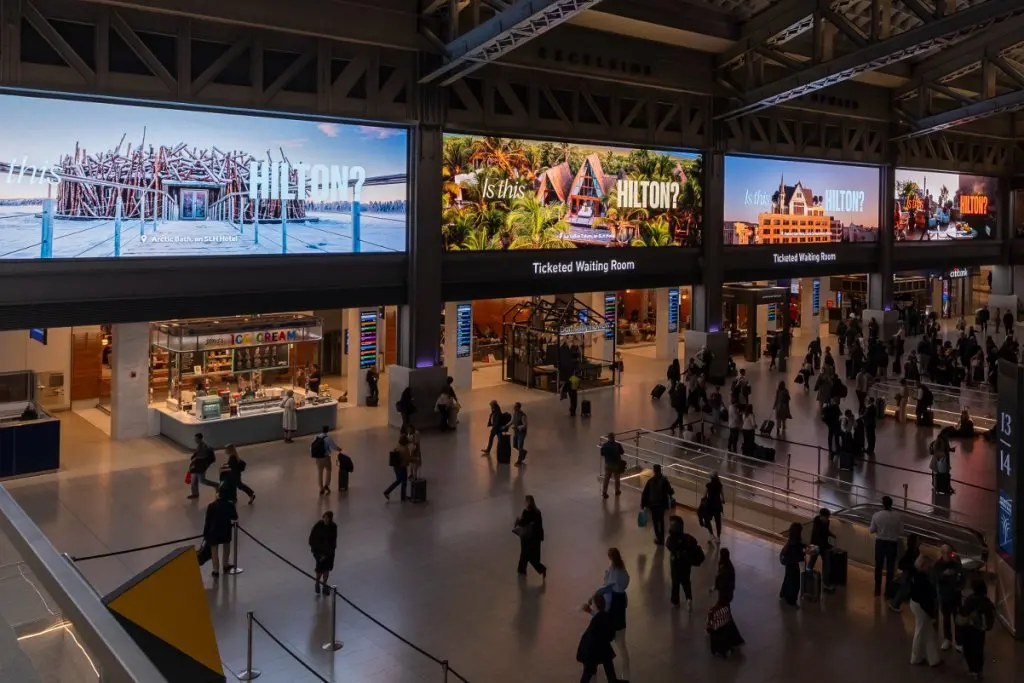
Hilton has a branding problem — and it is spending big money to fix it. The company's fastest-growing segments are luxury and lifestyle hotels, the design-forward, independent-feeling properties travellers tend to associate with boutique chains rather than the group behind Hampton Inn. According to CEO Chris Nassetta, luxury grew at a net unit rate of 11% over the trailing twelve months, while lifestyle hit 20%. Yet Hilton's own research showed many guests had no idea these newer properties belonged to Hilton at all, or that they could earn and burn Honors loyalty points by booking them.
The answer is a global ad campaign called "New Ways to Stay," built around the question "Is This Hilton?" The commercials showcase properties that look nothing like the brand's traditional image, then reveal that yes, they are Hilton — and booking them directly earns points like any other stay.
The campaign rides on a rapid shopping spree. Since 2024, Hilton has acquired Graduate Hotels, the college-town lifestyle brand, and NoMad, the luxury name behind some of the most talked-about properties in New York and London. It has also partnered with AutoCamp, the upscale outdoor lodging operator known for designer Airstreams and cabins near US national parks, and struck a licensing deal with Small Luxury Hotels of the World that brought hundreds of independent hotels into Hilton's booking channels and loyalty program.
For travellers, the practical takeaway is simple: the definition of what counts as a "Hilton stay" has expanded dramatically, and the points opportunities have expanded with it. Someone who collects Honors points for work travel can now redeem them at a boutique SLH property in Europe, a Graduate hotel near a US campus, or an AutoCamp site within driving distance of Yosemite. That is a meaningful shift for loyalty-program members who previously found Hilton's redemptions limited to predictable, business-hotel-style inventory.
It also matters for how you book. Hilton's own research found awareness of the loyalty connection was low, meaning plenty of guests have been booking these properties through other channels and leaving points on the table. If you have stayed at a Graduate or an SLH member hotel recently, it is worth checking whether the stay could have been credited — and making future bookings through the Hilton app if you want the nights and points.
There is a strategic story here too. Lifestyle and luxury are where the growth is in hospitality, and Hilton is using marketing rather than new construction to reposition itself quickly. Buying brands and signing partnerships is faster than building hotels, and an ad blitz is how the company tells travellers the portfolio has changed. Watch for more independent-feeling properties appearing under the Hilton umbrella over the next couple of years — and for the "Is This Hilton?" question to keep coming up on your feeds.
For holiday planners, the move widens choice without forcing a trade-off between character and loyalty perks. Design-led stays no longer require abandoning your points balance, which is exactly the message Hilton is paying to spread.