
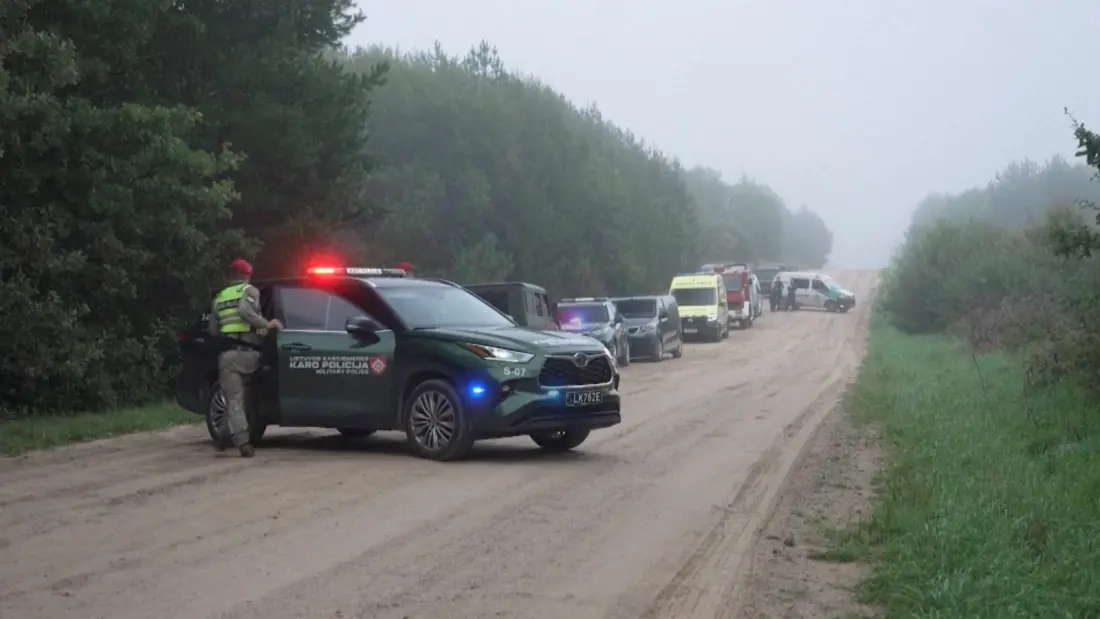
NATO fighters shot down a suspected Russian drone over Lithuania in the early hours of Tuesday, the latest in a string of airspace incidents along the alliance's eastern edge. For anyone planning a trip to the Baltics, the story is worth understanding — not alarming, but relevant.
Here's what happened. An Italian fighter jet, flying under NATO's Baltic air policing mission, intercepted the drone after it crossed into Lithuanian airspace from Belarus shortly after midnight. The aircraft came down near the village of Pratkūnai, close to Kaunas, Lithuania's second city. Nobody was hurt and no damage was reported, but Lithuanian officials say the drone carried an explosive device, which bomb-disposal teams neutralised. It stayed in Lithuanian skies for roughly half an hour and passed near populated areas before being brought down. Italy's defence minister said the drone most probably came from Russia, though investigators are still examining the wreckage to confirm its origin.
The reaction from European capitals was swift. Germany's foreign minister Johann Wadephul called it further evidence of Russian hostility toward NATO members and insisted the alliance would not be intimidated. NATO Secretary-General Mark Rutte argued that Russian military activity near allied territory would only deepen support for Ukraine. The interception itself was coordinated from NATO's Combined Air Operations Centre in Uedem, Germany, showing how routine — and how rehearsed — these responses have become.
The timing was pointed. On the same day, Denmark reported that a Russian frigate fired flares at a Danish military helicopter near the port of Gedser in the Baltic Sea, prompting Copenhagen to summon Russia's ambassador. Moscow denied the accusation. Meanwhile, drone exchanges between Russia and Ukraine continue to intensify, and Ukrainian drones have themselves strayed into Baltic airspace in recent months, with Kyiv blaming Russian electronic warfare for knocking them off course.
Why should travellers care? NATO has patrolled Baltic airspace continuously since Lithuania, Latvia and Estonia joined the alliance in 2004, and the mission has scaled up since 2022. Airports in Vilnius, Kaunas and Riga are operating normally, and there is no advisory against travel to Lithuania. What's changing is the frequency of border incidents and the scrutiny they attract — European governments are openly warning that repeated incursions risk pulling the war closer to NATO territory. Practical advice for visitors is simple: keep an eye on your foreign ministry's travel updates before flying, expect the occasional temporary airspace restriction or airport pause when incidents occur, and don't let headlines overshadow the fact that Lithuania remains a safe, well-organised and genuinely rewarding destination — Kaunas's baroque old town, the Curonian Spit's dunes and Vilnius's cafés are all business as usual.
The bigger picture is that the Baltics sit on a tense frontier, and incidents like this one near Kaunas are likely to keep recurring as long as the war in Ukraine continues. Travellers don't need to change plans, but a little awareness of the regional context goes a long way.