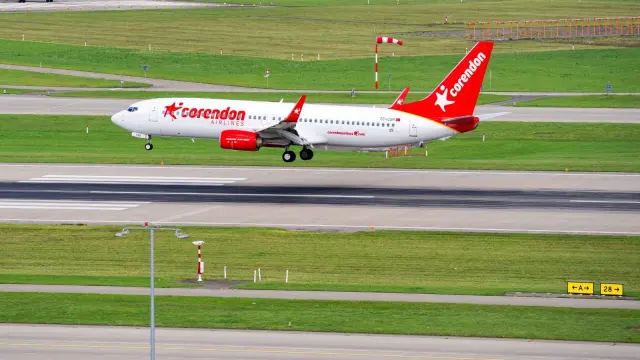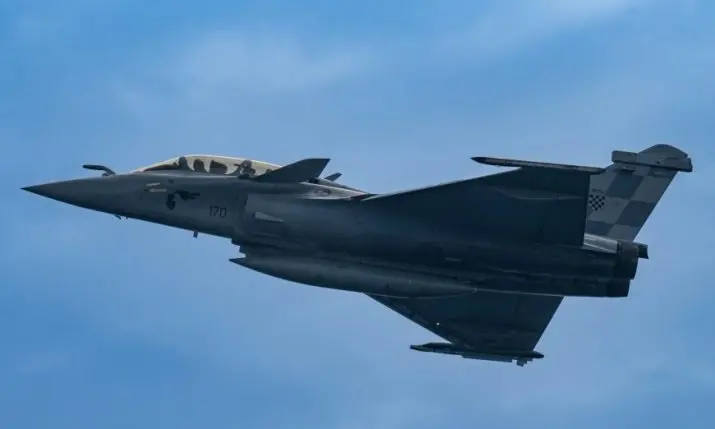
Passengers on a flight from Greece to Germany got an unexpected sight out the window this week: a Croatian fighter jet flying alongside their plane. A Rafale from the Croatian Air Force was scrambled on Tuesday morning after the Maltese-registered Boeing was flagged as a possible security threat while crossing Croatian airspace.
The alert came from NATO's Combined Air Operations Centre in Torrejón, Spain, acting on information from Italy's Command Reporting Centre. The aircraft had reportedly transmitted transponder code 7500 — the international code that signals a hijacking. In response, the Croatian jet moved to intercept, making visual contact with the plane at 11:02 over the Korenica area in central Croatia.
What happened next was textbook. The Rafale pilot established radio contact with the airliner and patrolled between Rijeka and Delnice before escorting the aircraft out of Croatian airspace. It entered Slovenian airspace at 11:20, roughly eighteen minutes after the interception began. Croatian authorities have not said whether the code turned out to be a genuine hijacking, a crew mistake or a technical issue — no details on the circumstances have been released. Transponder codes can be entered incorrectly, and false 7500 alerts do happen, so a scramble does not necessarily mean danger was confirmed.
The operation had senior-level attention. Deputy Prime Ministers Ivan Anušić, Tomo Medved, Davor Božinović and Oleg Butković coordinated with Prime Minister Andrej Plenković and the Air Force throughout. The Ministry of Defence was keen to frame the incident as proof of something bigger: Croatia's ability to police its own skies.
That point matters because it's new. Since 1 January 2026, Croatia has flown its own air policing mission with its Rafale fleet, operating under NATO's Integrated Air and Missile Defence System. Until recently the country relied on allied partners to help guard its airspace — a common arrangement for smaller NATO members. Tuesday's response was, in effect, the first high-profile test of the new setup, and the ministry was quick to highlight the readiness of its pilots.
For travellers, the practical takeaway is modest but worth knowing. Military interceptions of civilian aircraft are rare and, when handled properly, over in minutes — this one lasted less than twenty. If you ever spot a fighter jet alongside your plane, it usually means your aircraft triggered an alert and is being checked, not that something bad is happening. Knowing that squawk 7500 exists and that NATO's air-policing system reacts fast should be reassurance rather than alarm. Anyone flying routes between Greece, the Balkans and central Europe this year is, if anything, flying in airspace with closer attention than before.