Human civilisation barely registers on Earth's timeline, and a handful of destinations let you feel that scale in person. A roundup of ancient wonders spans everything from rocks nearly four billion years old to a medieval African stone city.
South Africa claims two of the most extreme entries. The Barberton Makhonjwa Mountains in Mpumalanga, a UNESCO World Heritage Site within the Barberton Greenstone Belt, preserve volcanic and sedimentary rocks between 3.6 and 3.25 billion years old — a record of early oceans, continent formation and even meteorite impacts from an era long before complex life. Meanwhile, the Vredefort Dome in the Free State marks the scar of a colossal meteorite strike roughly 2.023 billion years ago, the oldest and most deeply eroded impact structure known. Rather than a single photogenic crater, it's a vast geological story spread across rural, river-laced scenery.
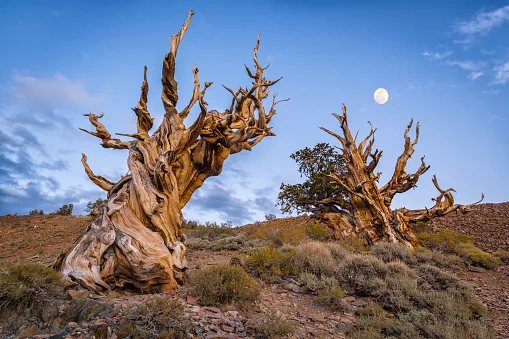
California offers living antiquity: the Ancient Bristlecone Pine Forest in the White Mountains, where gnarled trees over 4,000 years old survive on cold, windswept, nutrient-poor slopes. Their slow growth is the secret to their longevity, and the exact locations of the oldest individuals are deliberately kept quiet to protect them.
For human-made wonders, Göbekli Tepe in southeastern Türkiye predates the pyramids by millennia. Its T-shaped limestone pillars, some carved with wild animals, were raised by hunter-gatherers around 11,000 years ago — evidence that complex monumental building long preceded farming. Ireland's Newgrange, a passage tomb in the Boyne Valley built around 3200 BC, is older than Giza's Great Pyramid and engineered so the winter solstice sunrise lights its inner chamber. Access inside at solstice is by lottery only; the rest of the year, tours run from the Brú na Bóinne Visitor Centre.
Great Zimbabwe tells a different story: a medieval city built by Shona ancestors between roughly 1100 and 1450 AD, with towering mortarless dry-stone walls and a trade network dealing in gold. And in Australia's Red Centre, Uluru's sandstone dates back some 500 million years, though its deeper significance lies in its living role as an ancestral landscape for the Anangu people. The list rounds off with the Great Pyramid of Giza, Khufu's 4,500-year-old tomb and the last surviving Wonder of the Ancient World, best explored with a qualified guide alongside the Sphinx and neighbouring pyramids.
Why it matters: each of these places turns abstract deep time into something you can walk through, touch or stand beneath. They suit travellers who want their trips to come with a story — and several, like Barberton and Great Zimbabwe, remain satisfyingly under-visited compared with the classic wonders.