The team that looks after Belize's Hol Chan Marine Reserve has just levelled up its science game. Five staff members from the reserve's technical and enforcement departments recently completed a certification in fish identification through AGRRA, the Atlantic and Gulf Rapid Reef Assessment programme. The mix of online study and in-water training ran over roughly two weeks: three days of virtual sessions, then three days of practical work at the reserve itself.
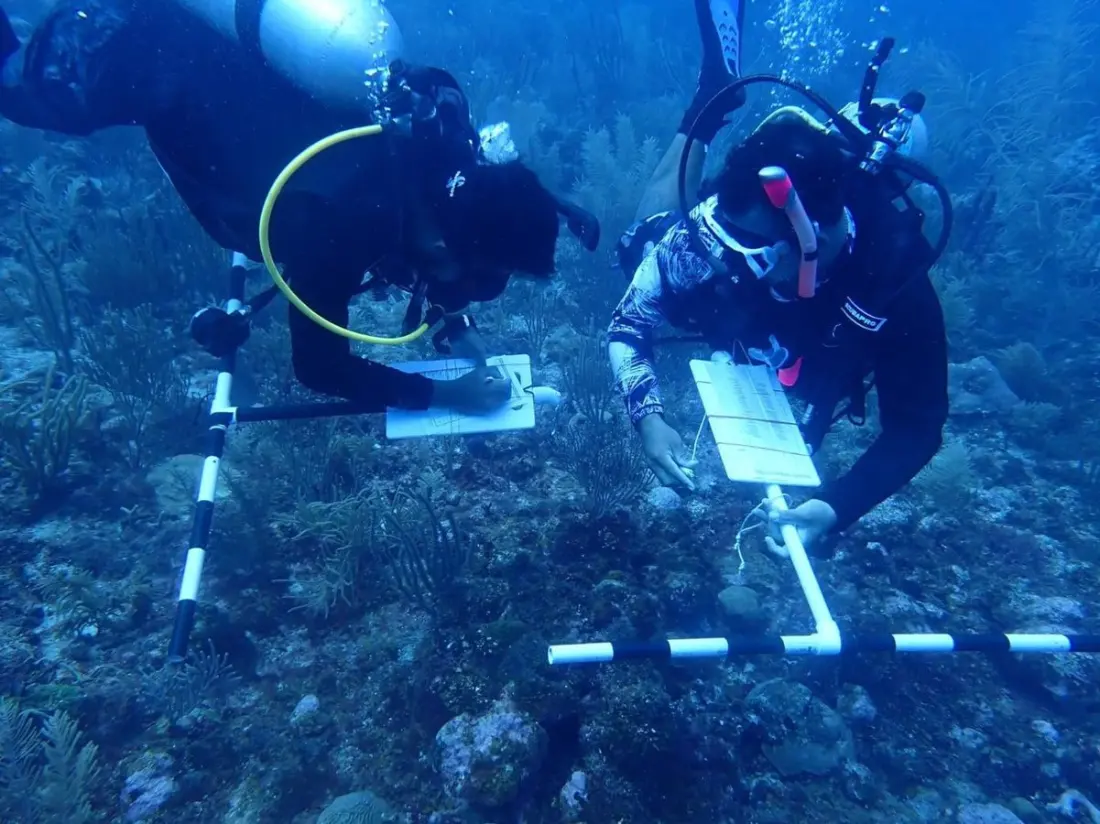
The five newly trained surveyors - Julio Noble, Jordan Gomez, Neri Reyes, Miguel Hernandez and Amilcar Chi - learned the standardised method used across Atlantic reefs. In practice that means swimming a 30-metre transect two metres wide, naming every fish species encountered, counting individuals and estimating their sizes. The numbers feed into estimates of fish density and biomass, which are among the clearest indicators of how healthy a reef actually is. That data then shapes how the reserve manages fishing, diving and conservation zones.
One detail from the training is worth knowing even if you never hold a clipboard: fish appear 20 to 25 percent bigger underwater than they really are. Anyone who has dived Hol Chan and sworn they saw a chunkier barracuda than they did now has an excuse. It's also a genuine problem for surveyors, which is why size-estimation drills were a core part of the course.
Why should a traveller care? Because Hol Chan - just off Ambergris Caye near San Pedro - is one of Belize's most-visited underwater sites. The reserve covers coral reefs, seagrass and mangrove channels, and its famous Shark Ray Alley is where nurse sharks and southern stingrays gather around tour boats. The quality of what you see there depends directly on this kind of monitoring work. A team trained to a consistent, certified standard means better long-term decisions about which areas need protection, how fishing pressure is handled, and how the reef copes with tourism. Belize's barrier reef is a UNESCO World Heritage site, and reserves like Hol Chan are its front line.
The reserve credited partners including Healthy Reefs Healthy People, AGRRA, instructor Angela Randazzo and Ramons Village Divers, the local dive operator that supported the practical sessions. For visitors, it's a reminder that the dive shops you swim alongside in San Pedro are often plugged into the conservation work happening beneath them. If you're planning a dive or snorkel trip to Ambergris Caye, you're not just buying a boat ride - you're visiting a reef that people are actively measuring, defending and trying to keep worth seeing.