Tucked into the pine-covered hills of northern Morazán, about 207 km from San Salvador, the small mountain town of Perquín is home to one of El Salvador's most unusual museums. The Museum of the Salvadoran Revolution (Museo de la Revolución Salvadoreña) doesn't display ancient artefacts or famous paintings. Instead, it documents the country's civil war — a conflict between the government and the FMLN guerrilla coalition that ran from 1980 to 1992 — largely from the guerrillas' own perspective.
That's no accident. The museum opened on December 13, 1992, less than a year after the Chapultepec Peace Accords were signed, and it was established by former fighters from the People's Revolutionary Army (ERP). Many of those same former combatants still help run the place, guiding visitors and sharing first-hand memories. Perquín itself was a guerrilla stronghold during the war, and the surrounding mountains saw heavy fighting.
Inside, five exhibition rooms cover the social and economic causes of the conflict, international solidarity with the Salvadoran cause, daily life in guerrilla camps (including the often-overlooked role of women fighters), wartime equipment, and the peace process. The standout section for many visitors covers Radio Venceremos, the FMLN's underground radio station, which broadcast from January 1981 and challenged the government's version of events. Original broadcasting kit is on display.
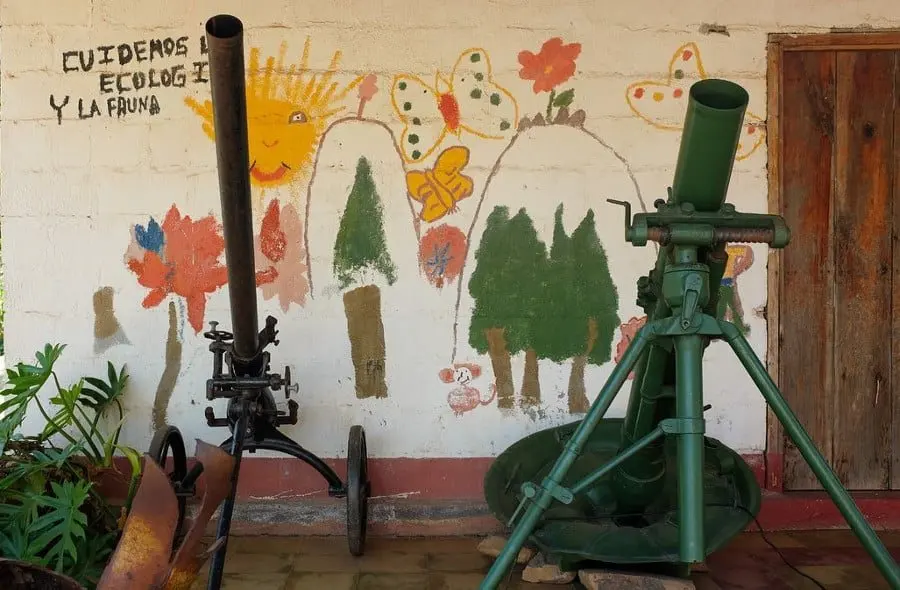
The grounds add a more visceral layer: the wreckage of military helicopters and armoured vehicles, and a preserved bomb crater from 1981. Expect to spend around two hours reading and talking with guides.
A visit pairs naturally with the wider Peace Route (Ruta de la Paz) through northern Morazán. Nearby El Mozote is home to the memorial for the victims of the December 1981 massacre, one of the war's darkest episodes — sobering, but essential context. You can also tour a rebuilt guerrilla camp close to the museum, or trade history for scenery at the Sapo River near Arambala, with its natural pools and forested banks.
Getting there takes some planning. From San Salvador, drive the Pan-American Highway east to San Miguel, continue to San Francisco Gotera, then head north to Perquín. Public transport works but usually requires changes in San Miguel or San Francisco Gotera; a car gives you far more flexibility for the surrounding villages.
Why bother? Because this is a side of El Salvador most beach-and-surf itineraries miss. The guides' personal stories turn abstract history into something human, and the museum is honest about being one perspective among several — best read alongside other accounts of the war. For travellers curious about how a country rebuilds after conflict, it's one of the most rewarding stops in the country.