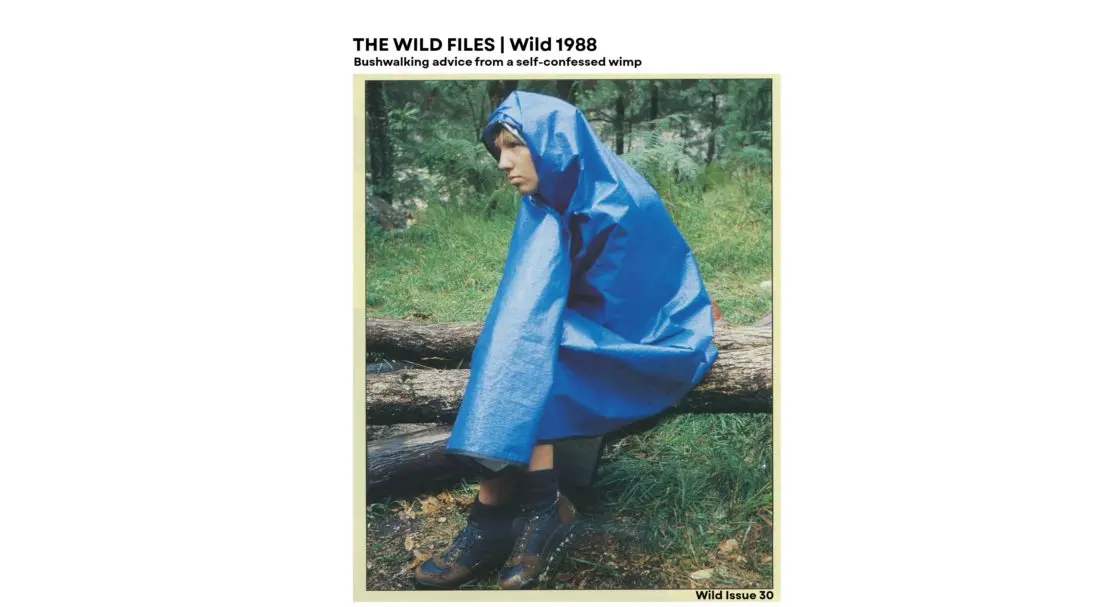
A piece from Wild Magazine's archives is proof that great walking advice ages well. Written by architectural historian Anne Neale for Wild #30 back in Spring 1988, 'Walking for Wimps' is a witty, oddly timeless guide for anyone who has ever hated a hike — and wants to try again anyway.
Neale's credentials as a hopeless walker were solid: freezing river crossings choked with blackberry, near-vertical scrub, scree slopes, and plenty of falls. Yet a trip on Tasmania's famous Overland Track won her over, and she came away with a strategy for the walking-averse that still holds up nearly four decades later.
Her pre-walk tips are refreshingly honest. Assess your fitness realistically and say so out loud to your group. Pick terrain you won't hate — a formed track, a beach walk, or something above the tree line rather than a scrub-bash. Upgrade bad gear, since miserable equipment causes a lot of 'bad at walking' moments. And choose companions carefully: skip anyone from past disasters and the super-keen speed demons, while keeping at least a few experienced walkers in the mix.
On the trail, her rules are practical and a little cheeky. Being slow is fine; whinging is not. Learn your rhythm of short breaks — five minutes, a snack, some water — and take them before you start stumbling. If you're clumsy, wade straight through the mud and streams rather than expending energy trying to stay dry and falling in anyway. Carry your own pack, pitch your own tent and do your share of the cooking; being mollycoddled, she argues, costs you your self-respect.
The post-walk advice might be the smartest part. If it went well, book a similar trip soon with the same crew, but resist the urge to suddenly overestimate yourself. If it was a disaster, don't over-correct — Neale's response to one bad trip was taking up weight training, which wrecked her back for months. Instead, rebuild confidence with easy family day walks (her benchmark: if a four-year-old can do it, so can you).
Her final point is a lovely one: a walking group doesn't need everyone to be a strong walker. History buffs, bird-spotters, camp cooks, storytellers and the person who smuggles extra snacks all earn their place. Cheerfulness, she writes, covers a multitude of miseries.
For travellers, this is a charming nudge to reconsider multi-day walking holidays without the bravado. The Overland Track in Tasmania remains one of the world's great signposted treks — huts, boardwalks and mountain scenery — and it's genuinely doable for fit beginners if you plan honestly. Neale's checklist is a handy template for choosing your first walking trip anywhere: match the route to your actual ability, sort your gear, pick kind companions, and pace yourself.