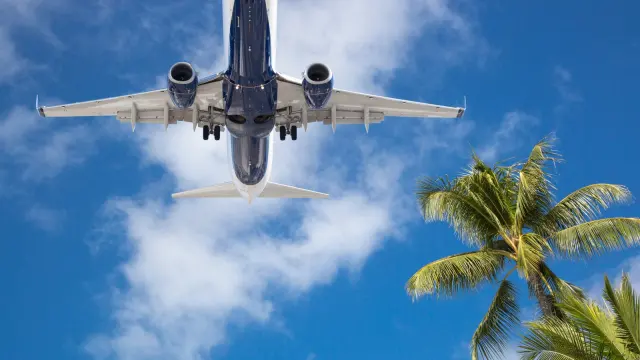
Kai Tak used to terrify pilots. The final approach into Hong Kong's old airport — nicknamed the "Kai Tak heart attack" — demanded a sharp bank between hills and apartment blocks to land on a runway jutting into Kowloon Bay. The airport closed years ago, but the site is welcoming international visitors again, this time by sea. Norman Foster's Kai Tak Cruise Terminal now occupies the former runway, and it has quietly become one of Asia's most impressive maritime gateways.
That shift says a lot about Hong Kong itself. Roughly 70 percent of the territory is too mountainous to build on, so the city has always grown by reshaping its coastline. The West Kowloon Cultural District — 99 acres of reclaimed land with parkland and 17 venues — is nearly finished. Around the cruise terminal, the old airport strip is turning into eco-parks, housing and a 50,000-seat stadium. And further north, the Northern Metropolis plan aims to convert more than 100 square miles of borderland near Shenzhen into a new high-tech urban core. The skyline you photograph is, in a very literal sense, temporary.
For cruise passengers, the practical upside is real. Hong Kong has two terminals suited to different ship sizes, a deep-water harbour and famously efficient transport. Travel logistics specialist Kevin Lo, who coordinates shore operations for lines including Silversea, Seabourn and Ponant, says demand is shifting toward smaller, more immersive experiences — private visits, meals with local chefs, community-focused excursions — rather than standard coach tours.
The classics still justify the trip. Take the Star Ferry across Victoria Harbour for a few coins, ride a 1904-vintage "ding-ding" tram along Hong Kong Island's north shore, or head up to Victoria Peak by funicular on a clear day. On Lantau, the Ngong Ping 360 cable car — book the glass-bottomed crystal cabin — leads to the Big Buddha and Po Lin Monastery. Closer to the ground, Tai Kwun (the former Central police headquarters, now a heritage and culture venue), Man Mo Temple in Sheung Wan and the old-town streets of Sham Shui Po reward a slow wander. Hikers can tackle the Dragon's Back trail for green-hill-meets-skyline views.
Time your evening around the Symphony of Lights, the free laser show illuminating more than 40 skyscrapers at 8 p.m. nightly, best watched from the Avenue of Stars in Kowloon.
Where to stay depends on mood and budget: Eaton HK in Jordan is a community-minded Kowloon hub with an in-house radio station and a Michelin-starred Cantonese restaurant; Tuve in Tin Hau is a moody, minimalist hideaway; the Upper House offers understated luxury above Admiralty. For dinner, The Chairman's steamed flower crab in aged Shaoxing wine is the famous splurge, while Tung Po Kitchen in Wan Chai delivers raucous, beer-in-porcelain-bowls seafood chaos.
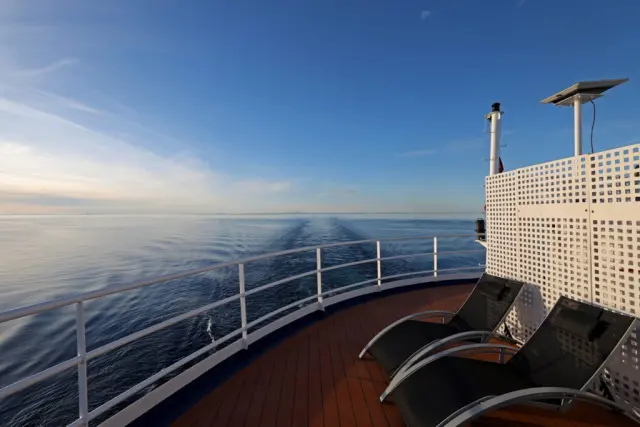
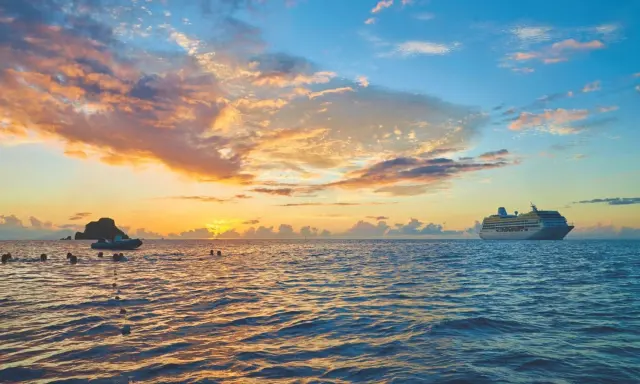
The bottom line: arriving in Hong Kong by cruise ship gives you the city's best angle — the full skyline slide-past as you enter one of the world's great harbours. U.S. citizens can stay 90 days visa-free, and the Airport Express gets you from plane to downtown in 24 minutes, so pairing a sailing with a land stay is easy.