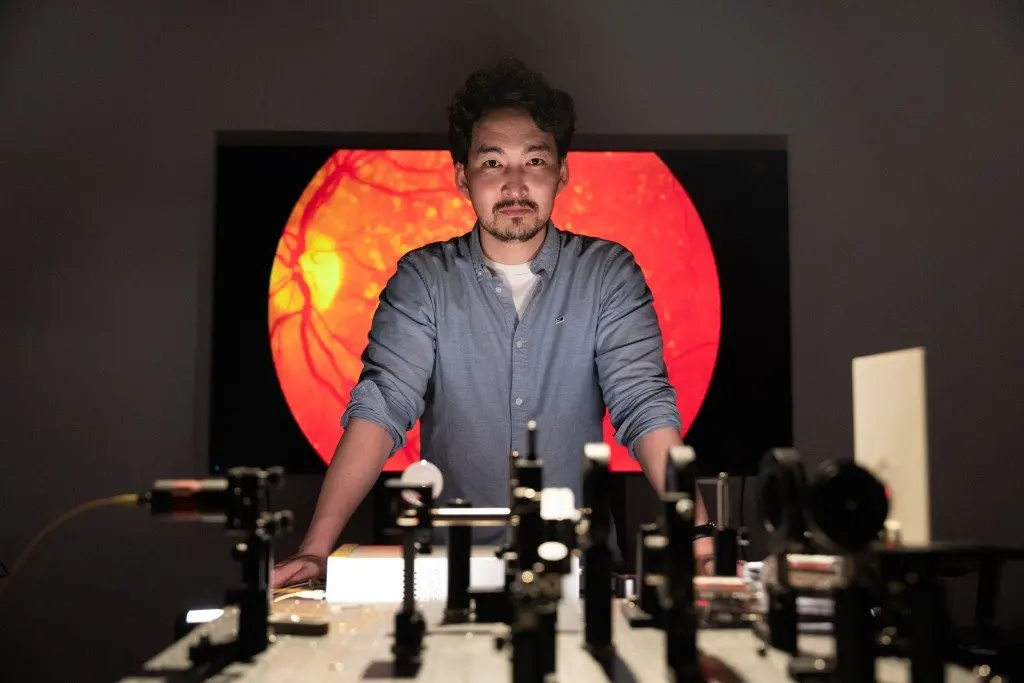
Hong Kong has picked up another quietly compelling marketing asset: Mukhit Kulmaganbetov, a Kazakh ophthalmologist who came for research and stayed for the city's ability to turn ideas into products. He's the co-founder and CEO of Entoptica Limited, and the star of a new promotional video from Hong Kong Talent Engage that doubles as an affectionate portrait of daily life in the city.
His invention is worth knowing about. Entoptica built SLOPE — Structured Light Observation Perception and Evaluation — a screening device that detects age-related macular degeneration using structured-light and quantum-optics technology. The whole test takes roughly two minutes, needs no pupil dilation, and is designed to flag the disease before noticeable vision loss sets in. At the Hong Kong ICT Awards 2025 it took home the ICT Startup Grand Award, plus a Gold Award in the Hardware and Devices category.
Kulmaganbetov's path to Hong Kong was anything but direct. Raised in a rural Kazakh village by doctor parents, he was pushed toward retinal research by a 2016 health scare that threatened his own eyesight. After finishing a UK doctorate in 2021, he fielded offers from Britain, Canada, Singapore and Japan — but chose Hong Kong, citing the Centre for Eye and Vision Research, a joint project between Hong Kong Polytechnic University and Canada's University of Waterloo under the Health@InnoHK cluster. He points to the city's blend of research funding, clinical access and links to mainland China, Southeast Asia and Europe as the reason ideas actually become products there.
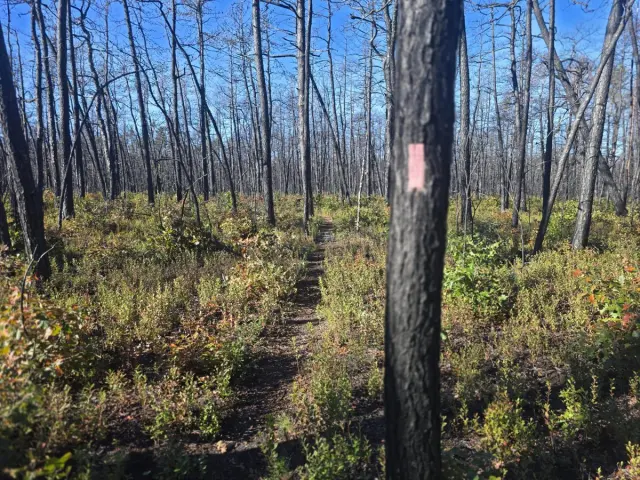
The most travel-relevant part of the video, though, is his off-duty life. Kulmaganbetov and his wife shop at wet markets, eat at neighbourhood restaurants, hike the trails and seek out quieter beaches — a side of Hong Kong that visitors often miss between the harbour and the malls. He's even mastered the essential Cantonese minibus call, "m̀h'gōi yáuh lohk", the phrase you shout to ask the driver to stop.
Why care? For anyone weighing Hong Kong as more than a two-night stopover, his story is a useful local's-eye view: the city that funds quantum-optics startups is the same one where you can finish a morning hike, haggle at a wet market and catch a minibus home. It also hints at a practical future for travellers — quick, non-invasive eye screening that could someday slot into a check-up abroad.
His verdict on five years in the city is blunt: he can't think of a reason to leave.
Story via The Astana Times.