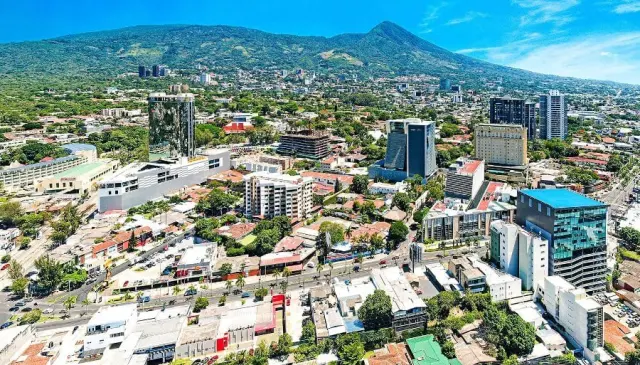
El Salvador doesn't get the attention its neighbours do, but the compact country packs in volcanoes, Pacific surf, colonial towns and UNESCO-listed archaeology — often within a couple of hours' drive of each other. That short-distance variety is exactly what makes it worth a look for a Central America trip.
Start with the volcanoes. Santa Ana (Ilamatepec) is the country's highest, and the climb ends at a summit overlooking a turquoise crater lake. Nearby Izalco is famous for its near-perfect dark cone, best admired from viewpoints around Cerro Verde National Park, where cool mountain air and easy forest trails make a nice break from the lowland heat. Closest to the capital, San Salvador Volcano's huge crater is protected in El Boquerón National Park — an easy half-day escape with restaurants and viewpoints.
The coast splits into distinct moods. El Tunco is the well-known backpacker and surf hub, lively and international, with El Sunzal's consistent waves just next door. Costa del Sol is the mellower option, all long sand, seafood restaurants and boat trips on the Jaltepeque estuary. Head east and El Cuco and Las Flores offer warmer water and far fewer crowds — a better fit for longer, slower beach stays.
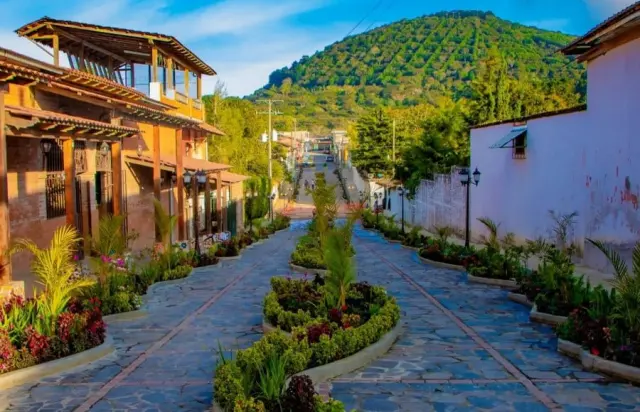
Inland, the towns are half the appeal. Suchitoto's cobblestone streets and colonial buildings sit beside Lake Suchitlán, where boat trips are easy to arrange. The Ruta de las Flores links Ataco — all murals, crafts and coffee farms — with Juayúa and its popular weekend food festival, plus Apaneca's cool climate and coffee plantations. La Palma is the place for colourful handmade souvenirs.
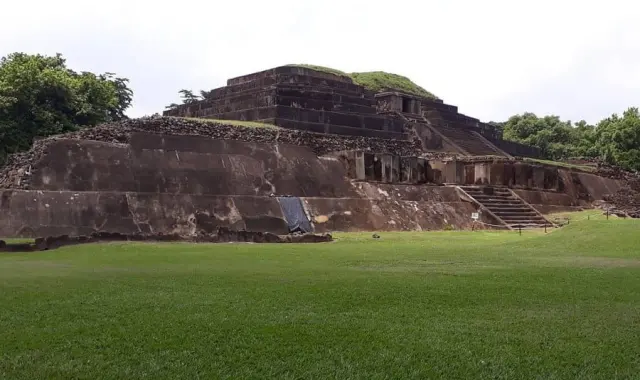
History fans get three solid stops: Tazumal in Chalchuapa, the country's most famous Mayan site, with an on-site museum; Joya de Cerén, a UNESCO World Heritage Site where a farming village was preserved under volcanic ash, offering a rare look at everyday pre-Hispanic life rather than ceremonial architecture; and San Andrés in the Zapotitán Valley, usually paired with Cerén since they're close together.
Nature beyond the volcanoes includes El Imposible National Park, one of western El Salvador's key forest ecosystems, and Montecristo in the north, a cloud forest near the Guatemalan and Honduran borders where some sections require advance permission. For a swim, try waterfalls near Juayúa such as Los Chorros de la Calera — check access and safety conditions first — or the volcanic lakes Coatepeque and Ilopango.
Why it matters: if you want a Central American trip that combines hiking, surfing, archaeology and food culture without long internal transfers, El Salvador does all of it in a small footprint. It suits outdoorsy travellers and culture-focused visitors alike, and it's easy to combine with Guatemala or Honduras by land.