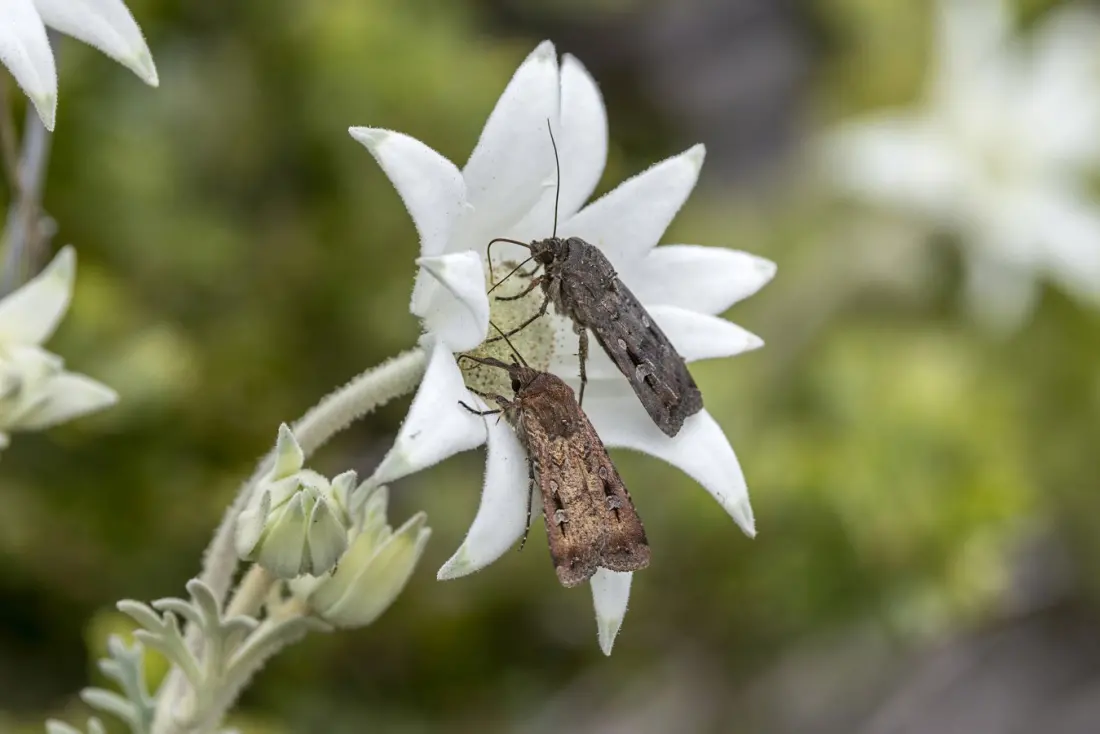
Australians have been finding fuzzy brown intruders in their living rooms, cars and bedrooms lately. They're bogong moths (Agrotis infusa), and they're in the middle of their annual migration from breeding grounds across southern Australia to the cool caves of the Australian Alps. For entomologists, the sudden surge in city sightings is genuinely exciting — but it doesn't change the species' official status: bogong moths remain listed as endangered on the IUCN Red List.
Why so many moths this year? Scientists aren't sure yet. Better food availability, good breeding conditions and winds that pushed moths towards the coast could all be factors. It's also unclear whether this reflects a real population recovery after years of decline, or simply more moths ending up in urban areas where people notice them. Unlike bird migrations, which can be modelled and predicted, bogong movements remain poorly understood.
One big shift since the famous 2000 event — when a huge cloud of moths engulfed the Sydney Olympics closing ceremony stadium — is that anyone can now contribute. This spring, citizen scientists logged hundreds of sightings on platforms like iNaturalist within months, revealing new details such as the moths' apparent fondness for bottlebrushes (Callistemons) and spider flowers (Grevilleas).
Here's the catch: a species can turn up almost everywhere and still be at risk. The bogong's Red List listing falls under Criterion B, which concerns the quantity and quality of habitat. These moths migrate precisely because they handle heat badly, sheltering in cool alpine caves and boulderfields over summer. The Australian Alps are warming fast due to climate change, and if that refuge disappears, the migration itself could grind to a halt.
Even basic questions remain open. Bogongs range from Perth in the west to southern Queensland in the north — one researcher found one at a hotel near Uluṟu, more than 2,000 kilometres from the alps. Where they start, where they end and which routes they take are all unsolved. Researchers are now exploring whether weather radar could be used to track the moths, and a Bogong Watch tagging program lets the public help directly.
For travellers, this is a good reminder that the alpine parks of New South Wales and Victoria aren't just ski slopes — they're a nationally significant wildlife refuge currently under climate pressure. And the citizen science angle means a holiday sighting can genuinely contribute to research: photographing a moth and uploading it to iNaturalist takes seconds and helps fill gaps in one of Australia's great animal migrations. After 26 years without a mass moth event in Sydney and Canberra, many Australians have never seen the phenomenon at all — which makes this year's city invasions feel like a rare second chance to witness, and help protect, something remarkable.