Japan sits on a furnace. Around 3,000 natural hot springs bubble up across the country, and the locals have turned soaking in them into something between a health treatment and a national pastime. For visitors, an onsen is one of those experiences that feels genuinely different from anything you'll do at home – but it comes with a strict etiquette that catches first-timers off guard.
The good news: the rules are simple once you know them. You strip completely (swimmers are not allowed), stash your clothes in a locker, and take a tiny towel – roughly the size of a napkin – with you. Red curtains mark the women's side, blue the men's, as most baths are segregated. Before you go anywhere near the water, you must scrub yourself thoroughly at the washing stations, where low stools sit in front of rows of taps. Any soap residue in the bath is a serious faux pas, and your hair should never touch the water. Take off your jewellery too – the mineral-rich water corrodes metals.
Once you're clean, ease into the baths, which vary in temperature and sometimes colour depending on their mineral content. Water typically sits around 40°C, though some run closer to 50°C for the brave. If there's a cold plunge, it makes a bracing finish.
The one sticking point for many travellers is tattoos. Because body ink has long been linked to the yakuza, many public baths still ban it outright, though attitudes are softening – younger Japanese are increasingly tattooed, and tourist-area baths are more forgiving. If your tattoo is small, a flesh-coloured cover patch such as the Aqua Tattoo Cover Seal can do the trick. Otherwise, book a private bath or a ryokan room with its own open-air onsen and sidestep the issue entirely.
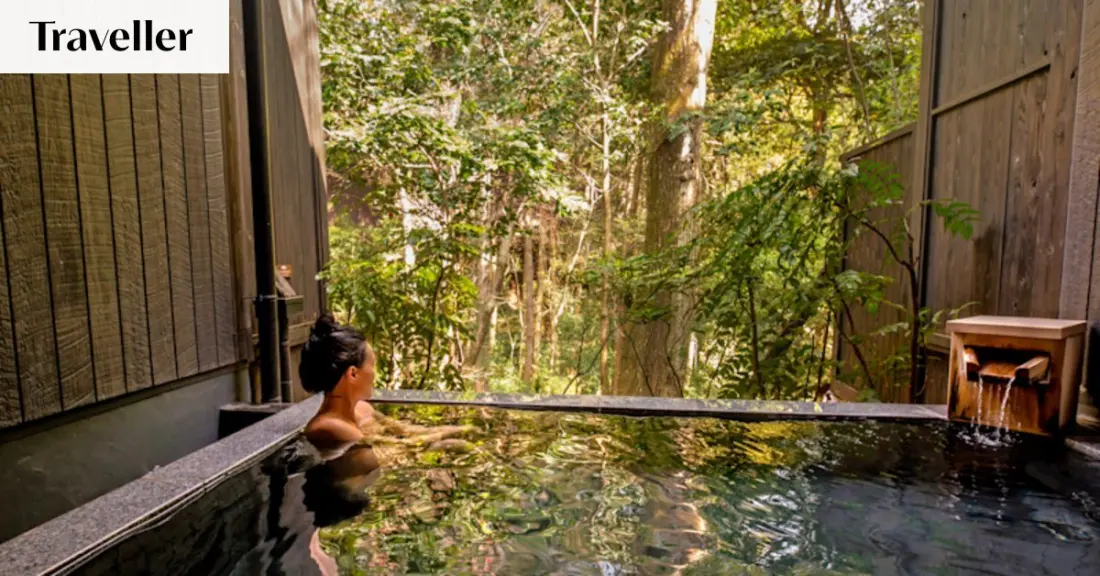
Price ranges from free public baths to ryokan stays costing several hundred dollars a night, where the soak is part of the package. The connoisseur's pick is the rotenburo – an outdoor bath in a natural setting, which is as atmospheric as Japanese bathing gets.
Why bother? Because the onsen is less a spa treatment than a cultural immersion (literally). Locals treat it as a leveller – everyone's equal once the clothes come off – and getting comfortable with it opens the door to one of Japan's most cherished rituals. For travellers heading to hot spring towns like Hakone, Beppu or Kusatsu, a few minutes of preparation turns an awkward first visit into the highlight of the trip.