Most Pacific War battle sites that tourists visit have infrastructure, ticket booths and gift shops. Yap, in the Federated States of Micronesia, has none of that. What it does have is an old Japanese fighter airfield slowly being swallowed by jungle, with the wrecks of Second World War aircraft scattered among private homes and overgrown runways — and almost nobody coming to see them.
The airfield at Lamer sits right beside today's Yap International Airport. Japan built it in 1944, using crushed reef material and, according to locals, even some of Yap's famous stone money discs as fill. The strip was meant as a staging point for Japanese aircraft moving across the region, defended by a garrison of roughly 4,000 to 5,000 soldiers. The Americans had planned to invade but changed tack: they bombed Yap into neutrality and simply bypassed it, leaving the garrison to wither on the vine.
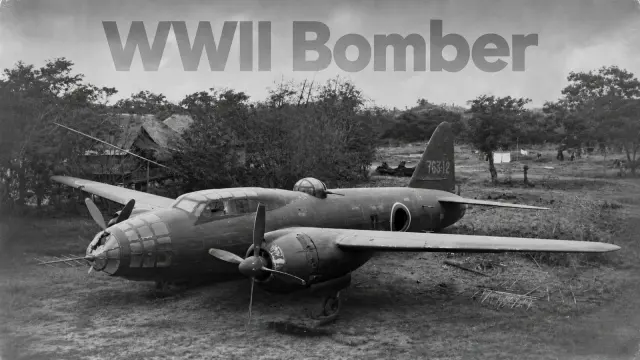
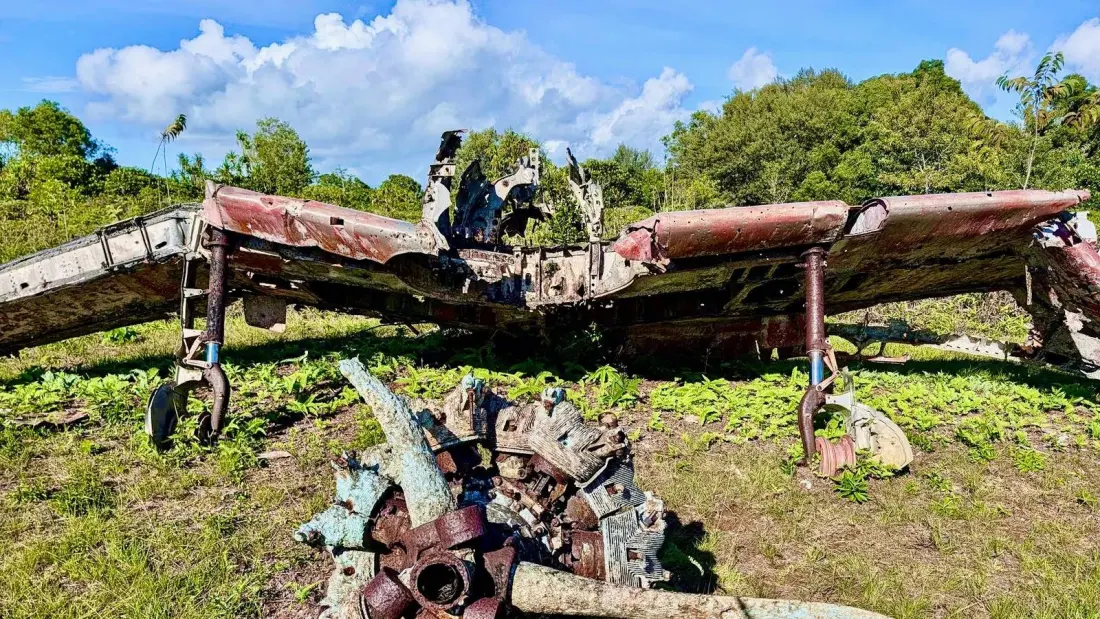
Fast-forward eight decades and the jungle has taken over. One recent visitor who hiked the old airfield found the remains of around eight Japanese aircraft, including a Mitsubishi G4M 'Betty' bomber — now improbably parked next to a Boeing 727 that crashed there decades later — plus a Nakajima B5N torpedo bomber and what appear to be Mitsubishi A6M Zero fighter tails. Wrecks generally sit 45 to 91 metres off the crumbling, potholed runway, which is lined with abandoned cars. Big American bomb craters pockmark the whole area; one aircraft could only be reached by climbing in and out of a crater.
Beyond the airfield, the island has more wartime remnants: a preserved Japanese Type 88 75mm anti-aircraft gun near some Zero remains, four destroyed gun barrels on the hill above Colonia, and wreckage of US aircraft including Vought F4U Corsairs and B-24 bombers. American sites tend to carry memorial plaques — one commemorates Lt. Zack F. Lillard, whose F6F-5 Hellcat flew from the USS Enterprise and whose partial wreckage was only located in 2008. Japanese wrecks, by contrast, are largely unmemorialised. A scattering of 2000s-era marker signs exists, but many have rotted away or vanished under growth.
Two practical notes for anyone tempted to follow. First, nearly all land on Yap is privately owned, and visitors are expected to ask landowners' permission before exploring wrecks, marked or not. Second, the past here isn't entirely past: a bomb disposal team of contracted ex-US military personnel was on the island during the visit, collecting unexploded ordnance — including live rounds recovered from some of these very aircraft — and detonating it.
Yap currently draws divers and little else; the visitor described himself as the only backpacker on the island, and expats said they'd rarely seen one before. For history-minded travellers who don't mind thick jungle, rough ground and asking permission at each stop, that makes Yap one of the Pacific's least crowded WWII sites — stone money, decaying fighter tails and all.