
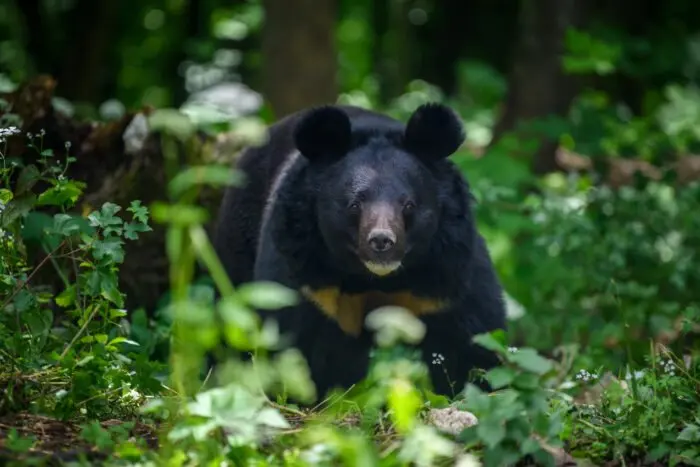
Japan is in the middle of its worst bear conflict in memory. Between April 2025 and March 2026, the country logged 230 bear attacks and 13 deaths — a sharp jump from just three deaths and 82 injuries the year before. The government's response has been drastic: around 14,000 bears culled, and a further 8,800 planned this year. Yet attacks have kept coming, with six more deaths and over 35 injuries since April 2026.
Most of the animals killed are Asian black bears — about 12,000 of them — plus some 2,000 brown bears. That's where the controversy lies. The Asian black bear is classed as vulnerable by the IUCN, and Japan is one of its last strongholds, with perhaps 60,000 or fewer left worldwide. Research from 2024 suggests the species has already lost 30-40% of its population over three decades and vanished from roughly half its historic range. Conservationists like Yuko Muroya of the Japan Bear and Forest Society warn that regional extinctions are a real possibility if trapping continues at this pace. The government, meanwhile, has framed bears as a public safety threat and wants to cut numbers by over 30% in several prefectures by 2030.
The root causes matter for anyone heading into rural Japan. Poor acorn, berry and nut harvests in late summer push hungry bears toward towns as they fatten up for hibernation. Add decades of rural depopulation and abandoned farmland — which once acted as a buffer between villages and forest — and the line between bear habitat and human space has blurred badly.
Not every solution is a rifle. Wildlife groups are planting nut trees to restore food sources, Hokkaido uses drones to track and shoo bears away, and Wolf Kamui's solar-powered robot wolves blast the howl of Japan's extinct wolves to scare bears off — a portable 20cm hiker version is in development. In Nagano Prefecture, the Picchio Wildlife Research Center runs Karelian bear dogs that chase off or help tranquilise and relocate bears, though the model hasn't spread nationwide.
For travellers, this isn't a reason to cancel a trip to the Japanese Alps or Hokkaido — attacks remain rare relative to visitor numbers — but awareness counts. Hiking in bear country (Tohoku, Nagano, Hokkaido) calls for common sense: don't leave food or rubbish accessible, make noise on quiet trails, keep dawn and dusk encounters on your radar, and check local advisories before setting out. Autumn hikers should be especially alert, since that's when food shortages drive bears closest to villages. Some areas may have trail closures or warnings posted; take them seriously.
The bigger story is one travellers will increasingly encounter worldwide: shrinking habitat, changing food supplies, and emptying countryside pushing wildlife and people together. Japan's answer so far leans on culling; whether the robot wolves and bear dogs can offer a better balance is still an open question.