When Jimmy Cornell planned his first Atlantic crossing in the 1970s, the only routing book available was a Victorian-era Admiralty volume written for commercial ships, not yachts. He left La Palma for Barbados in November 1976 and arrived 26 days and 2,697 miles later — the start of a career that would map the oceans for generations of cruising sailors.
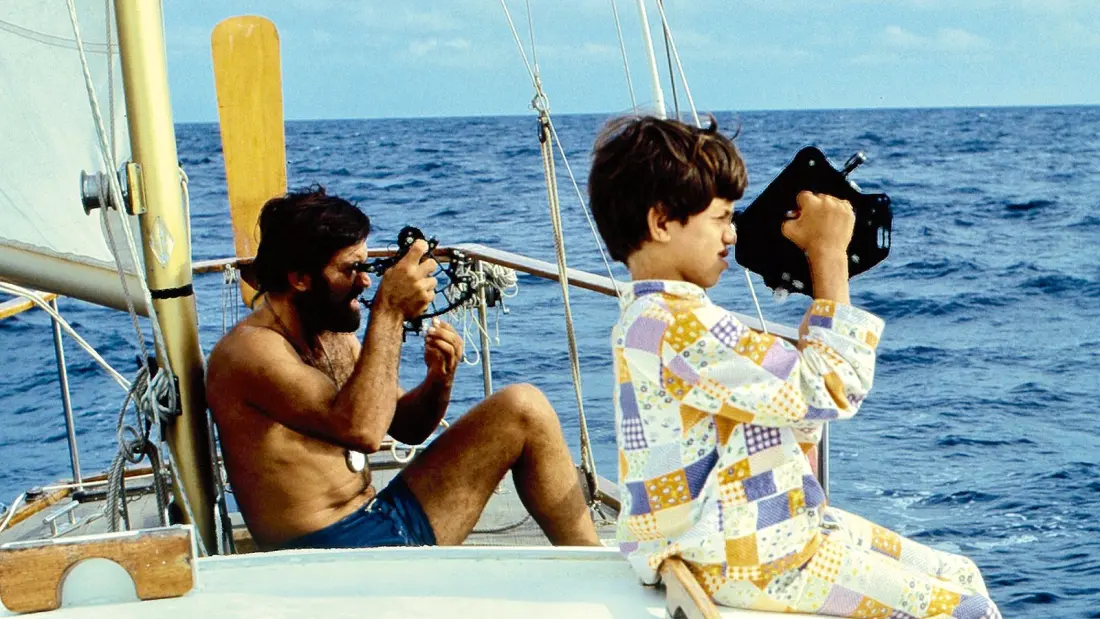
Cornell went on to sail some 58,000 miles on a six-year circumnavigation with his wife Gwenda and their two young children, often reaching places no yacht had visited before. Back home, he combed the logbooks of centuries-old ships at Greenwich's Maritime Museum — including Captain Cook's own records — and turned that research into World Cruising Routes, the reference book that still shapes how sailors plan offshore passages today.
His core principle is simple: be in the right place at the right time, and never the reverse. Early editions offered favourable windows for each route, storm seasons, currents and recommended landfalls. Technology transformed the rest — the 1990 edition added GPS-era waypoints, and Cornell calls the chartplotter the biggest shift in offshore navigation since the sextant. Its limits, though, were brutally exposed in 2014 when the Volvo Ocean Race yacht Team Vestas Wind ran aground on the Cargados Carajos Shoals near Mauritius; the navigator hadn't zoomed in on an electronic chart that clearly showed the reef, which Cornell's own book had flagged as a hazard. Later editions added explicit coordinates for reefs, unlit atolls, oil fields and wind farms.
The bigger story now is climate. Cornell has watched trade winds lose their reliability, while tropical cyclones have grown stronger, longer-lasting and wider-ranging — striking in off seasons and in places that never used to see them. He flagged freak weather as early as the 1995 edition, and the 2022 edition highlights storm-affected regions in detail. A survey he ran among recent circumnavigators found nearly all are revising their plans because of it; only a handful are giving up.
His message to would-be voyagers, though, is encouraging: sailing your own boat remains the most rewarding way to see the planet. His one piece of advice? Don't leave it too late. For anyone dreaming about an Atlantic crossing or a slow loop of the tropics, the ARC-style rallies he helped popularise — and the routing knowledge built up over five decades — mean there has never been more support for first-time bluewater sailors, even as the weather gets harder to predict.