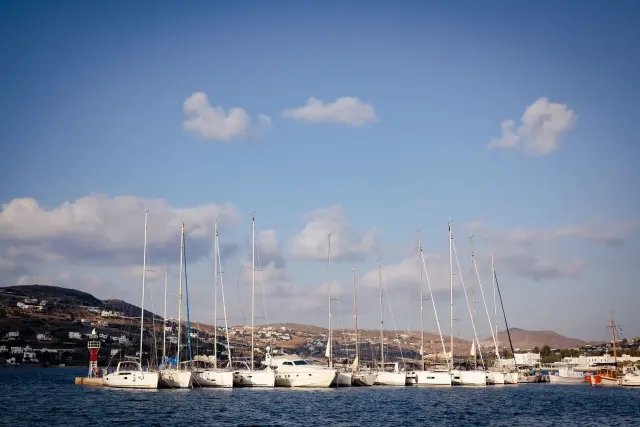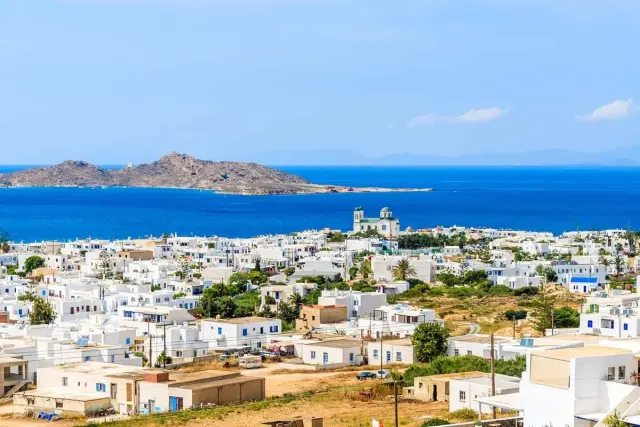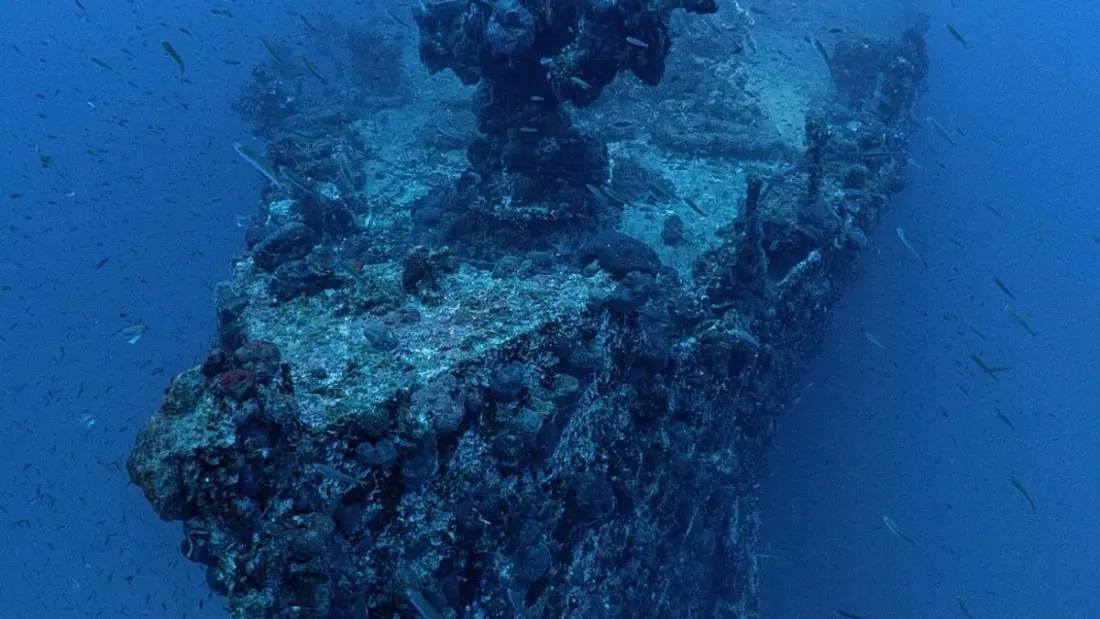
An hour or so from Athens, the Cycladic island of Kea has quietly become one of the most storied dive destinations in the Mediterranean. Off its coast lie three wrecks — the Patris, the Burdigala and, above all, the Britannic, sister ship to the Titanic — which now sit inside a protected Underwater Historical Site made up of three themed marine zones.
The Britannic sank in November 1916, five years after her famous sister, after striking a German mine. Despite design improvements made following the Titanic disaster, the ship went down in just 55 minutes. Luckily, better lifesaving equipment and the short distance to Kea meant roughly 1,300 people were rescued, though about 30 died — mostly because lifeboats were launched too early while the engines were still turning. The wreck rests about 120 metres down, so it is strictly for trained technical divers, not casual holiday snorkellers.
Those who do make the descent describe it as a career-defining moment. Giannis Tzavelakos of Kea Divers says the first emotion is pure awe: the wreck is enormous, remarkably intact, and after more than a century underwater still essentially an underwater museum. He compares it to Everest for divers — a life goal that leaves people grinning the moment they surface. The wreck was first located by Jacques-Yves Cousteau in 1975 and explored by his team the following year.
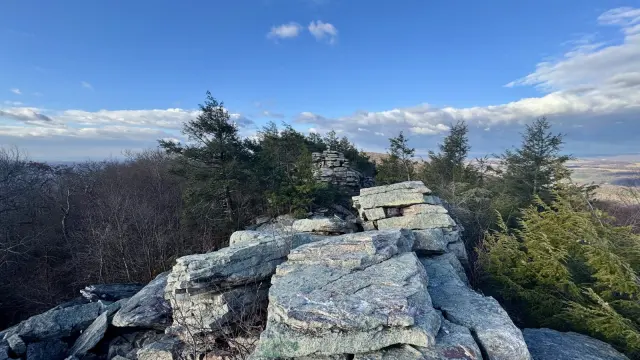
Kea isn't only for deep-sea specialists. On land, the island has a marked network of about 81 kilometres of trails across 12 main routes, many threading through the largest Valonia oak forest in the Cyclades — a rare woodland that some consider a remnant of a much greener era for these islands, and others the product of past tanning-industry planting. The trails connect villages, springs and beaches, and a local walking group has spent the past year clearing and reviving them. Near the main town, you can also see the famous Lion of Kea, a 6th-century BC figure carved straight into solid schist rock.
The appeal is the combination: world-class wreck diving and quiet hiking on an island that sees far less attention than nearby Mykonos or Santorini. Its proximity to Athens makes it realistic for a weekend, a three-day break or even an organised day hike. For divers, the Britannic is a serious undertaking requiring advanced training and planning; for everyone else, Kea offers oak forest, stone paths and empty beaches — plus the chance to swim above one of history's most famous wrecks.