Vietnam's south-central coast is having a monster year. Khánh Hòa province — home to Nha Trang and the Cam Ranh resort strip — has already welcomed 22.5 million visitors in the first ten months of the year, blowing past its full-year target of 18.8 million long before the calendar said it should. That's a 50.8% jump on the same period last year, according to the provincial Department of Culture, Sports and Tourism.
The real headline for international travellers is how crowded with foreigners the beaches have become: over 7.8 million foreign arrivals, up 66.6% year-on-year. October alone drew roughly two million visitors — more than double the previous October — including 685,000 internationals, and generated VNĐ4.3 trillion (about $166 million) in a single month. All told, tourism has pulled in an estimated VNĐ72.2 trillion ($2.8 billion) this period, with hotel occupancy holding above 60% province-wide.
Local authorities are clearly not treating this as a fluke. A batch of planning work is underway: an application to designate the northern Cam Ranh Peninsula as a National Tourism Area, a master plan for the Ninh Chữ National Tourism Area running to 2045, and an international visitor strategy for 2026–2030. Officials are also preparing to receive visa-free Chinese tourists — a policy shift that could push numbers even higher — and building a Destination Management Organisation model for 2027–2030.
There's a sustainability angle too. Three properties — Champa Island Nha Trang, The Anam and Vinpearl Resort Nha Trang — have been certified under the province's Green Tourism Standards, with plans for dedicated 'green' tourist shops aimed at eco-conscious visitors. On the tech side, visitor data is now feeding into the provincial Intelligent Operations Centre, and local businesses are getting digital transformation training. The department has also been tightening oversight, processing 31 administrative files on tour guides and travel licences and inspecting accommodation facilities over the ten months.
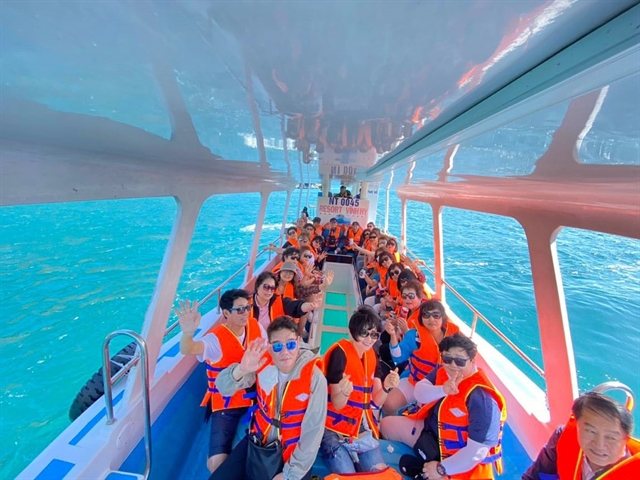
So what does this mean if you're actually booking a trip? Nha Trang and Cam Ranh are firmly back on the map and operating at scale — you'll find plenty of flight connectivity, cruise calls and hotel stock, but the most popular beachfront areas and island tours will feel busy, especially around October's surge. Booking accommodation ahead and travelling in shoulder months is a sensible hedge. On the plus side, the push toward zoned tourism areas at Cam Ranh and Ninh Chữ means new corners of the province — quieter bays like Vĩnh Hy, already known for glass-bottom boat trips — are being developed with longer-term infrastructure in mind. If you want the classic Nha Trang buzz, go now; if you'd rather get ahead of the crowd, keep the northern Cam Ranh Peninsula and Ninh Chữ on your radar before the master plans turn them into the next big things.
With 40 major hospitality and travel firms in the province now fine-tuning growth plans for the final quarter, Khánh Hòa looks set to close the year with records still falling.