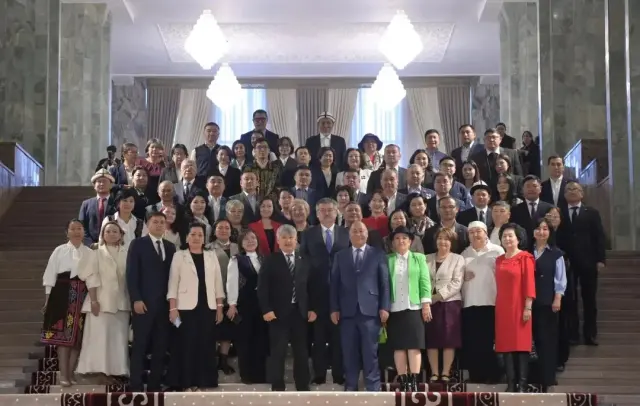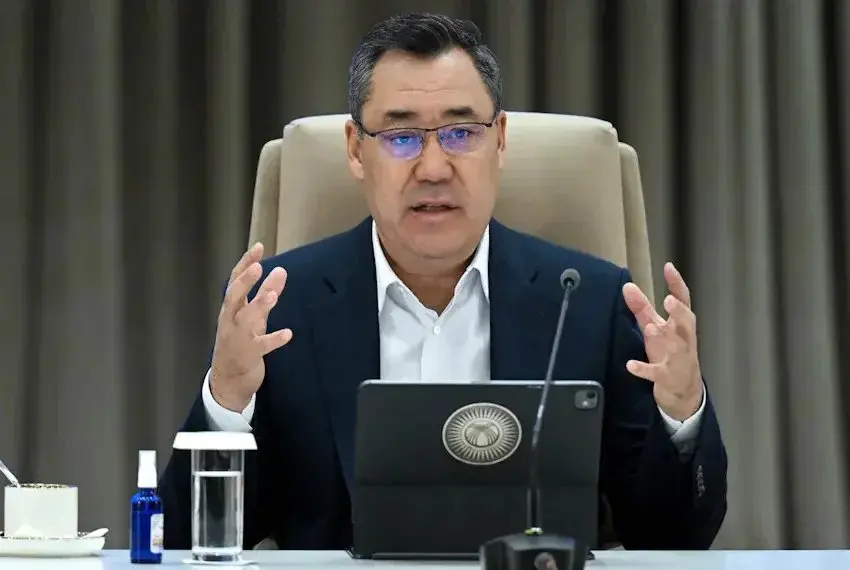
Kyrgyzstan's president says the country should eventually stop relying on foreign firms — currently Chinese companies — to dig its tunnels, and start handling the work with domestic engineers and equipment. Sadyr Japarov made the comments during a meeting with residents of Nooken district and the town of Mailuu-Suu, after a local from Kochkor-Ata suggested putting Kyrgyz specialists and machinery to work on big infrastructure projects instead of letting the money and expertise flow abroad.
The proposal, Japarov said, fits a shift that has already happened in road building. In 2021–2022 the Ministry of Transport began constructing and asphalting roads itself rather than handing everything to contractors, and the state bought roughly 1,500 pieces of equipment to make that possible. The ministry now paves around 2,000 kilometres of road a year on its own.
Tunnels are a different story. Japarov was candid that Chinese firms still get the job because Kyrgyzstan lacks both the specialised equipment and the track record — tunnelling through mountainous terrain is a far bigger technical leap than laying asphalt. His answer to a pilot-project suggestion was supportive: start small, keep funds in the country, create jobs and build expertise over time. He also admitted domestic road quality still needs work, but argued that skills develop gradually.
For travellers, this matters indirectly but genuinely. Kyrgyzstan is one of Central Asia's most rewarding outdoor destinations — alpine lakes like Issyk-Kul, horse-trekking around Song-Kul, and gritty, friendly Bishkek — and its biggest practical drawback has always been the roads. Mountain passes that close in winter, long detours and bone-rattling bus rides shape almost every itinerary. If the state keeps paving 2,000 kilometres a year and eventually tunnels through its own ranges, journey times between the north and south of the country, and access to remoter valleys, could improve significantly over the coming decade.
There's no immediate change for visitors to plan around; this is a long-term capacity-building announcement rather than a new road opening. But it signals where the country is heading: more infrastructure handled in-house, more spending kept at home, and presumably steadier investment in the routes that connect its best scenery. Anyone who has bumped over a 3,000-metre pass in a shared marshrutka will understand why that's worth watching. Original report: 24.kg.