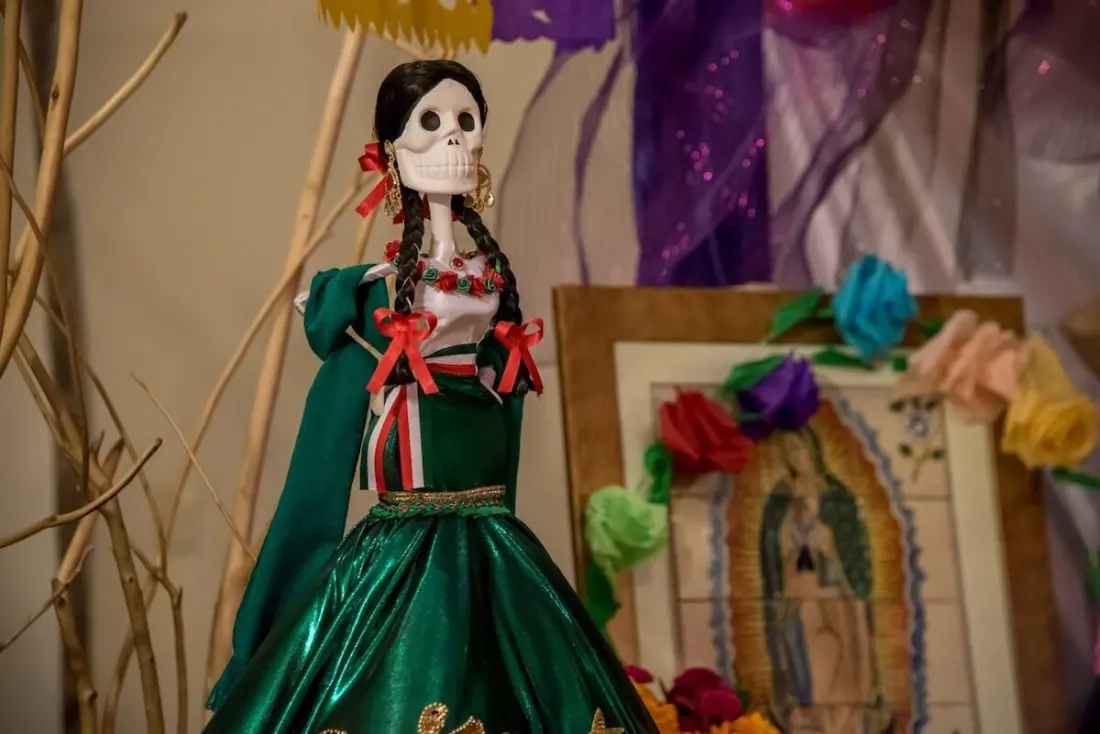
Every 1 and 2 November, Mexican streets fill with marigold petals, candlelit altars and painted skulls — and towering over the festivities is La Catrina, the gracefully dressed female skeleton who has become the face of Día de los Muertos.
Visitors often assume she's a straight descendant of Mictēcacihuātl, the Aztec Lady of the Dead who presided over the underworld. The connection is real but indirect. Mesoamerican peoples, including the Mexica, long held rituals honouring their dead, and those traditions feed into today's celebrations. But La Catrina herself is surprisingly modern — and she started life as political satire.
Her creator was José Guadalupe Posada, a printmaker from Aguascalientes working in Mexico City in the early 1900s. Posada drew a skeleton in an oversized feathered hat to mock Mexicans who imitated European aristocratic fashion while the country's indigenous and mixed-race majority were marginalised. He called her 'La Calavera Garbancera'. The figure stayed a satirical sketch until muralist Diego Rivera gave her a full body, a serpentine gown and her famous name — La Catrina — in his 1947 mural in Mexico City. From there she spread into folk art, papel picado, face paint and every Day of the Dead parade in the country.
For travellers, this matters: La Catrina isn't a Halloween costume but a walking piece of art history with a pointed message about class, identity and the Mexican habit of laughing at death rather than fearing it. If you're planning to see her in the flesh — or the face paint — head to celebrations in Mexico City, Oaxaca, Pátzcuaro or the Yucatán around 1-2 November. Expect ofrendas (altars) piled with cempasúchil marigolds, pan de muerto, photos of deceased loved ones, and catrina face-painting sessions open to visitors. Learn the backstory before you go, and ask before photographing someone's altar or painted face. It's a festival, but at its heart it's a family observance.