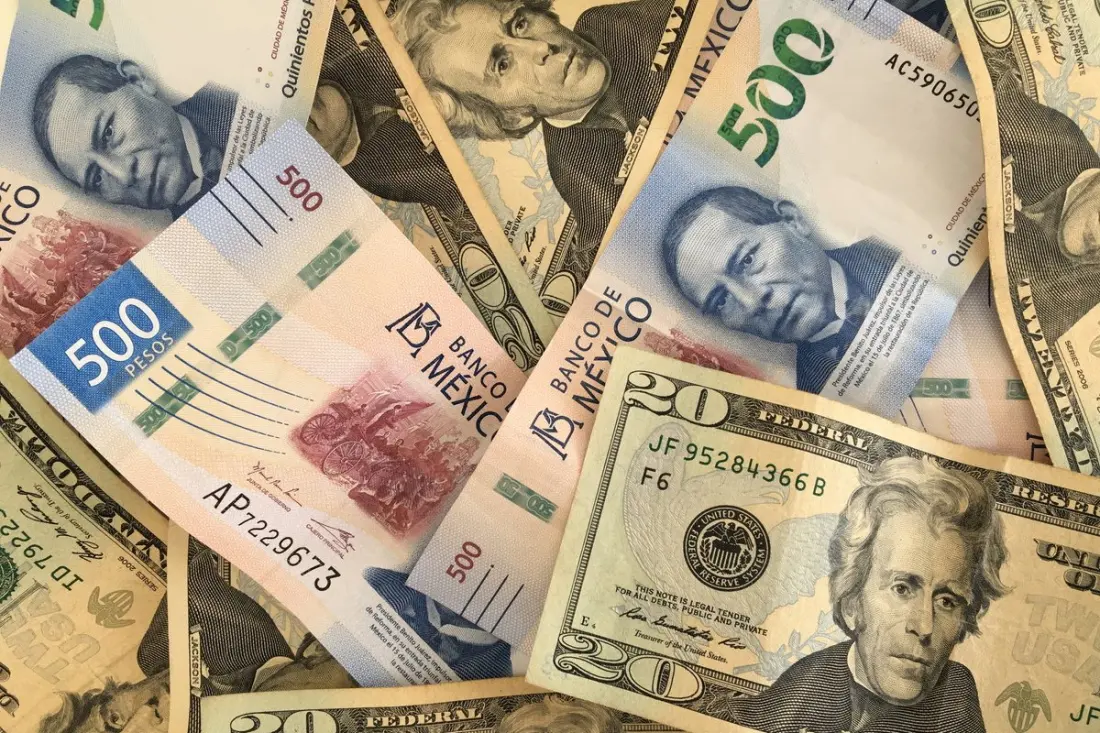
The Mexican peso has never been a boring currency. Over the past seven decades it has swung from a rock-solid fixed rate of 12.50 to the US dollar — a level that held from 1954 all the way to 1976 — through waves of devaluations, exchange controls and crisis, to the free-floating currency visitors exchange at airport counters today.
The turning point came in December 1994, when Mexico's reserves ran dry after a year of capital flight and the peso was set loose on international markets. Since then it has traded freely, with the central bank stepping in only during genuine turmoil. Economists point out an irony in the story: the peso has only truly appreciated in the eras when it was allowed to float without controls on exchange rates, prices or capital.
The post-float years tell a familiar pattern of shocks and recoveries. The peso hovered between 9 and 10 to the dollar in the late 1990s, then buckled during the 2008 global financial crisis, sliding from around 10 to more than 15 per dollar by March 2009 — Mexico's heavy trade and investment ties to the US made the damage worse than in most countries. Recovery followed, with the currency recovering to about 12.50 by October 2010, and trading between roughly 11.60 and 14.70 through 2014.
Then came the slide past the symbolic 20-to-1 mark in November 2016, touching around 21.60 in January 2017. The pandemic delivered another hit — the peso briefly hit a historic low near 25 to the dollar in late March 2020 — before staging a fast recovery and settling between 19 and 20 for two remarkably calm years. The 'Super Peso' era arrived in late 2022, with the rally peaking near 16.33 in spring 2024. Pressure after the June 2024 elections pushed the rate back above 18, closing that year at 20.88. It has since swung between strength and softness: trading near 17.10–17.80 for much of 2026, dipping briefly to 19 in the autumn, and settling around 18.60–18.80 by November.
What does this mean if you're planning a trip? Quite a bit. The rate you get on arrival can differ meaningfully from year to year, and even month to month — a 16% annual gain, like the peso posted recently, quietly changes what your hotel, tacos and day trips cost. Peso rates against the British pound, euro or Canadian dollar are all derived from the peso-dollar pairing, so the US exchange rate drives everything. And a word of humility for forecasters: economists — including those at the Bank of Mexico — expect the peso to close 2026 somewhere between 17 and 19, but their own track records suggest nobody really knows. Budget with a buffer, watch the rate before you go, and change money sensibly on the ground rather than guessing the trend.