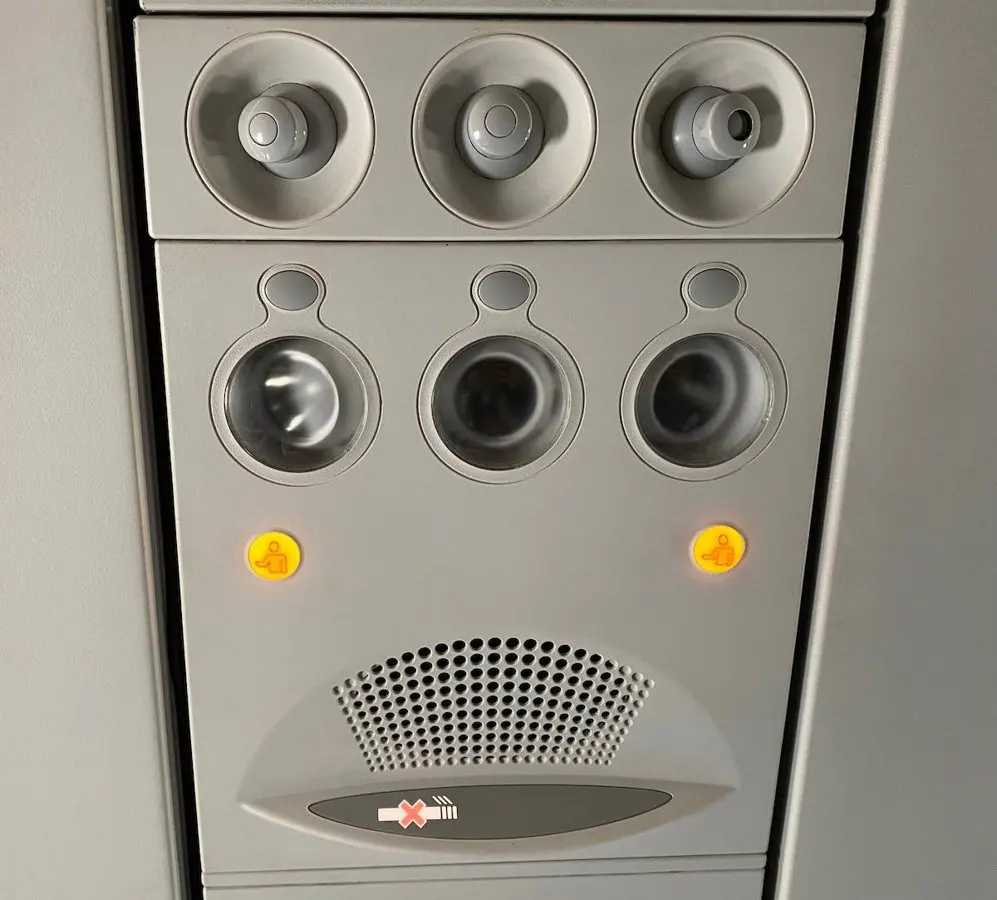
That little button with the tray-and-person icon above your seat is one of the most quietly contested objects in aviation. Some flight attendants treat it as a service request; a few on US carriers have gone as far as announcing mid-flight that it's an "emergency" button only. So what's the actual etiquette?
The short answer: it depends on where you're sitting and which airline you're flying.
In first and business class, especially with international carriers, using the call button for service is entirely appropriate. You paid a premium, and crews on top airlines would often rather you did press it than wander into the galley. On many foreign carriers, heavy curtains separate the galley from the cabin, and entering that space uninvited is seen as intrusive — crews may be eating, resting or preparing service, and they'd prefer to come to you. Just respect the flow: if a cart service is working through a 50-seat business cabin, wait for the round to finish before buzzing unless you genuinely need something.
Culture varies even among excellent airlines. Singapore Airlines crews are famously proactive, sweeping through the cabin every 10-15 minutes, so there's rarely a need to press anything. Cathay Pacific is the opposite — deliberately invisible between meal services to protect your privacy, then at your seat within seconds of a call. And Emirates takes the concept furthest: in first class you can voice or even video call the crew without them visiting your seat at all.
Economy is more nuanced. Crew-to-passenger ratios are far thinner, and on long-haul flights rest periods cut staffing further. Still, the button isn't off-limits — it's completely fair game if you have mobility issues or you're stuck at a window or middle seat next to a sleeping neighbour. Otherwise, it's often easier to stretch your legs and walk to the galley, where long-haul flights usually have a self-serve snack and drinks setup, and crews tend to be more visibly present in the economy cabin anyway.
The US is its own case. Cabin galleys use open nets rather than curtains, and some American crews openly discourage service-related calls, leaning on the safety-first framing. A sensible rule of thumb: the call button is reasonable in international premium cabins on US airlines, less so on domestic routes, and best skipped altogether if the crew's vibe suggests it won't be welcomed.
Why does this matter to travellers? Because a misread button press can sour the mood of an entire long-haul flight — while knowing the local convention gets you faster service and keeps things friendly with the people looking after you. Read the cabin, match the airline's culture, and use your judgement: proactive crews make the button redundant, reactive crews make it essential, and everyone appreciates a passenger who doesn't hit it three times in an hour.
One Mile at a Time