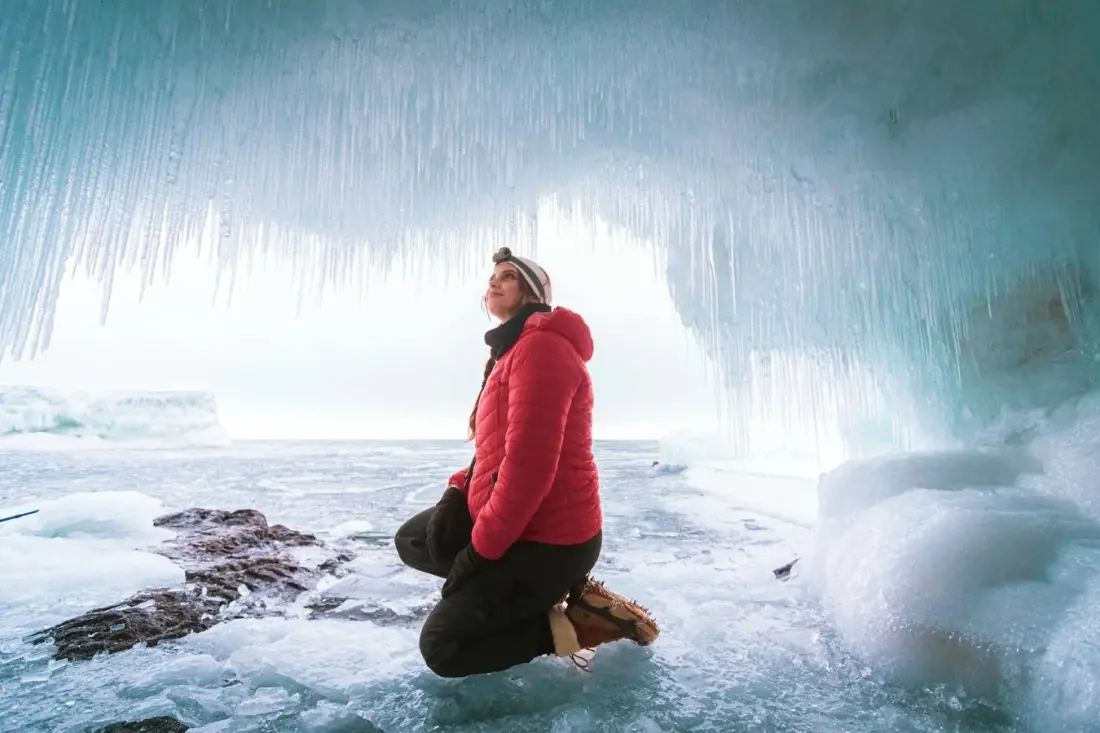
Every winter, a short stretch of Lake Superior shoreline just north of Sault Ste. Marie turns into something you'd normally associate with polar expeditions: caves, tunnels, arches and hanging curtains of ice, glowing blue in the low afternoon sun. The catch? It only exists for a few weeks, and some years barely at all.
These aren't proper caves worn into rock over millennia. They're built fresh each winter by the lake itself. Waves hurl water against the rugged Canadian Shield coastline, and when temperatures drop well below freezing, that spray freezes layer on layer. Add drifting snow, plus meltwater trickling through cracks and refreezing into icicles, and you get hollowed-out chambers and overhangs that look almost invented.
Timing matters. Late February into early March is the sweet spot. By then winter has had months to stack up the ice, but the days are lengthening and the sun is climbing higher. The shoreline here faces west, so afternoon light hits the formations directly, softening them slightly each day before everything refreezes overnight. That constant freeze-melt-refreeze cycle carves new patterns daily and gives the ice its striking blue and white colour when the sun streams through. The formations you photograph on one weekend may be reshaped or gone the next.
The unpredictability cuts both ways. Some winters produce genuinely spectacular caves; others deliver small formations or nothing. Conditions along the shore change fast, and that's the serious part: snow can conceal cracks or thin ice, the structures themselves can shift or collapse as temperatures rise, and the rocky ground is tough to walk in deep winter. Local guides are strongly recommended. Outfitters such as Forest the Canoe run guided trips, reading conditions on the day and getting visitors out safely. Getting there is genuinely part of the outing, not a stroll to a viewpoint.
Why here specifically? Lake Superior's eastern shore combines everything the ice needs: a vast, wave-generating lake, exposed rock, winds that pile water against the coast, heavy snowfall and brutal cold. Similar formations occasionally appear elsewhere on the Great Lakes, but this stretch is the reliable star of the show.
For winter travellers, this is one of Ontario's most time-sensitive natural events. There's no booking an ice cave six months out; you watch conditions and go when locals say the ice is right. If your dates line up with a good season, you get a fleeting, otherworldly scene that vanishes completely by spring — which is exactly what makes it worth the drive north.