The week before winter properly arrives may be the most treacherous time to be in the mountains, and a grim string of incidents across three continents shows why. Trails still feel walkable, the air isn't bitter, and snow cover is patchy — so hikers head out dressed for autumn. Then they meet ice.
In California's San Gabriel Mountains, 44-year-old trail runner Guillermo Batres died on Mount Baden-Powell (2,865m) after slipping on an icy slope while rushing to help his 14-year-old son, who had himself slipped but caught a tree. Batres fell 150m into a ravine. Passing hikers fitted the teen with microspikes and got him out, but a sheriff's helicopter paramedic found his father already dead. Days later in Angeles National Forest, 14-year-old Nathan Sakaue died in a similar 150m fall into an icy ravine, with a second teen injured. Local search and rescue teams logged six callouts in a single week.
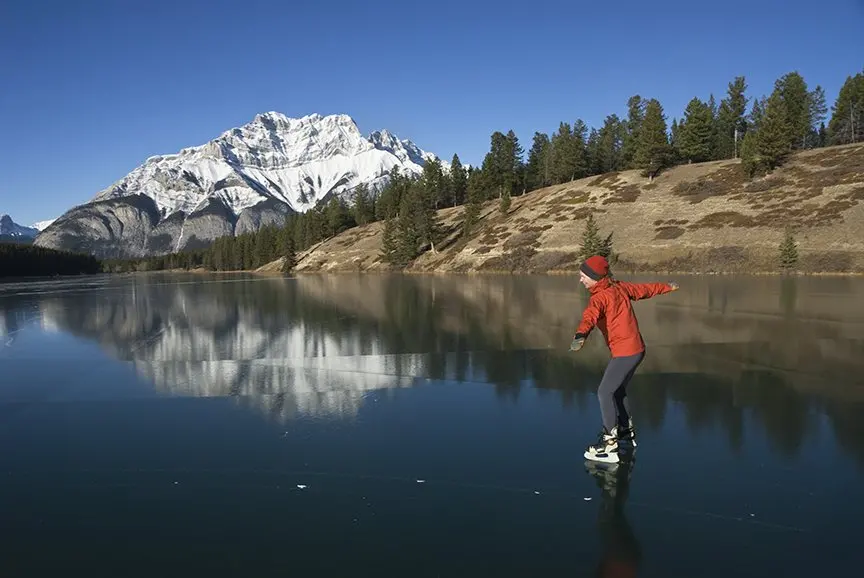
The pattern repeats elsewhere. In Colorado, a 31-year-old Denver man summited Humboldt Peak (4,288m) on a Sunday morning, then fell fatally; winter conditions dragged the search out over two days before National Guard crews found him. At Lake Louise in Banff National Park, three skaters fell through thin "wild ice" within two days — two climbed out, one died of hypothermia. Early-season lake ice is notoriously fickle: a hard freeze one day can turn treacherous within hours if temperatures climb above zero.
France had the heaviest toll. A 22-year-old solo hiker was found dead under snow after a 24-hour search near Chamonix, where avalanche danger in the Mont Blanc massif had hit 4 out of 5 above 2,200m following heavy snowfall. Separately, three parties needed helicopter or escort rescues — under-equipped trail runners on Mont Valier in the Pyrenees, two novices stranded in snow in the same range, and four young hikers caught out in Isère.
There were close calls further afield: a 56-year-old seriously injured slipping on snow between Corno Grande and Corno Piccolo in Italy's Apennines, airlifted out at night by an Italian Air Force helicopter, and a mountaineer in his 40s rescued after getting lost in snow in Japan's Ōmine Mountains southeast of Osaka.
For anyone planning a shoulder-season mountain trip, the lesson is straightforward. Carry traction devices like microspikes even when the trailhead looks dry, since north-facing slopes and shaded corners hold ice long before you expect it. Pack winter layers regardless of the forecast at lower elevations, check avalanche bulletins where they exist, never skate or walk on early-season lake ice, and avoid solo outings above the treeline in these conditions. The mountains don't announce the change of season — one clear, mild morning can end in winter without warning.
ExplorersWeb