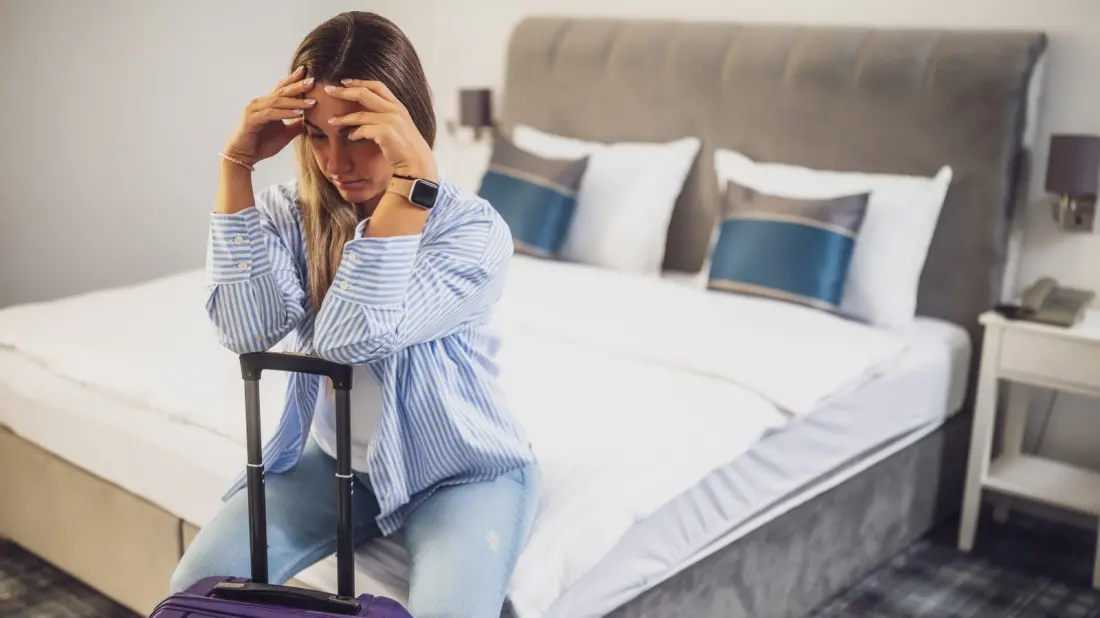
A TikTok creator's account of collapsing in a Cancun resort room has put an uncomfortable question in the spotlight: if you get carbon monoxide poisoning on holiday, can you actually hold the hotel accountable?
In November 2026, creator Jacki Bru described headaches, dizziness and fainting during a stay at a Cancun resort — symptoms that line up with CO exposure. She and her husband recovered once they left. Others haven't. In February 2025, three American travellers died in their room at a Belize resort, and a wrongful death lawsuit is still working its way through the system after investigators traced the leak to a faulty water heater.
Carbon monoxide is a nasty hazard because you can't see or smell it. It comes from burning fuels — gas water heaters, furnaces, portable generators — and builds up fast in poorly ventilated spaces. Early symptoms feel like flu: headache, nausea, dizziness. Left unchecked, exposure can cause brain damage or death, and people asleep in a contaminated room can be poisoned before they wake. That's what makes hotel rooms, holiday rentals and RVs the riskiest settings: you're sleeping somewhere with appliances you didn't choose and can't inspect.
The cheapest insurance is a portable carbon monoxide detector. Battery-powered models cost roughly $25–30 and slip easily into a suitcase, making them a smart pack for international trips where safety rules vary widely.
As for suing: it's possible, but not automatic. In the US, 15 states require hotels and other temporary lodging to install CO detectors. If a hotel in one of those states skips it and you're harmed, that's negligence per se — the law treats the statute violation itself as a breach of duty. Even where there's no such requirement, hotels carry premises liability, meaning they must inspect and maintain anything dangerous on the property. The catch: you still have to prove the hotel's failure actually caused your injury. And the hotel isn't always the liable party — a botched water heater installation could point blame at a contractor, or a defective unit at the manufacturer.
If you suspect CO exposure, act fast and document everything. Get a blood test for carboxyhemoglobin as soon as possible, since it provides hard evidence of exposure. Keep records of symptoms and medical treatment, photograph any suspicious gas appliances in your room if it's safe, and ask to see the hotel's maintenance logs when you report the problem.
For travellers, the takeaway is simple. The detector in your luggage does more than warn you of danger — it's the only protection that works at 2am in a strange room. The legal system can help after the fact, but by then the harm is already done.