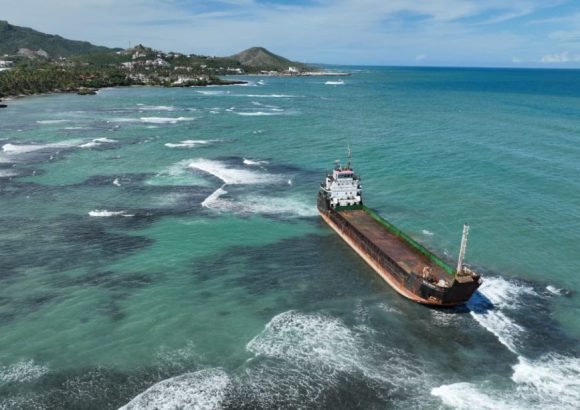
A Cuban-flagged vessel called the Nova Orion ran aground on a coral reef off Costámbar beach, near Puerto Plata on the Dominican Republic's north coast, and the Environment Ministry has moved in to assess the damage. The 74.6-metre ship lost power at sea after at least two water valves ruptured in its engine room, flooding electrical panels and leaving the crew drifting for several hours before it hit the reef at around 11:30 p.m.
The ministry's Vice Ministry of Coastal and Marine Resources sent a specialist team to the scene. Technicians boarded the vessel, interviewed the captain, documented the flooded engine room and took bilge water samples for analysis — a standard step when there's a risk of fuel or contaminants leaking onto a reef. They also got in the water, recording at least five coral species, two kinds of sea urchins and four types of algae in the affected area.
To map the damage precisely, the team used drone photogrammetry to fix the ship's exact position and establish the perimeter of the affected reef. Based on those preliminary findings, authorities have ordered the vessel refloated and removed before a fuller assessment. Once it's off the reef, specialised teams will keep documenting the impact and work out what restoration the ecosystem needs.
For travellers, the context matters. The reefs off Puerto Plata and Costámbar are part of what draws snorkellers and divers to the Dominican Republic's Atlantic coast, and grounding incidents like this can crush coral structures that took decades to grow. The good news here is the response: quick inspections, water sampling and a removal order suggest the authorities are treating reef protection as a priority rather than an afterthought.
There's no indication yet that beaches are closed or that water activities around Costámbar or central Puerto Plata have been affected, and the incident is confined to the area around the grounded ship. If you're planning dives or snorkelling trips in the region, it's worth confirming conditions with local operators, who tend to know exactly which sites are open. Ship groundings on Caribbean reefs aren't rare — what varies is how quickly they're cleaned up — and a transparent assessment process is usually a sign a destination takes its marine tourism seriously.
Why it matters: healthy reefs are the raw material of a beach holiday in the Dominican Republic, and incidents like this one show both the fragility of those ecosystems and the machinery that exists to defend them. For anyone heading to the north coast, the practical takeaway is simple — the story is an environmental management event, not a travel advisory.
Story via Dominican Today.