
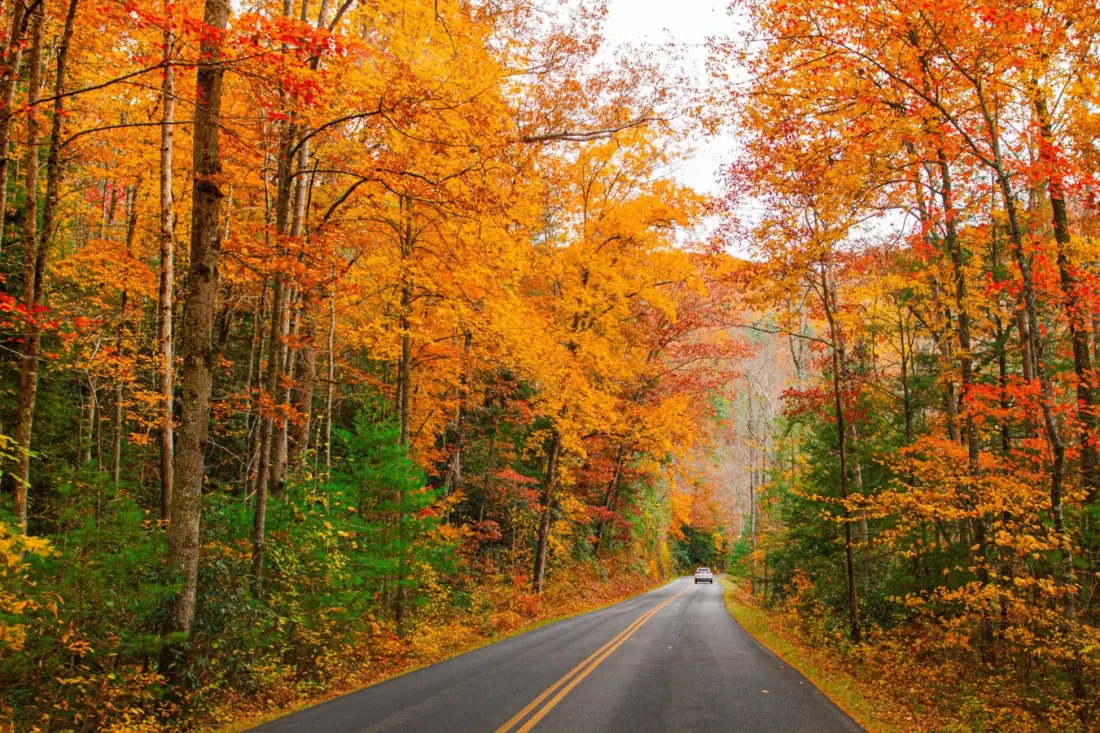
Fall foliage doesn't happen all at once across America's national parks — it rolls down the map. It can start in Alaska's tundra as early as August, sweep through the Rockies and Pacific Northwest in September, and still be going strong along the Colorado River and in Yosemite Valley in November. The trick to catching it: match your park to your dates.
Elevation is as important as latitude. In mountainous parks, color starts high in alpine zones and works its way downhill, so the same park can offer multiple chances at peak color. Weather throws curveballs too — drought, heat, frost, wind and storms can all shift or shorten the season, so check current conditions before you go.
Here's how the timing breaks down across twelve popular parks. Denali leads off in mid-August to early September, when crimson and orange shrubs spread across the tundra, though snow can arrive by mid-September. Rocky Mountain's golden aspens peak mid-September to early October beneath red and purple alpine tundra. Grand Teton and Yellowstone are close enough to combine in one trip, both peaking mid-September to early October — look for yellow cottonwoods and willows around Yellowstone Lake and Lamar Valley, keeping in mind that much of Yellowstone sits above 6,000 feet and frost can end the show abruptly.
In Washington, Mount Rainier's subalpine meadows at Paradise, Sunrise and Tipsoo Lake light up with huckleberry, vine maple and mountain ash from late September to mid-October — and seasonal roads start closing soon after. Olympic stretches later, from red berry shrubs in the high country through late-October amber bigleaf maples in the rainforest lowlands.
Back east, Acadia peaks early to mid-October on Mount Desert Island with a tight window of red maples, yellow birches and coppery oaks. Shenandoah's mostly deciduous forest — about 95% of the park — delivers color along more than 100 miles of ridgelines, best in the second and third weeks of October. Cuyahoga Valley in Ohio is more predictable thanks to modest elevation change, peaking mid-to-late October. The Great Smoky Mountains offer one of the country's longest foliage seasons, roughly early October to early November, because the park spans nearly 6,000 feet of elevation, with color cascading downhill for weeks.
Yosemite effectively has several foliage seasons at once: Tuolumne Meadows aspens turn late September through mid-October, Glacier Point and Tioga roads peak in early to mid-October, and Yosemite Valley itself doesn't hit its stride until late October or early November, sometimes holding into mid-November. Grand Canyon bookends the season — golden aspens and Gambel oaks near the rims in October, then vivid Fremont cottonwoods along the Colorado River at Phantom Ranch and Havasupai Gardens from late October into November. Note that the canyon color requires a strenuous hike or overnight trip; you won't see it from most rim overlooks.
The practical takeaway for travellers: if you can only travel in September, aim north and high — Denali, the Tetons, Rocky Mountain. October travellers have the widest choice, from Acadia to the Smokies to the canyon rims. And if you're chasing late-season color, Yosemite Valley or a Grand Canyon descent in early November can still deliver. Before committing to dates, check each park's current conditions and local foliage reports, since a single early frost or windstorm can strip a hillside overnight.