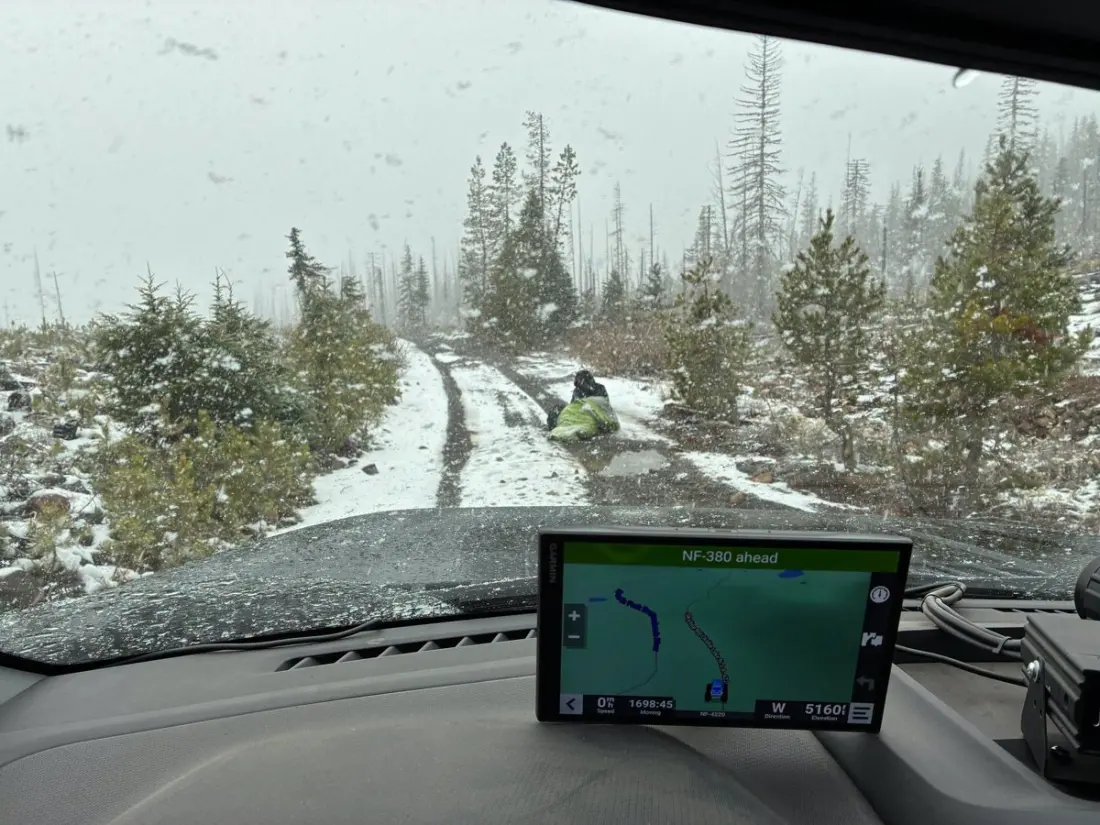
Most rescue stories start with a distress call. This one started with an odd set of footprints. On October 30, an Oregon forest patrol deputy spotted tracks on the Pacific Crest Trail near Breitenbush Lake: one print from a boot, the other apparently barefoot, pressed into snow. Sensing someone was in trouble, Deputy Ramseyer followed the trail on foot for nearly five miles.
At the end of it, on Forest Service Road 4220 — roughly PCT northbound mile 2042.5 — deputies found a hiker wrapped in a sleeping bag. The man, who had been reported missing four days earlier, was hypothermic and suffering from frostbite. He was taken to Detroit, Oregon, for treatment. The Marion County Sheriff's Office, which shared the story on Facebook, credited the deputy's vigilance with likely saving his life.
The Sheriff's Office hasn't said how the hiker ended up with one bare foot or why he was still on the trail so late in the season. What they did stress is the lesson for everyone else heading into the backcountry: carry an emergency communicator like a Garmin inReach or similar satellite device, and remember that mountain weather can flip from fine to dangerous in hours, especially at higher elevations. Late October in the Oregon Cascades is well past prime hiking season, and snow can settle in fast.
The PCT near Breitenbush Lake sits at elevation in the Mount Jefferson area, a stretch that's gorgeous in summer but unforgiving once winter arrives. Long-distance hikers push hard to finish their thru-hikes before the snow gates close, and stories like this one show how thin the margin gets. Search teams can't help you if nobody knows where you are — telling someone off-trail your planned route and dates is as basic and as important as any gear you carry.
Even if you're not attempting a thru-hike, the advice translates to any autumn or winter trip into the hills: pack for conditions that haven't happened yet, carry the ten essentials, and bring a way to call for help that works without cell coverage. The basics are boring right up until they're the difference between a cold night and a hospital visit — or worse.