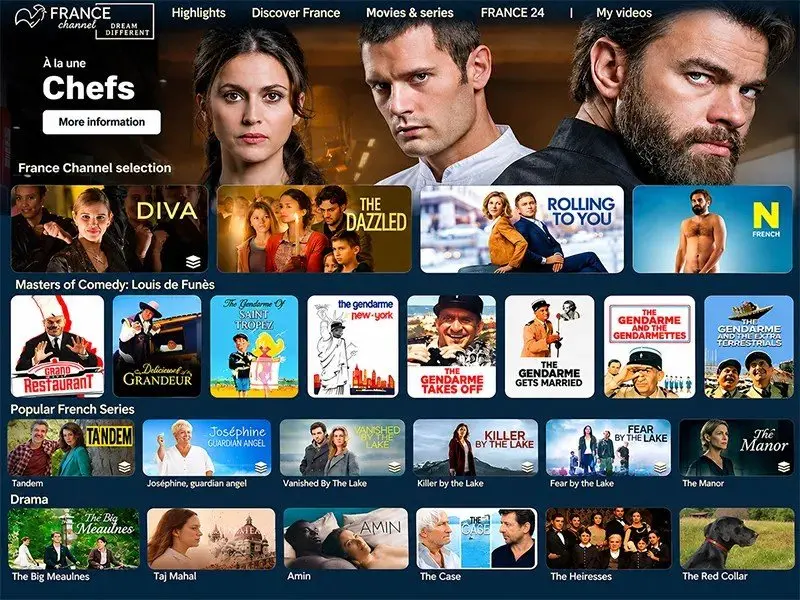
Textbook French and street French are two different languages, as anyone who has ordered confidently in a classroom and then frozen when a Parisian replied at full speed knows. Words get shortened, slang creeps in, and vowels merge together in ways lessons never quite prepare you for. The fix, argues a new feature from France-focused experts at France Channel, might be as pleasant as it gets: watch French cinema and television, regularly and with the right subtitles.
The idea is simple. Films give you real conversation speed plus context — facial expressions, gestures, situations — so you can follow meaning even when individual words slip past. Repeated exposure to everyday phrases like ça marche (that works), c'est pas grave (no big deal) and j'en ai marre (I've had enough) eventually wires them in, the kind of expressions that rarely make it onto a syllabus. Subtitles are a tool, not a crutch: beginners can start with English subs to follow the story, then switch to French subtitles once they have some footing, so the ear and the eye meet in the middle.
The pick of the classics: Marcel Pagnol's La Gloire de mon Père and Le Château de ma Mère, two warm, funny films about a boyhood in sun-soaked Provence where the talk is all family, school and holidays — easy to follow visually. Le Goût des Autres, a wry drama about a businessman drawn into an actress's world of theatre and art, is praised for dialogue full of opinions, flirting and disagreement — social French at its most useful. Comedy fans get three options: Le Mystère Henri Pick, a witty literary mystery about a manuscript found in a library of rejected books whose supposed author was a Breton pizza maker; Papa ou Maman, in which a divorcing couple compete to avoid custody of their children (fast dialogue — keep the English subs early on); and Tout le monde Debout, where a womaniser fakes a wheelchair to impress a woman, then meets her sister, a violinist who actually uses one.
For something heavier, Au revoir là-haut is a darkly comic, visually striking drama about two soldiers rebuilding their lives in the aftermath of the First World War — strong enough visually that you can follow it even when the period register of French gets tricky. Le Roman de Jim, a quieter story about love and what makes a family, is recommended for hearing how French speakers actually talk about feelings and relationships.
Series have an edge over films for learners, the piece notes: over multiple episodes you get familiar with voices, accents and pet expressions, so comprehension builds week by week. The practical route in is France Channel, a streaming service dedicated to French film and TV with a free trial, then £69.99 a year in the UK or $8.99/$79.99 in the US, with a 30% discount code (30GLFUK) currently offered. It streams on the web, Apple and Android TV, mobile apps, Amazon Prime Video Channels and, in the US, Roku, Xumo and Xfinity.
The payoff goes beyond vocabulary. Dinner-table dynamics, greetings, teasing between friends, the landscapes of Provence, Brittany and the Jura — it's a crash course in the country itself, which is exactly what you want before a trip there.