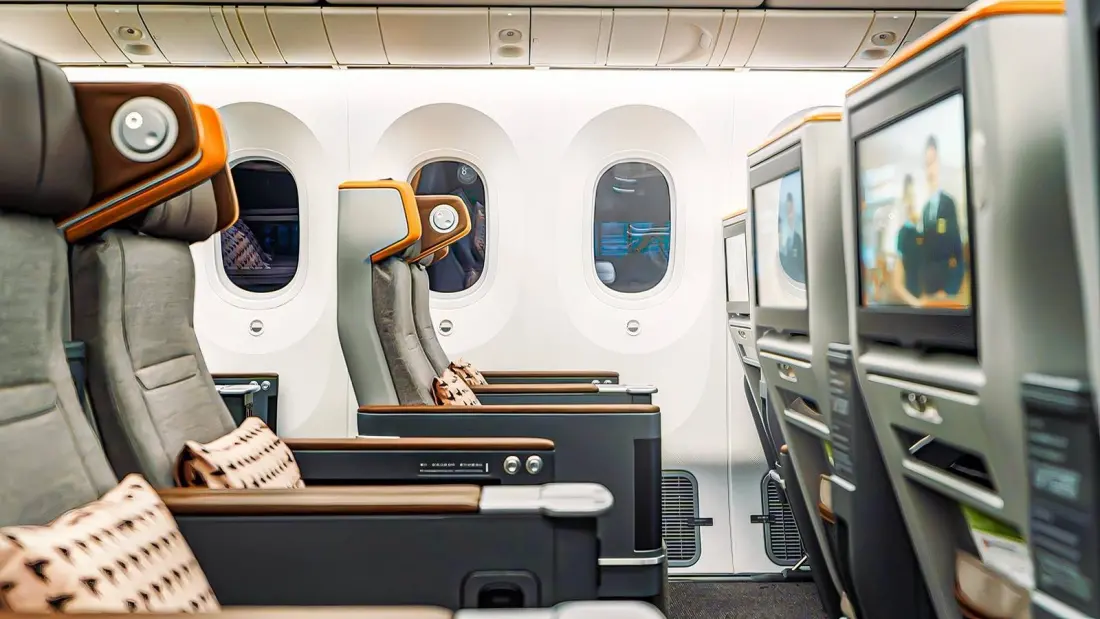
The gap between premium economy and business class looks small on a spec sheet — a couple of inches of width, a bit more recline. The gap that actually matters only shows up at 3am over the Atlantic, when one passenger is horizontal on a proper bed and the other is angled awkwardly in a padded chair.
United's Boeing 787-9 makes the contrast easy to see. In one configuration the airline flies, there are 48 Polaris business seats and 21 Premium Plus seats. Polaris converts into roughly 78 inches of flat sleeping surface, about 20.5 inches wide, arranged 1-2-1 so everyone has direct aisle access. Premium Plus gives you 38 inches of pitch, a seat around 19 inches wide, six inches of recline — and a 2-3-2 layout, meaning window and middle-seat passengers may need to climb over a seatmate to stretch their legs.
Price is where it gets murkier. Business fares aren't a fixed multiple of premium economy; they swing wildly with route, dates and demand, so the only honest comparison is the real fare difference for your exact itinerary, booked at the same time. And don't assume every business ticket bundles the perks: lounge access, baggage allowance, seat selection and flexibility all depend on the fare rules. United has just introduced tiered Base, Standard and Flexible fare options for Polaris and Premium Plus, rolling out through the year — a clear sign that 'business class' no longer means one product.
The timing of your flight should drive the decision more than the cabin name. Overnight US-to-Europe routes are the classic case for business: you land in the morning with meetings or sightseeing ahead, and horizontal sleep is the only real cure. On a daytime flight where you plan to watch films or work, premium economy delivers most of the comfort at a fraction of the cost. Special occasions and company-paid tickets shift the maths again.
Before booking, check three things separately: the aircraft type (layouts vary even within the same model), the seat map (a privacy door exists on some seats, not all), and the fare conditions attached to the price. The upgrade worth paying for is the one you'll actually use.