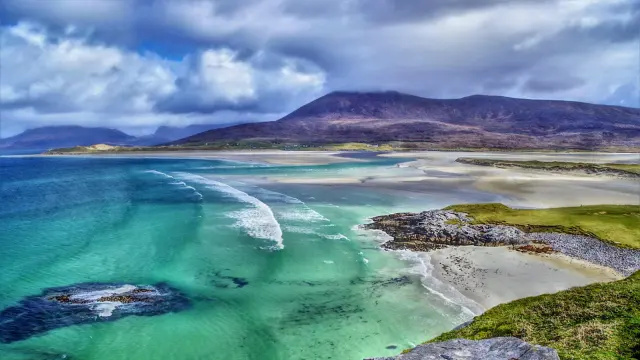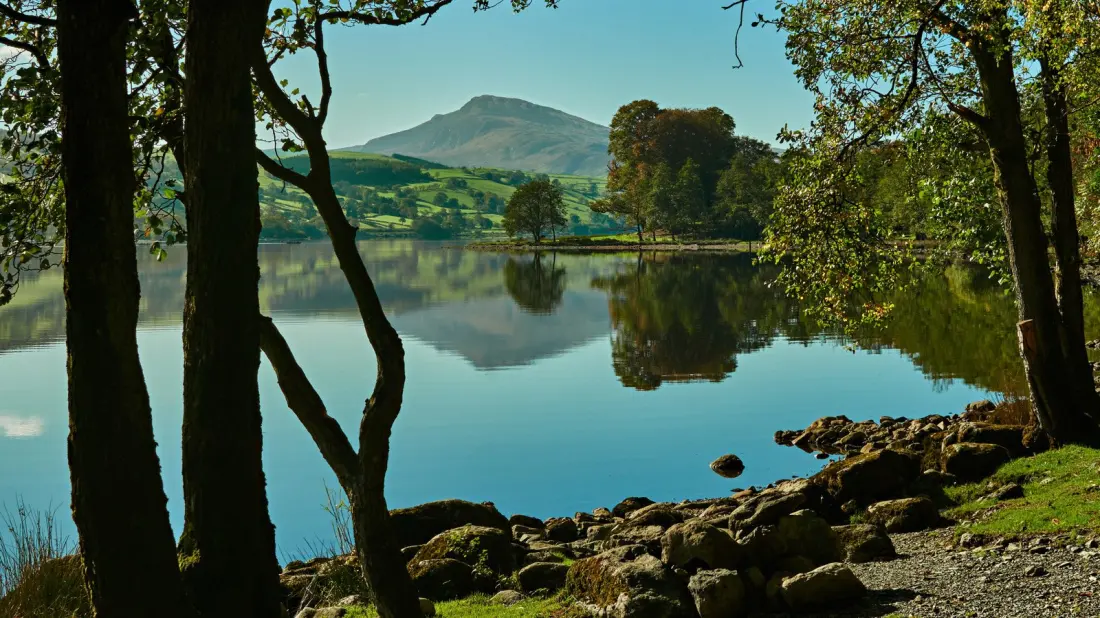
Wales is drowning in fresh water — around 500 lakes and reservoirs, plus thousands of miles of rivers. The biggest natural one of the lot is Llyn Tegid, better known in English as Bala Lake, a long ribbon of deep blue water sitting in the mountains at the heart of the country. It runs roughly 3.5 miles end to end and stretches nearly 3,000 feet across at its wide northern end, which is enough to earn it the title of Wales' largest natural lake.
The setting does a lot of the selling. The lake sits just inside Eryri (Snowdonia) National Park, Wales' largest, with some of the country's highest peaks to the west and the moorland tops of the 2,000-foot Berwyn range to the east. On clear days from the higher summits you can even spot Yr Wyddfa (Snowdon), the roof of Wales.
Anglers have plenty of reasons to come. The lake holds a genuinely rare fish — the gwyniad, a whitefish found naturally here and almost nowhere else — alongside perch, pike and trout, some of them sizeable. Shore fishing spots are dotted along the banks, with the best access off the A494 as it skirts the northwestern shore. If you'd rather be on the water, Bala Watersports, just behind the main car park near town, hires out everything from single kayaks to bass boats. Two paperwork items are non-negotiable: a Wales-wide rod fishing licence and a local Llyn Tegid permit, which you can buy from the parking meters at the big northern-shore car park. Extra permits may apply if you bring a boat.
Non-anglers are well served too. Arenig Fawr, one of the taller mountains near the lake, can be walked to the summit via a farm track that crosses a ridge before steepening towards the top, rewarding you with panoramic views deep into the park. For something gentler, two lakeside routes split the shoreline: Llyn Tegid South, just under 7.5 miles through hillside farmland, and Llyn Tegid North, about 6.2 miles over ridges past old cottages and streams.
Getting there takes a bit of planning. Bala, the small town at the lake's edge, has no train station, though the T3 bus links it to Wrexham and Chester — the latter often called one of the UK's most beautiful towns and worth a detour in itself. Driving from Cardiff, home to Wales' only international airport, takes around four hours; flying into Liverpool John Lennon Airport in England cuts that to under two.
It's a spot for travellers who like their holidays quiet and outdoorsy: fishers chasing an unusual catch, hikers after big mountain views without the crowds of Snowdon's summit trails, or anyone keen on kayaking cold, clear water beneath serious peaks. Pack for rain — Wales can top 127 inches a year — and you'll be rewarded with one of the country's most atmospheric corners.