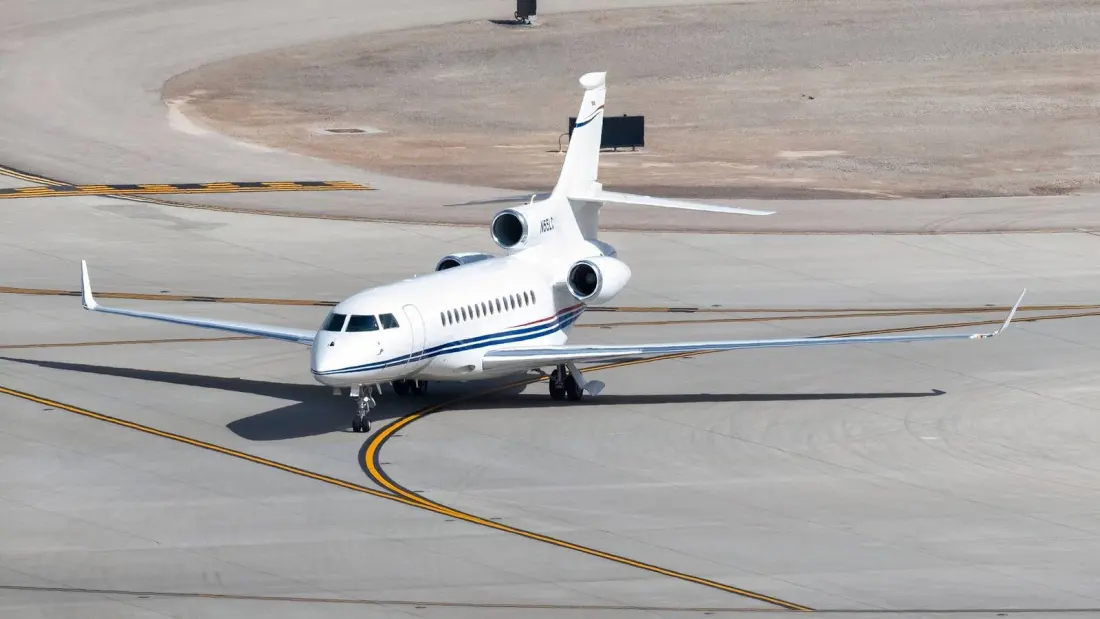
A Sunday morning takeoff that never happened brought part of Las Vegas Harry Reid International Airport (LAS) to a standstill. Around 11 a.m., a Dassault Falcon 50 business jet registered N200SG aborted its departure from runway 1L, skidded off the paved surface and made contact with the airport's perimeter fence. Authorities confirmed no known injuries, but the disruption rippled across one of America's busiest travel hubs.
Airport officials closed runways 1R and 1L for inspection and warned travellers to expect delays. Flight-tracking services showed traffic-management restrictions imposed on inbound flights, with a string of delays visible on departure boards through the afternoon. Crews had to secure the scene and assess both the aircraft and the airport infrastructure before normal operations could restart.
The jet had arrived in Las Vegas from Seattle-Tacoma International earlier that day and was reportedly scheduled to continue on to Toronto Pearson. Aviation community posts described it accelerating down the runway, then decelerating and leaving the pavement — but why the crew rejected the takeoff remains unconfirmed. It could have been a warning, a mechanical fault or an obstruction; at high speed, stopping a jet demands serious runway length, and margins depend on weight, braking and surface conditions. The Federal Aviation Administration will piece together the sequence.
The aircraft itself, a three-engine Dassault Falcon 50, is a French-built long-range business jet that's been out of production for years but remains in service with private and commercial operators worldwide.
Why should holidaymakers care? Because a single small aircraft leaving the runway can snarl a major commercial airport. Las Vegas handles scheduled passenger flights, cargo, charters and private aviation side by side, and closing two of its runways — even briefly — means cascading delays for everyone from slot-machine-bound weekenders to convention crowds. If you're flying into or out of LAS, it's worth keeping an eye on your airline's notifications after any incident there, and building a little slack into tight connections or show bookings. The good news: in this case nobody was hurt, and the airport moved quickly to inspect and reopen.