Most people planning a trip to the Lofoten Islands open a booking site and search for hotels. That's the wrong first move, argues Norway writer Brian Johnston on Life in Norway — because in this part of the Arctic, where you sleep matters far less than where that place sits on the map.
Lofoten looks compact, but it isn't. The E10 road runs roughly 163km from Fiskebøl to Å, and the two headline towns — Svolvær in the east and Reine in the west — are around two hours' drive apart even with no stops. Add spontaneous viewpoint pull-ins, summer traffic and the occasional roadwork, and a badly placed base can swallow your holiday in the car. So the advice is simple: decide what you're coming for first, then book.
The second big tip is to look past hotels altogether. Self-catering cabins and apartments give you a kitchen for early pre-hike breakfasts and late dinners after chasing the midnight sun or northern lights, and they save money in a region where restaurants are thin on the ground in small villages. The stars of the show are the rorbuer — the red fishermen's cabins built for the historic winter cod fishery, now restored as holiday lets. Many offer far more space than a hotel room, often with a living room and kitchen. One caveat: some are genuinely historic, others are modern apartments in traditional-looking shells, so check the details if authenticity matters to you.
So where to base yourself? Svolvær suits first-timers and anyone without a car: it's the largest town, has the widest choice of tours, shops and restaurants, and its own airport. Henningsvær, spread across small islands beneath sharp peaks, is the atmosphere pick — galleries, cafes and 26 kitchen-equipped cabins at Henningsvær Rorbuer — though its spot off the E10 adds a drive to every day trip.
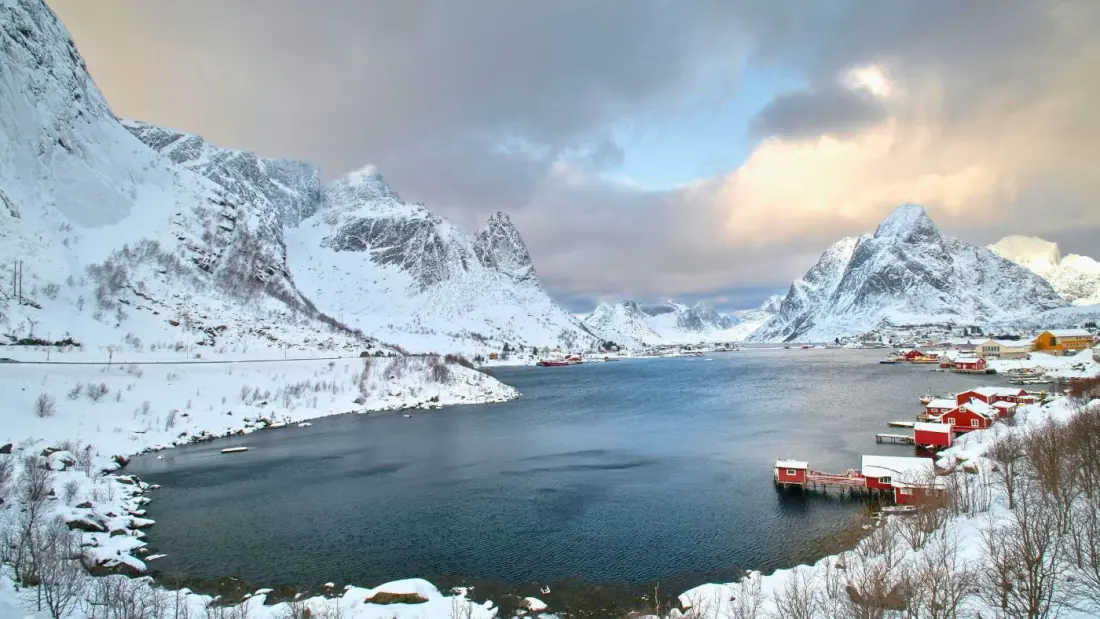
Leknes and nearby Ballstad make the most practical central base for drivers, putting beaches and hiking within easy reach in both directions; Ballstad adds the waterfront fishing-village looks that Leknes itself lacks. For the postcard scenery, look west to Reine, Hamnøy and Sakrisøy, where red cabins sit beside still water and steep mountains — wake up inside the photo rather than driving to it. Eliassen Rorbuer on Hamnøy is among the archipelago's best-known stays. At the very end of the road, Sørvågen and Å suit hikers, photographers and anyone arriving on the Bodø–Moskenes ferry; The Tide there mixes a modern hotel with rorbuer and apartments. Remote options like preserved Nusfjord, the beaches around Ramberg and Flakstad, and quiet Gimsøy reward those with their own wheels.
One last decision: one base or two? For two or three nights, stick to one. For four to six, splitting your stay between eastern and western Lofoten can dramatically cut driving time.
For travellers weighing up a summer road trip or a winter lights chase, this is the kind of planning homework that turns a good Lofoten trip into a great one.
Life in Norway