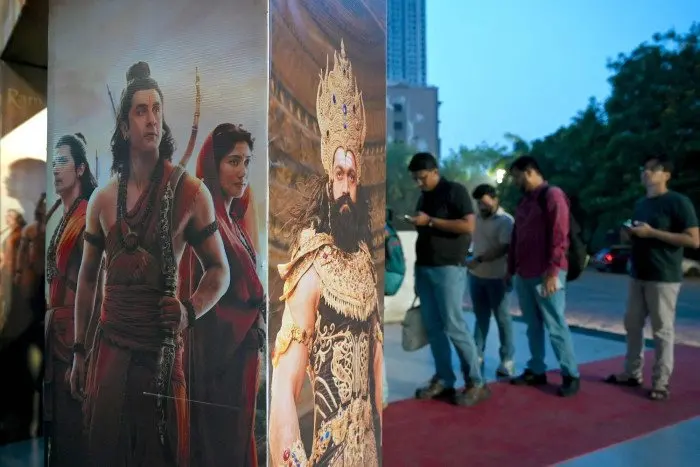
A decade in the making and backed by a reported $420 million budget, Ramayana: Rise of a Legend has arrived in cinemas worldwide, and its creators are calling it the most ambitious film India has ever produced — and its first truly global release.
The two-part spectacle retells the ancient Sanskrit epic at the heart of Hindu culture: the virtuous prince Rama, played by Bollywood star Ranbir Kapoor, fights to rescue his wife Sita from the demon king Ravana, portrayed by Kannada-language cinema favourite Yash. South Indian star Sai Pallavi plays a notably fearless, fighting Sita. Expect flying elephants, enormous demons and heavy computer-generated effects — but skip the usual Bollywood song-and-dance numbers.
What makes this production unusual is the collision of Indian and Hollywood talent. Producer Namit Malhotra, whose UK-based effects house DNEG has won eight Academy Awards for work on Inception and Dune, has branded the film India's answer to Star Wars or Lord of the Rings. The score comes from two Oscar winners, Hans Zimmer and AR Rahman, and the crew worked across studios in Mumbai, London and Vancouver. Shot in Hindi with a separately crafted English-language version, it runs nearly three hours and is distributed internationally by Sony Pictures.
The cast and crew felt the weight of the material. Many Indians hold a deeply personal connection to the Ramayana's characters, and the filmmakers were careful to keep the telling, in Malhotra's words, authentically Indian while scaling it for audiences who have never encountered the story.
Why should travellers care? Because Indian cinema has been quietly going global — roughly 2,000 films a year, plus streaming deals with Netflix and Prime Video — and a release of this size tends to pull attention toward the places that made it. Mumbai, where the massive central sets were built, is already the natural pilgrimage for film fans: Film City studio tours, the Art Deco cinema district around Regal and Eros, and the seaside promenades of Bandra where Bollywood's biggest names live. If the film performs the way its backers hope, expect India's mythology-infused destinations — from Rameswaram's Ramanathaswamy Temple, tied to Rama's legend, to the Ramayana trails of Sri Lanka and Nepal — to see a fresh wave of interest too.
It's also a rare chance to catch a major release in both its original Hindi form and an English version, which could make Indian cinema more approachable for travellers who want to understand the country's pop-culture obsession before they land.
Whether Ramayana becomes India's breakout Oscar moment remains to be seen — the country's industry has never won in the top categories. But as a piece of cultural storytelling with global production values, it's already a milestone, and a good excuse to put India's film cities on your itinerary.
Via Bangkok Post Life.