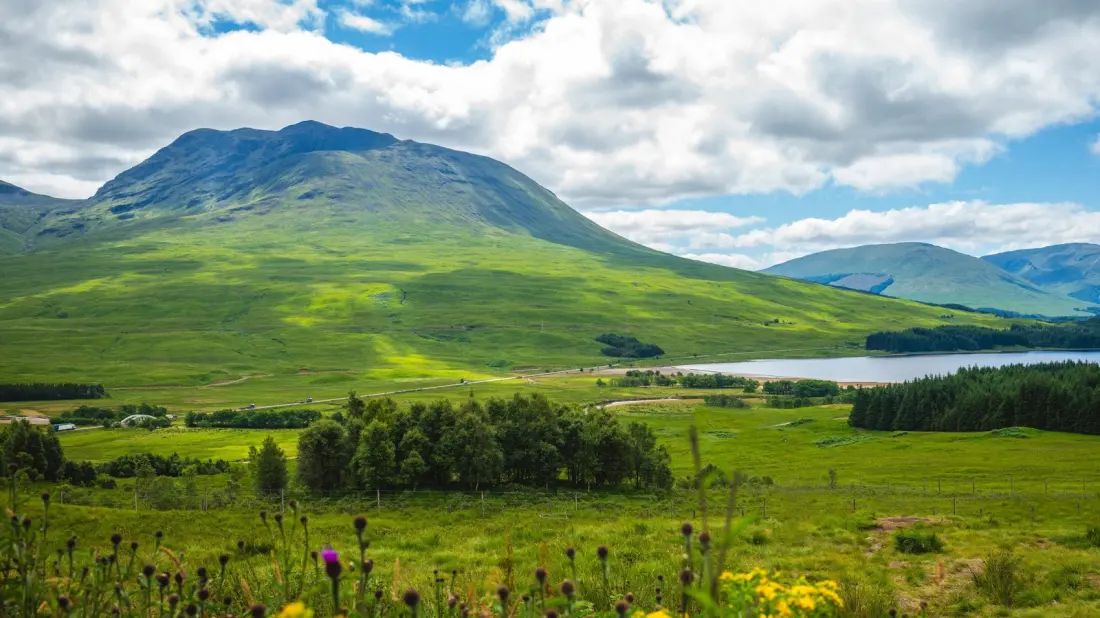
An hour north of Edinburgh, the landscape starts to buckle. Lomond Hills Regional Park covers roughly 25 square miles of Fife countryside where the Scottish lowlands give way to highland-style terrain, with 15 named peaks and a scattering of Iron Age forts, Bronze Age cairns and odd geological spires. The highest point, West Lomond, tops out at 1,713 feet — the tallest summit in all of Fife.
The hills themselves are part of the appeal. Limestone sits under the green slopes, but veins of igneous dolerite and basanite push through, creating the strange rock shapes that give parts of the park an almost sci-fi look. Local legend leans into it: a 33-foot rock pillar on Bishop Hill called Carlin Maggie is said to be a witch turned to stone by the Devil, with the nearby outcrops known as Devil's Burdens supposedly the boulders he dropped in anger.
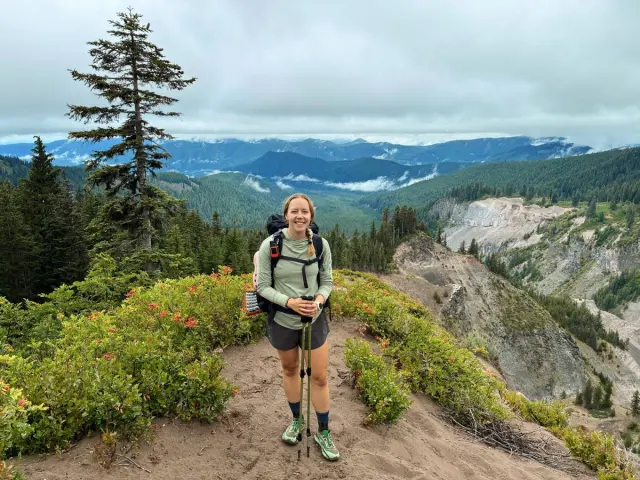
Hiking is the main draw, and there's a route for most fitness levels. The 4.5-mile East Lomond and Falkland Circular mixes forest, open moor and a hilltop site tied to the Venicones, a Celtic tribe of the 1st century, before delivering a view over the pretty village of Falkland. For something gentler, the 4-mile John Knox's Pulpit walk follows a small sandstone gorge with a stream and waterfall; one hidden cove along the way once served as a secret place of worship for a 16th-century denomination that opposed Stuart rule. Serious hikers should aim for the 4.6-mile West Lomond trail, which climbs through heather moor and past stone cairns and grazing sheep to the regional high point. Multiple trailheads and parking areas serve the hill, and routes vary in difficulty.
Beyond the summits, the park hides built landmarks too. East Lomond was first settled around 700 B.C. and now carries Bronze Age cairns. On Black Hill, the lighthouse-shaped Tyndall Bruce Monument, erected in 1855 for local landowner Onesiphorus Tyndall Bruce, is visible from miles around, and the nearby Greek-style Temple of Decision adds a dash of classical folly to the moorland.
Getting there is straightforward. The park sits about an hour's drive north of Edinburgh Airport and roughly 40 minutes south of Dundee by car, with farmland, cliffs and the odd stone ruin lining the route. Without a car, buses and taxis run to Kinross, where local transport continues into the park.
For travellers who've already ticked off Edinburgh and the Highlands, this is a quiet, under-visited middle ground — big-sky walking, deep history and barely a queue in sight. Bring proper footwear: trails here turn muddy in wet weather and icy in winter, so spring through early autumn is the safest bet for solid underfoot conditions.