
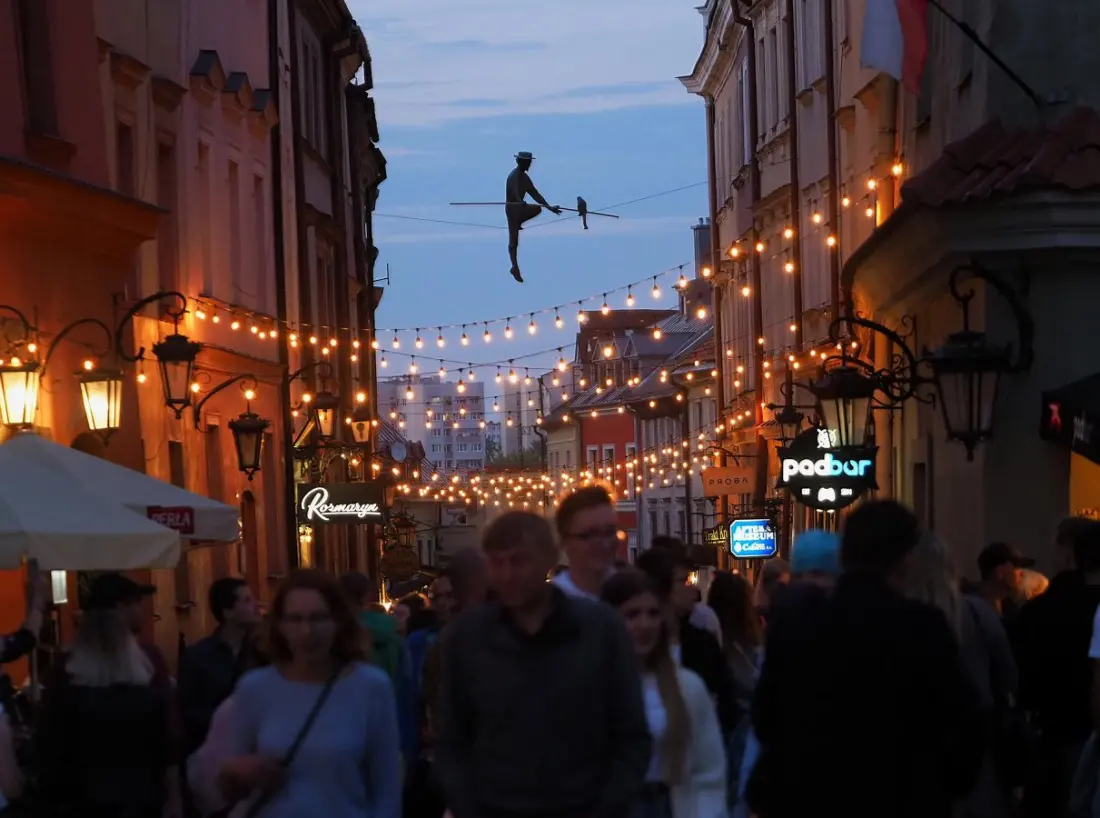
While Kraków and Prague groan under tour groups, southeastern Poland's biggest city is quietly getting on with things. Lublin has one of Europe's finest Old Towns, a castle, a heavyweight food scene and a festival calendar that puts most capital cities to shame — and you'll share it mostly with locals and around 60,000 students from its nine universities. Little wonder it's been named one of Europe's two Capitals of Culture for 2029.
The historic core is compact and walkable. Lublin Castle dates to the 1200s, its round tower offering wide views and its chapel covered floor-to-ceiling in Byzantine-influenced frescoes. A raised walkway leads to the Old Town, whose cobbles and pastel Renaissance houses survived the Second World War remarkably intact — keep an eye out for the small goat statues referencing the city coat of arms. Below ground, the Underground Trail threads through 16th-century merchant cellars.
The city's Jewish history runs deep — Lublin was once called the 'Yiddish Oxford' for its scholars. The Grodzka Gate exhibition recalls that pre-war community, and on the city's edge, the Majdanek memorial museum, free to enter, preserves the site of a Nazi extermination camp. It's a sobering but essential visit.
For lighter fare, the Open-Air Village Museum reassembles original 18th-century rural buildings in a river valley — windmills, thatched cottages and all — while the leafy Lipowa cemetery and the Saxon Garden (peacocks included) offer calm in the centre. Come evening, the student energy takes over: Litewski Square fills up at sunset before its fountains stage sound-and-light shows, the Perła brewery complex hosts beer flights and free courtyard film screenings, and cocktail bar Nocny Portier delivers drinks via toy railway in its basement speakeasy.
Time your trip around a festival if you can. The European Festival of Taste fills Rynek Square each September; June's Night of Culture keeps galleries and theatres open into the small hours; July brings Carnaval Sztukmistrzów, with acrobats and one of the world's biggest highlining events; and August sees the Lubliner Festival of Jewish culture and the crafts-focused Jagiellonian Fair.
Eat well and cheaply throughout. Try the local cream cheese pierogi, a bowl of sour rye żurek staropolski, and cebularz — an onion-and-poppy-seed flatbread with Jewish roots, best from the Old Town bakery Piekarnia Kuźmiuk. There's even a museum where you can make your own. Mandragora restaurant on Rynek Square does the full traditional Jewish dining experience, and pączki doughnuts are everywhere. Prices across the board are gentle on the wallet.
Getting there is easy: Wizz Air and Ryanair fly direct from London Luton, daily from April to October and several times weekly in winter, with trains into the centre from about £1.50. If you've been putting off central Europe because of the crowds, Lublin is the answer you didn't know you were looking for.