Nearly 40% of Poland's land is protected — well above the EU average — yet the country rarely gets mentioned alongside the likes of Finland or Spain when European wildlife is discussed. That looks like an oversight. The continent's three big carnivores (brown bear, grey wolf, Eurasian lynx) all live here, alongside the world's largest wild population of European bison and more than 470 recorded bird species.
The protection network is enormous: around 10,000 protected sites, including 23 national parks, 11 UNESCO Biosphere Reserves and 19 Ramsar wetlands. Some are famous — Białowieża Forest is the largest remaining primeval lowland forest in Europe, and its park dates to 1932. Nearly 900 bison now roam the Polish side, descendants of animals reintroduced in the 1950s after the species was hunted to extinction in the wild. Wolves, lynx, elk, beavers and eight of Europe's ten woodpecker species share the woods. Note that the pristine Orłówka old-growth district can only be visited with an authorised guide.
Biebrzański National Park protects one of Europe's largest wetland reserves — nearly 592 sq km of peat bog and marsh holding Poland's biggest elk population (700-plus) and over 280 bird species, including white-tailed eagles and the aquatic warbler, the continent's rarest migratory songbird. The Carska Droga road, nicknamed the Moose Highway, works well for self-guided dawn and dusk drives, while boat trips on the Biebrza River are a good bet for beavers.
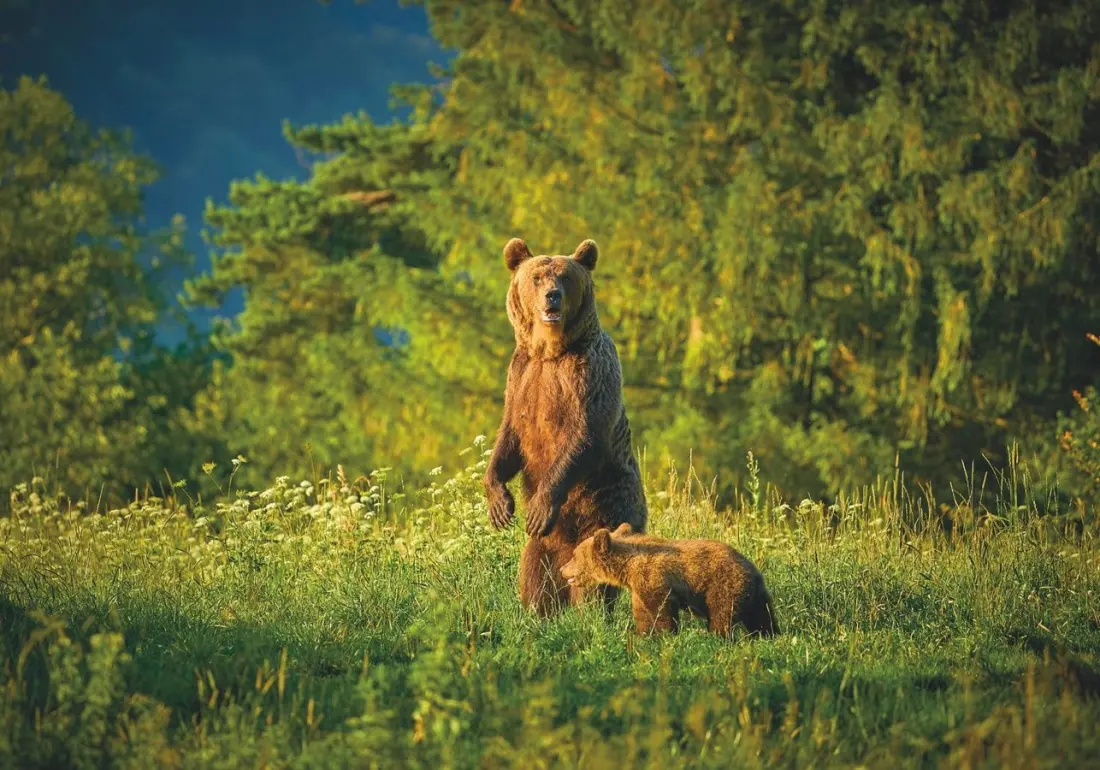
In the far south-east, the Bieszczady Mountains — rugged Carpathian beech forest dotted with abandoned villages — host Poland's largest populations of brown bear and lynx. Sightings are never guaranteed; local guides such as Wild Poland substantially improve your odds. Elsewhere, the Tatras deliver chamois and golden eagles amid serious hiking terrain, Roztocze's forests shelter the rare spotted souslik and semi-feral konik horses, and tiny Ojców National Park packs in around 700 caves holding 19 bat species.
You don't even need to leave Warsaw for wildlife: Syrian woodpeckers turn up in city parks, and the Raszyńskie Ponds reserve with its waterfowl sits just 15km from downtown.
The Oder Delta, on the German border, is one of Europe's great rewilding stories. Volunteers have restored parts of the canalised River Ina to its floodplain, creating fish spawning grounds — and the delta now has Europe's highest breeding density of white-tailed eagles. It hasn't been all smooth sailing: a golden algae pollution incident in 2022 hit Baltic sturgeon recovery, and plans for a 24th national park in the Lower Odra Valley were vetoed by Poland's president in late 2025.
Why go? Poland pairs genuinely big-name wildlife with prices and crowd levels that western Europe can't match. Narew National Park, the so-called Polish Amazonia, sees fewer than 25,000 visitors a year. April and May suit birders best, late August to early October brings the deer, elk and bison rut, and January–February is prime time for bison sightings and wolf tracking in snow. Direct flights from the UK start around £36 return, or take the train: Eurostar to Brussels, European Sleeper to Berlin, then onward to Warsaw in about 16 hours from London.