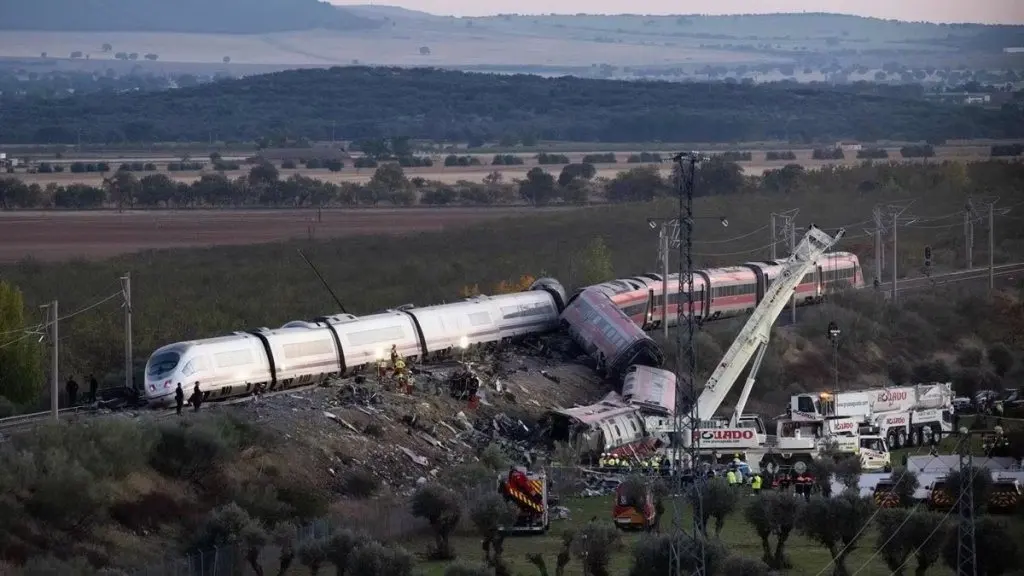
Travellers hoping to ride Spain's flagship Madrid–Seville high-speed line still don't know when it will fully reopen. A judge in Toledo has now allowed rail infrastructure manager Adif to start rebuilding the damaged stretch near Urda, at kilometre 118 of the route — the site of the 28 October collision in which a Renfe AVE train ran into a stationary Iryo service, killing 69 people. But as of the ruling, no start date for the work or reopening date for services had been confirmed.
The court's approval comes with strings attached. At prosecutors' request, Adif must first produce a complete inventory of everything damaged in the crash, then file a detailed list of every component it repairs or replaces, pinpointing exactly where each fix was made. Both records go into the court file so investigators can compare the original damage against the work done. The site had been sealed off while Guardia Civil forensic teams examined the wreckage, and the criminal proceedings remain under judicial seal.
This is the second fatal crash on the Madrid–Seville line in under a year. In January, 46 people died in a collision at Adamuz, in Córdoba province — a case where the investigating judge ordered track sections returned after Adif removed them without authorisation.
The politics around the repair timeline haven't gone smoothly either. Then transport minister Óscar Puente told Congress on 3 November that the work would take no more than ten calendar days once authorised; the court granted permission 16 days later, and Puente has since resigned.
When trains do return, expect a reduced timetable. The Transport Ministry wants fewer services running at greater spacing initially, and Adif is negotiating schedules with Renfe, Iryo and Ouigo — asking operators to couple two trainsets together where possible so passengers don't lose seats. Investigators, meanwhile, are focused on a failure of the line's LZB train protection system and on why the Atocha control centre authorised the AVE to proceed at normal speed while the Iryo ahead was stopped.
The longer-term fix is a switch to ERTMS Level 2, the European-standard signalling system, planned for early 2027. Equipment was installed in July and is being tested during overnight weekend slots. Until then, the ministry has pledged a full operational review of the line, upgraded traffic control technology, a second check on driver instructions when LZB is down, and better conditions for controllers and drivers.
If you're planning a Madrid–Seville trip in the coming months, build in flexibility: reduced frequencies and longer gaps between departures are likely until the ERTMS switch. Check Renfe's site before booking, and consider the alternative of flying between the two cities or routing via Córdoba by conventional services if timings don't work. Capacity constraints could also push up fares on remaining departures, so booking ahead matters more than usual.
Story reported by Spain in English.