A pre-dawn earthquake shook a broad swath of Colombia on Tuesday, November 3, waking residents in the capital and several major cities. The tremor hit at 4:13 a.m. local time, and while Bogotá escaped without reported damage, the epicenter region in Tolima department saw injuries, building collapses and power cuts.
The Colombian Geological Survey (SGC) initially logged the quake at magnitude 5.3 before revising it to 5.6. Its epicenter lay near the municipality of Chaparral, about 22 kilometres from the town itself, and crucially it was shallow — less than 30 kilometres deep — which amplifies shaking at ground level. People felt it across central and western Colombia, including Bogotá, Cali, Armenia, Manizales, Pereira and Ibagué. In Bogotá, building alarms triggered evacuations, though Mayor Carlos Fernando Galán confirmed after inspections that the capital recorded no damage or injuries.
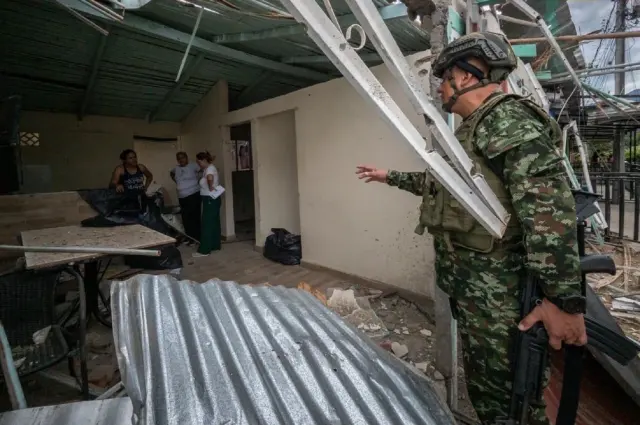
Closer to the epicenter, the picture was worse. Tolima's governor and local officials reported a woman injured by a collapsing wall in Chaparral, a destroyed home in the Las Hermosas district, and power outages in Roncesvalles, Rioblanco and rural parts of Planadas. Schools in the department moved online while inspections continued. Five aftershocks, ranging from magnitude 2.1 to 3.5, followed within about an hour.
Tuesday's event wasn't a one-off. The SGC recorded more than 1,100 quakes above magnitude 2.0 in southern Tolima between September 20 and 30, and activity persisted through October — including a magnitude 4.0 tremor on October 30 felt in 44 municipalities across 12 departments. The region sits where the Nazca, South American and Caribbean tectonic plates converge, making Colombia one of the more seismically active countries in South America. The scare also stirred memories of the August 10 earthquake — a magnitude 7.4 centered in Chocó department that killed 335 people and hurt thousands more, hitting Cali and Pereira especially hard.
For travellers, the practical takeaway is straightforward: Colombia's main tourist circuits remain open and operating, but it pays to know what to do if the ground moves. Familiarise yourself with your hotel's evacuation routes, keep shoes and essentials by your bed, and follow the SGC's official channels for verified updates rather than social media rumour. If you're heading into rural Tolima or the coffee region in the coming weeks, expect possible local disruptions such as road checks or temporary power issues, and allow buffer time in your itinerary. The SGC's Sismo Sentido tool lets visitors and locals report felt tremors, which helps the agency track activity.