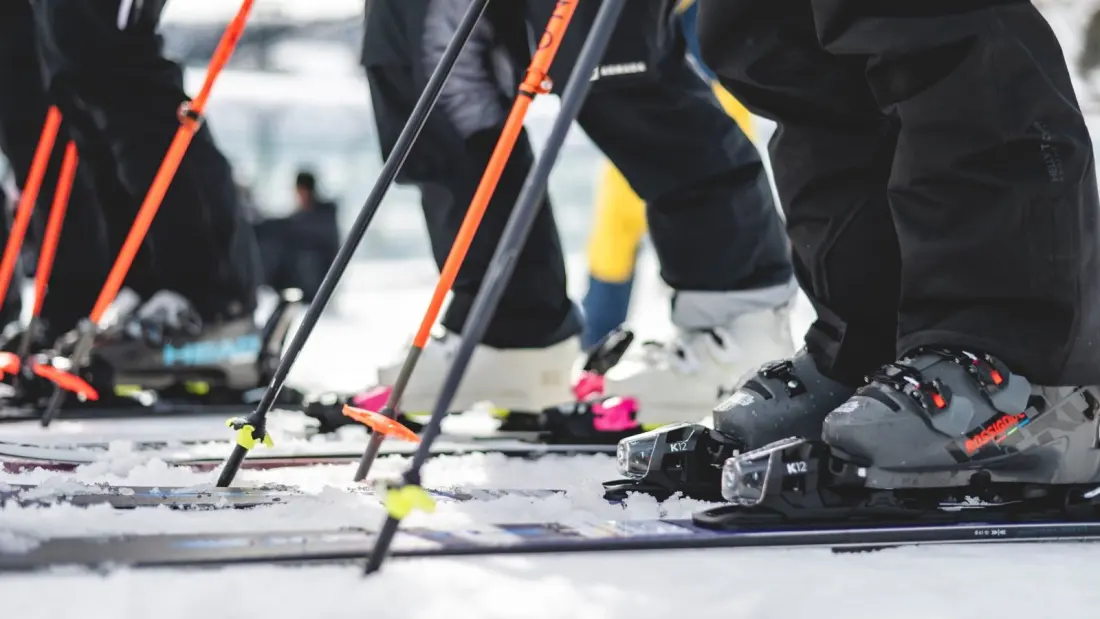
Ski boot shopping is misery if your forefoot is wide, your instep is high, or your calves run thick. The default advice — size up — leaves you with a floppy, unresponsive boot that skis like a moon boot. Outside Online's latest gear test takes a better angle: seven current boots with roomier lasts (100 to 103.5 millimeters) that still hold an edge.
The picks span resort and backcountry. Standouts include the Fischer Premio BOA, the roomiest of the bunch with an unusually square, angled toebox that lets toes spread, and the Rossignol Hi-Speed HV BOA at 102mm — one tester called it the best 102mm boot ever made, with a lower-shell BOA dial for fine-tuning and a 120 flex that skied like stiffer boots. The Salomon S/Pro Delta BOA (also 102mm) proved surprisingly powerful for a comfort-oriented wide-fit model, while the Nordica Speedmachine 3 BOA DD squeezes real high-volume comfort into a 100mm medium last, though testers joked the "DD" stood for "difficult donning."
For tourers, the Dynafit Radical Pro is the wide-feet wildcard: a 103.5mm last, a 60-degree walk mode with barely any friction, and a progressive flex that took the sting out of wet snow during a three-day Sierra traverse. Its Vibram sole grips well on rocky scrambles, but genuinely narrow feet will find it cavernous.
A few practical notes from the testing worth knowing before you buy. Boot width is expressed as the "last" — the internal forefoot width in millimeters — and it's a rough proxy for overall volume: low-volume runs 96-98mm, medium 99-101mm, high-volume 102mm and up. Wide forefoot plus high instep usually means high-volume; but some wide-footed skiers genuinely fit better in medium boots, so try several widths. BOA dials now dominate this category because they make on-the-fly adjustment far easier than buckles alone, especially across the instep.
Also worth knowing how these picks were vetted: professional bootfitter Mark Elling, who runs a bootfitting lab in Bend, Oregon, coordinates an annual test where ten expert skiers put 50 boots through three runs each over two weeks. Every result here comes from that process, in both men's and women's fits and multiple flexes.
The honest caveat, which the testers repeat themselves: fit is stubbornly individual. A boot that's heaven on one foot punishes another. Use this list to shortlist, then get to a shop with a proper bootfitter — a stretch, grind, or heat-mold tweak can turn a nearly-right boot into the right one, often for less than the cost of a bad buy.
For anyone planning a ski trip this winter with feet that have never forgiven rental boots, this is the groundwork worth doing first.