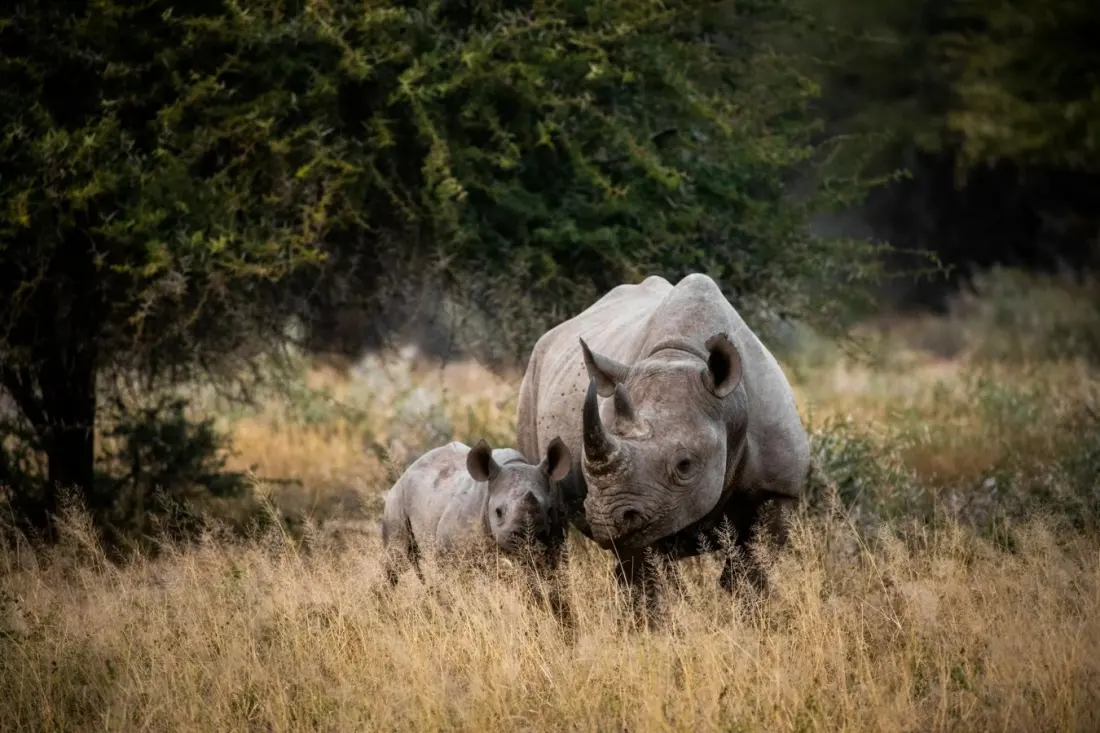
A quiet municipal game reserve near Komani in the Eastern Cape has become the latest scene of South Africa's rhino crisis. Poachers shot dead a mother rhino and her calf at Lawrence de Lange Game Reserve and hacked off their horns — the reserve's first poaching incident since 2018.
The case moved quickly. Reserve staff discovered the two dead animals in the morning, and by mid-afternoon a joint operation involving police, Crime Intelligence and private security had tracked a suspected getaway vehicle to a petrol station on Cathcart Road. Two Mozambican nationals, aged 35 and 36, were arrested there; a third suspect fled and remains at large. Officers recovered four rhino horns, a silenced .375 rifle, live ammunition, three cellphones and a Volkswagen Polo with Cape Town plates believed used in the attack. The pair face charges including illegal hunting of protected species and possession of an unlicensed firearm, though their first court appearance in Komani was postponed due to administrative issues.
There was a partial reprieve: a tenth rhino initially unaccounted for after the attack was later found alive with a gunshot wound. The Enoch Mgijima Local Municipality, which helped beef up security at the reserve after the 2018 incident, condemned the killing as senseless, noting it robs the community of natural heritage and undercuts tourism as a driver of jobs and local development.
The wider picture is mixed. On World Rhino Day, the Department of Forestry, Fisheries and the Environment reported that South Africa's rhino population has grown 4.9% since 2024 — but poaching keeps pace. Some 230 rhinos were killed nationwide between January and late August 2026, down slightly from 248 over the same stretch the year before, with Kruger National Park accounting for 114 of the losses. A 10-year Biodiversity Management Plan, plus a planned National Rhino Conservation Co-ordination Committee, aims to grow black and white rhino numbers through better biological management and population expansion projects.
For travellers, the story is a reminder of what's actually at stake on safari. Small municipal reserves like Lawrence de Lange rarely make headlines, yet they hold genetically important rhino populations and depend heavily on visitor revenue and community goodwill. Choosing reserves and operators that invest in anti-poaching security — and reporting anything suspicious during a visit — is one practical way tourists can support the effort.