Penang's George Town has long drawn travellers for its street food and shophouse streetscapes, but a fresh wave of hotel openings is making the Unesco-listed city a genuine luxury destination. The formula: restore significant historic buildings, then layer on contemporary design and service. Three new properties show how it's done.
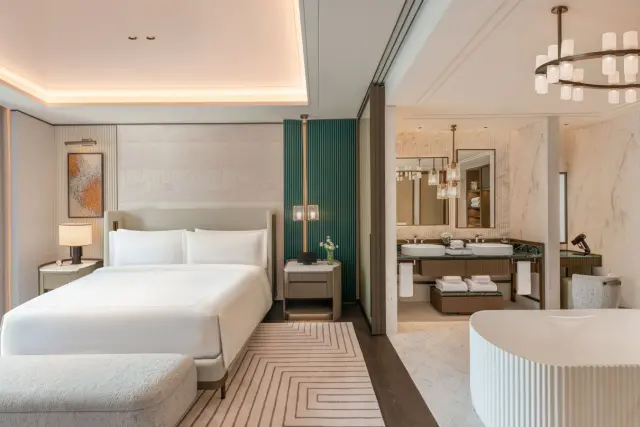
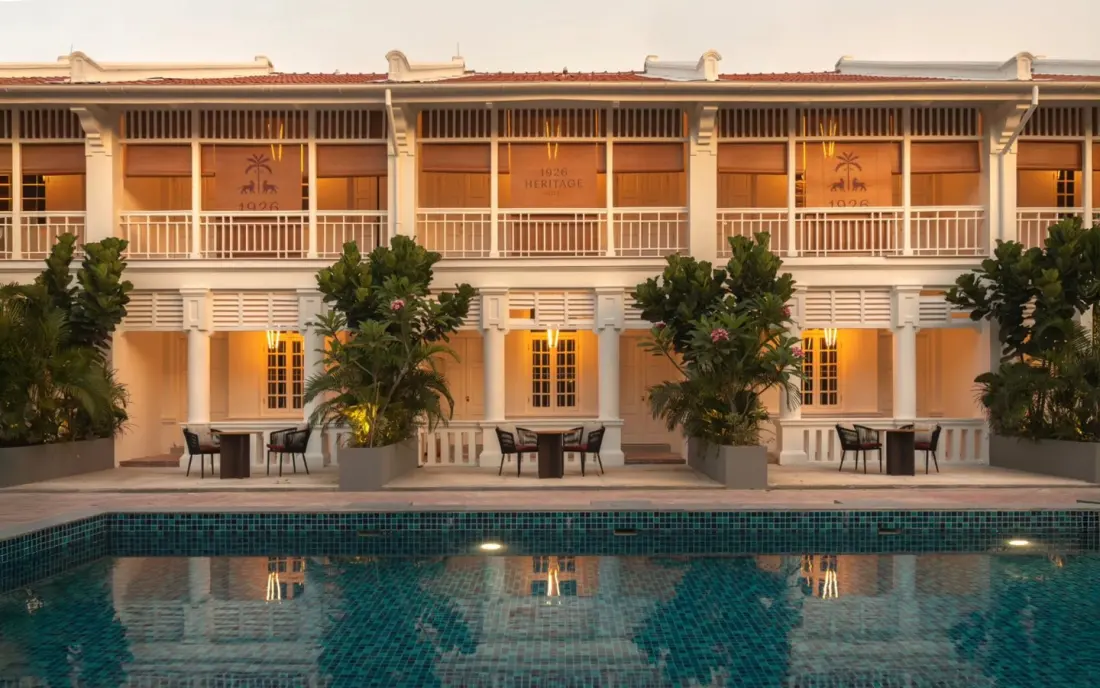
First, the 1926 Heritage Hotel Penang relaunched in April after a major refurbishment with The Unlimited Collection by Ascott. The building began life in the 1920s as quarters for British colonial immigration officers — a cluster of 24 two-storey houses on Jalan Burma, once the island's administrative hub. Design studio Office Of_ kept the original wooden spiral staircase, timber doors, verandahs and mature trees, and turned the compound into a 78-room boutique hotel. Its corridors now carry vibrant impressionist paintings by Penang-born artist Koay Shao Peng, and the in-house restaurant, Root House by Gen, serves refined takes on Penang Chinese classics from celebrity chef Johnson Wong — think wok-fried lotus root with black garlic. A new Centennial Local Discover Series adds a chauffeur-driven spin through George Town's civic and waterfront districts in a vintage Jaguar Mark II, with optional Peranakan kebaya dress-up.
Across the street from the famous Blue Mansion, the team behind that indigo landmark has converted a row of five 1904 shophouses — formerly the tycoon Cheong Fatt Tze's servants' quarters — into Cheong Fatt Tze – The Qing Suites. Just 13 suites (44 to 67 sqm), Art Deco-inflected interiors, a striking cobalt façade and an open-air courtyard with a marble-topped bar. Breakfast runs to ginseng chicken congee and coconut pancakes with kaya; there's a Chinese-tea-paired afternoon tea; and the standout extra is a wellness programme run by TCM-trained practitioners from Virtue TCM, offering pulse diagnosis, massages, gua sha, cupping and acupuncture.
The most ambitious of the trio may be Soori Penang, from Singaporean architect-turned-hotelier Soo K Chan, whose own clan ties drew him to the Khoo Kongsi compound. Fifteen restored shophouses that once housed members of the Khoo family now hold understated one-bedroom suites with Byredo amenities, stone lion motifs and a trickling courtyard fountain. The property is evolving: each shophouse is being converted into a two-storey, three-bedroom residence for families and groups, a public café is planned, and muralist Ernest Zacharevic is collaborating on a bespoke guest art experience. Hotel manager Azman also leads a walking tour of the clan houses, unpacking the Khoo family's history and its reach across Southeast Asia.
Why it matters: these aren't generic five-star boxes. Each hotel is tied to a real slice of Penang's story — colonial administration, a Chinese tycoon's household, a clan compound — so a stay doubles as a guided dive into George Town's heritage. They suit design-conscious travellers who want atmosphere and provenance over resorts, and they pair naturally with the city's famous hawker food. Singapore Airlines flies to Penang for those combining the trip with a wider Malaysia or Southeast Asia itinerary.