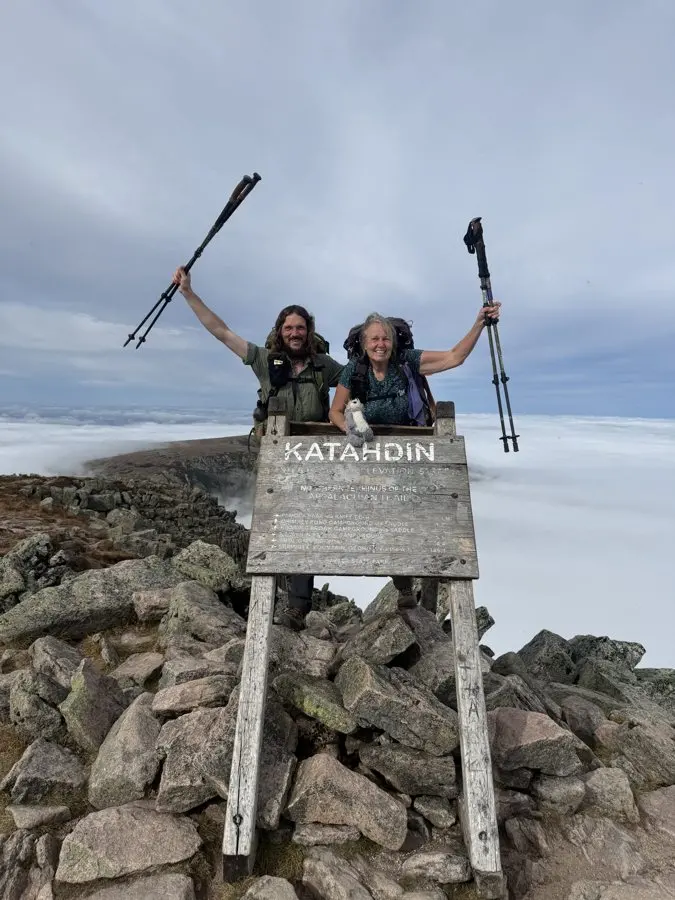
Every autumn, a small crowd of battered, elated hikers limps off the Appalachian Trail having done something most of us will never attempt: walking roughly 2,200 miles from Springer Mountain in Georgia to Mount Katahdin in Maine. The latest round of finishers, celebrating their 2026 completions, is a good reminder of what the trail actually demands — and why it keeps drawing thousands of hopefuls every year.
The odds are humbling. Fewer than half of the people who start a full thru-hike ever finish it. The route crosses 14 states, and while the scenery ranges from wide-open mountain views to thick forest, the physical and mental grind is the real story. Finishing typically takes five to seven months of daily walking, sleeping in shelters or tents, and navigating blisters, storms, injuries and motivation dips.
This group of finishers proves how unpredictable the trail can be. One hiker, going by Catapult, fell coming down Mount Madison in New Hampshire in August and assumed the hike was finished. After bailing to Gorham and taking 32 zero days — trail-speak for days without hiking — they recovered enough to salvage the trip through a flip-flop, restarting from a midpoint rather than quitting altogether. That kind of improvisation is common among finishers; a rigid plan rarely survives contact with the White Mountains.
Others in the cohort — trail names like Bushwhack, Spreadsheet, Chef, Rooster, WARHammer, Smurfette, The Dude, Red, Acorn and Gone — finished between mid-July and early October, reflecting the usual window for northbound hikers who start in spring and race the clock before Katahdin's seasonal closures. WARHammer's whole summary: "Great times — Great people — Great memories." You don't get 2,200 miles of company without the trail community becoming half the experience.
Why should a traveller care? Even if you never attempt a full thru-hike, the AT is one of the most accessible long-distance trail networks in the world. Day hikes and section hikes are doable from dozens of towns along the corridor — hotspots include Georgia's Springer Mountain approaches, Virginia's Shenandoah National Park, and New Hampshire's dramatic Presidential Range, where Catapult took their tumble. Trail towns like Hot Springs, Harpers Ferry and Gorham have built whole visitor economies around hikers, with hostels, outfitters and famously generous locals.
If a full thru-hike is on your someday list, the advice from every finisher cohort is the same: train your legs, budget for five to seven months, and be ready to adapt — the trail rewards flexibility over speed. And if you just want a taste, a long weekend on any section puts you on the same footpath as the people who just walked all of it.