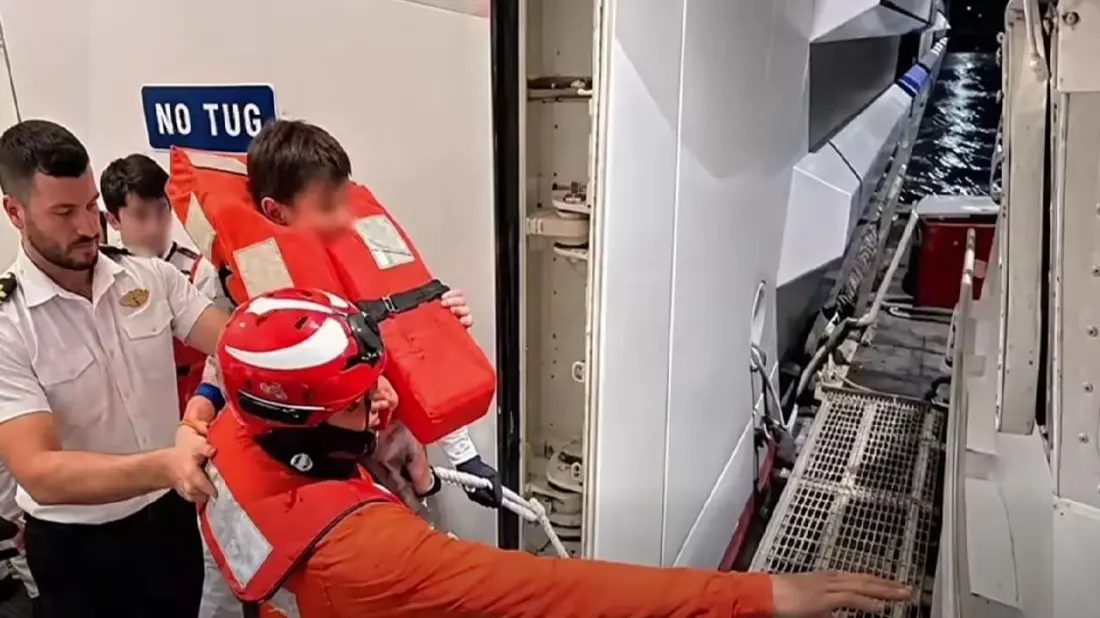
Two passengers aboard a cruise ship off Mexico's Riviera Maya got a rapid night-time rescue this week, after the Mexican Navy stepped in to ferry them ashore for hospital treatment.
According to the Secretariat of the Navy, the ship put out an emergency call requesting help evacuating a six-year-old child and a 23-year-old woman, both suffering from intestinal obstruction. Naval personnel from the Search, Rescue and Maritime Surveillance Station (ENSAR) in Isla Mujeres were ordered to respond immediately.
They deployed two vessels — an MLB-type boat and a Defender-class boat — to intercept the ship offshore. Once alongside, crews transferred the two patients onto the naval boats and ran them across to the mainland, docking at the Advanced Naval Station in Puerto Juárez on Wednesday night. Private ambulance paramedics were waiting at the dock and drove both patients to a hospital in Cancún for specialised care. No update on their condition has been released.
For anyone cruising the western Caribbean, the episode is a useful reminder of how these evacuations actually work. When a ship is close enough to port, Medevac by small boat is often faster than a helicopter rendezvous, and in this stretch of coast the Isla Mujeres ENSAR station is the unit that answers the call, shuttling patients to Puerto Juárez — the mainland pier just across from the island, roughly a twenty-minute crossing from Cancún.
It's also worth knowing that ships' medical teams handle a lot on board, but bowel obstructions are the kind of condition that genuinely needs a hospital, so captains won't hesitate to request naval assistance when the situation calls for it. The Mexican Navy runs these search-and-rescue operations free of charge as part of its maritime safety remit, and cruise lines coordinate directly with the stations rather than relying on local emergency services alone.
Nothing here should put you off a Caribbean cruise — medical evacuations like this are rare and generally end well thanks to fast coordination between ships and naval stations. But it's a good prompt to sort the basics before you sail: check your travel insurance covers medical treatment and evacuation abroad, note any pre-existing conditions when you book, and carry details of your policy with you. If you're travelling with young children, a basic medical kit for stomach complaints is a sensible addition to the packing list.
The area where this happened is one of Mexico's busiest cruising corridors, with ships calling at Costa Maya, Cozumel and Playa del Carmen week after week, so rescue infrastructure around Isla Mujeres and Cancún sees regular drills and real call-outs alike. That's reassuring, not alarming.