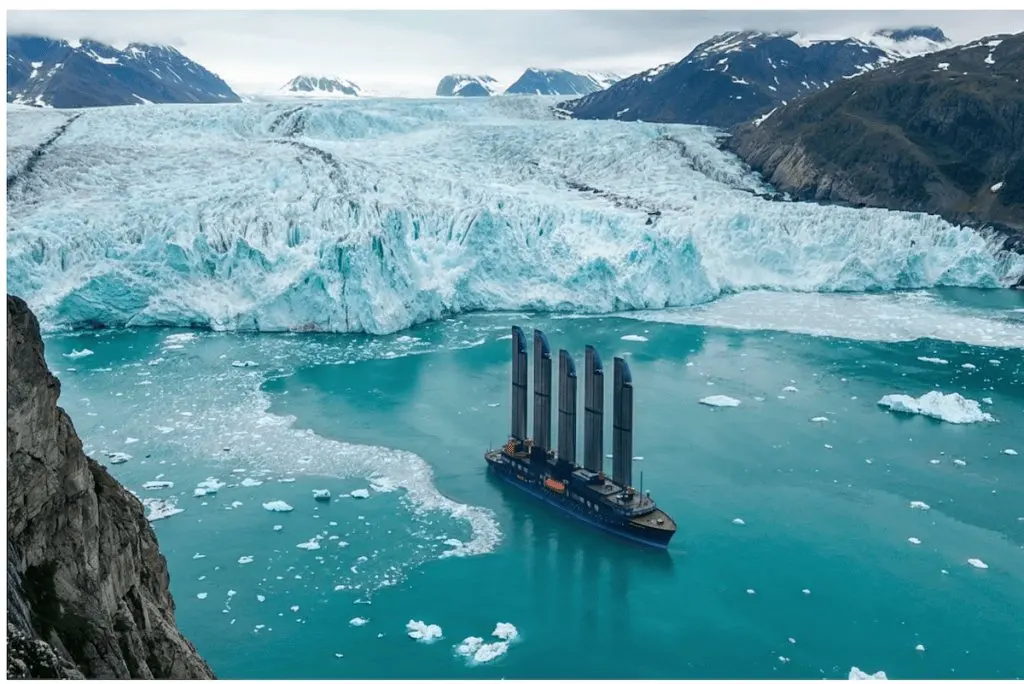
A new expedition ship with retractable, solar-covered sails is set to sail Arctic waters from early 2027, and its creators think cruise tourism there needs a rethink from the ground up.
Selar is the company behind Captain Arctic, a vessel purpose-built for just 36 passengers and a crew of 24. That tiny capacity is a deliberate choice, not a limitation. CEO and co-founder Sophie Galvagnon, a French-Swedish captain, argues that genuine cultural exchange is impossible when hundreds of visitors arrive in a small Arctic community at once. In her view, big ships turn the encounter into crowd logistics: herding masses of people through a place before they have any chance to actually understand it. "You cannot have real exchange and real contact if you suddenly come with a crowd," she says.
The ship's design backs up the philosophy. The retractable solar-covered sails are the most striking feature — part propulsion, part statement — and they signal how seriously the company takes its environmental footprint in one of the world's most fragile regions. But Selar's real differentiator is the pairing of that green tech with the deliberately small scale: fewer people means less impact on shore landings, slower and deeper engagement with the places visited, and a trip that feels closer to an expedition than a floating resort.
First expeditions are scheduled for early 2027, so the ship is still ahead of its sailing debut. Details on itineraries and fares are yet to be widely published, but the concept is aimed squarely at travellers who want the Arctic without the mega-ship dynamic — think expedition-style landings, meaningful contact with local communities, and a vessel that leaves little trace behind.
For anyone weighing up an Arctic trip, this matters because the region's cruise industry has been under growing scrutiny over emissions, overtourism in small communities like those in Greenland and Svalbard, and wildlife disturbance. Smaller, low-impact ships like Captain Arctic represent one answer, and they typically offer access to spots big vessels simply can't reach — narrow fjords, small harbours, landing sites without queues.
The trade-offs worth knowing: expedition ships at this scale come with a luxury price tag and fewer onboard amenities than a conventional cruise liner, and sail-assisted travel is about the journey being slower and quieter rather than faster. If your priority is entertainment decks and buffet lines, this isn't it. If you want the Arctic to feel like an actual expedition — led by a captain who has spent her career in polar waters — early 2027 is when you can find out.
Story via Skift.