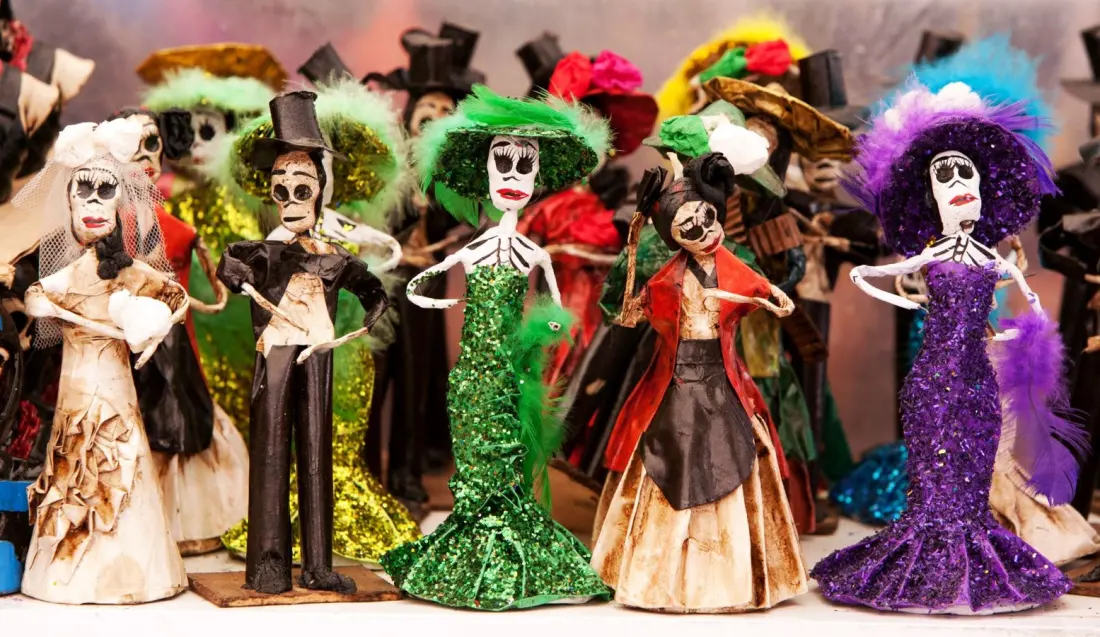
Mexico City's Zocalo now hosts the tallest Catrina ever built — a 33.411-metre skeletal figure, roughly the height of an 11-storey building, certified by Guinness World Records as the centrepiece of the capital's 2026 Dia de Muertos Monumental Altar.
The sculpture was unveiled on 29 October at Plaza de la Constitucion, in front of the Metropolitan Cathedral, and comfortably beat the previous mark of 28.15 metres, set by Puerto Vallarta in November 2023. Built by the workshop Taller de Arte Xibalba with around 140 artists and technicians, the figure wears a purple dress stretching more than 27 metres. A Guinness representative verified the height on site, and Mexico City Mayor Clara Brugada accepted the certificate.
The Catrina doesn't stand alone. The surrounding altar is dressed with roughly 70,000 marigolds — the flower Mexicans believe guides the souls of the dead back to their families' altars — plus axolotls, alebrijes and other folk-art figures, all lit for evening viewing.
The figure itself has a story worth knowing before you go. Printmaker Jose Guadalupe Posada sketched the original skeleton, La Calavera Garbancera, in the early 20th century as satire aimed at people who pretended to be richer or higher-born than they were. Diego Rivera later cemented her fame by painting her into Dream of a Sunday Afternoon in the Alameda Central, and she has since become the face of Dia de Muertos — a holiday built on the idea that death levels everyone, regardless of status. Celebrations centre on 1 and 2 November, when families build altars with photos, candles, food and flowers for lost loved ones.
If you're in Mexico City before 2 November 2026, the installation is free to visit in the Zocalo, one of the most historic squares in the Americas. Come at dusk for the lighting, then wander the surrounding Centro Historico — the cathedral, Templo Mayor ruins and Palacio Nacional are all steps away. Food stalls and mercados around the square make it easy to pair the spectacle with pan de muerto and hot chocolate. Timing a trip around the first days of November also means catching parades, ofrendas in museums and neighborhoods, and generally the most atmospheric week of the Mexican year.
For travellers, this is a rare chance to see a record-breaking piece of public art during the country's signature festival — and admission won't cost you a peso.