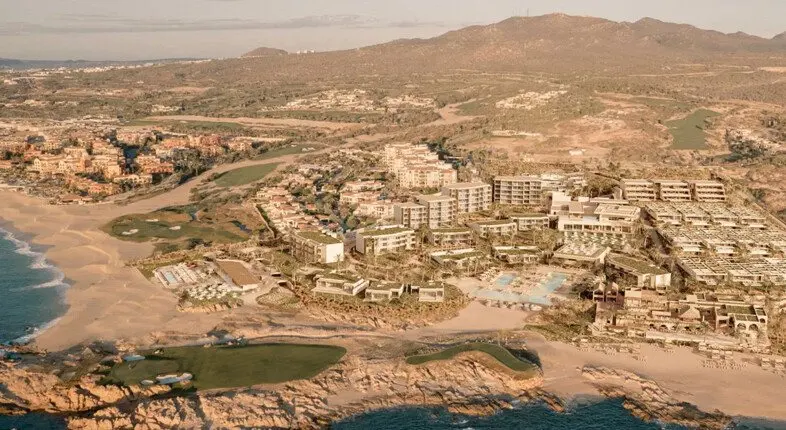
Los Cabos isn't content being a great getaway — it wants to be the Americas' defining luxury destination. At the Los Cabos VIP Summit in late October, the tourism board laid out a 2036 strategy that pairs serious hotel growth with a promise to spread the benefits beyond the resort strip.
The hardware is already coming. More than 1,200 hotel rooms are confirmed in the development pipeline through 2029, with many projects under construction. That includes Park Hyatt's arrival at Cabo del Sol and a planned all-inclusive Grand Hyatt Los Cabos. The destination now counts 16 Virtuoso-affiliated properties — the highest concentration anywhere in Mexico, the Caribbean or Latin America.
Demand backs the ambition. Annual visitation jumped from 2.12 million in 2016 to nearly 3.8 million in 2025, up 77 percent, and roughly 40 percent of visitors are repeat guests. Getting there keeps getting easier, too: Los Cabos now has nonstop links to 55 cities worldwide, 33 of them in the United States, up from just 21 US cities a decade ago. Canada and Mexico remain core markets, Germany and Colombia are flagged for growth, and Australia, Japan and the UK are being courted as high-value niches.
What's more interesting is how the destination defines success this time. The 2036 plan commits to career pathways in hospitality and technology for locals, more room for small businesses and producers, and tying hotel development to investment in water, housing, transport and public spaces. Coastal and marine conservation is a stated priority as well. Tourism board managing director Rodrigo Esponda framed it as a shift from measuring how much tourism grows to measuring what that growth actually creates — with local incomes, small-business opportunity and ecosystem health joining arrival numbers as benchmarks.
For travellers, the practical upshot is simple: more choice, more flights and a destination actively trying to keep itself worth visiting. Expect new luxury openings over the next few years alongside the established golf, wellness and dining scene, and a place that — at least on paper — is planning its next decade with residents and coastline in mind, not just room counts.