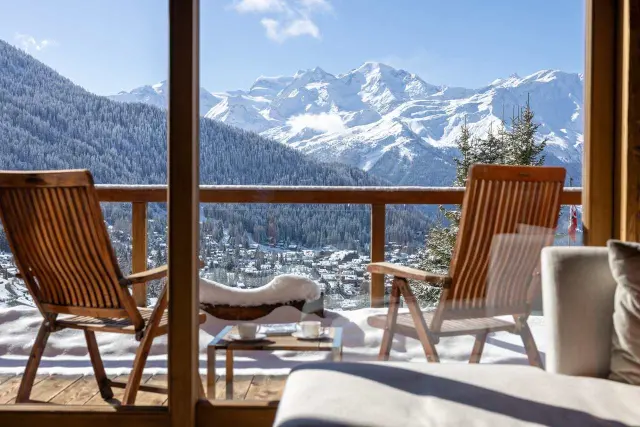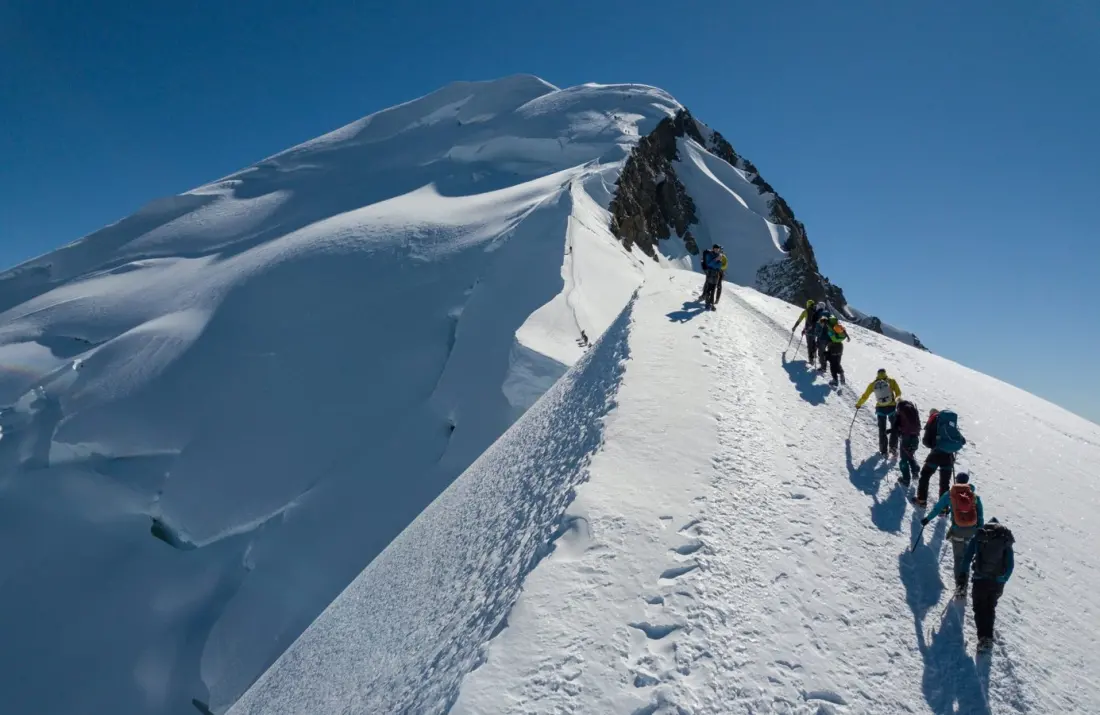
Mont Blanc has a new official height: 4,807.47 metres above sea level, according to France's National Geographic Institute (IGN). That's 1.88 metres taller than when it was last surveyed in 2023 — but before anyone rewrites the climbing guides, there's a catch. The summit is essentially a giant, shifting snowcap sitting on rock that tops out around 4,792 metres, and the ice layer swells and shrinks with the seasons. A drier year at altitude means a shorter mountain; a snowier stretch means a taller one.
Jean des Garets, chief geometer for the Haute-Savoie department, told Le Monde that each individual measurement shouldn't be read as significant on its own. The peak has been re-measured every two years, and the figure moves every time.
The latest survey was a proper expedition. A team from the Order of Chartered Surveyors acclimatised on the 4,153-metre Bishorn, spent days taking measurements at points around the massif, then climbed Mont Blanc by the normal route on September 15-16. On top, they used a GNSS satellite pole to pinpoint the highest point in real time.
The genuinely new part: for the first time, a gravimeter was installed on the summit. It recorded gravity at 9.7944689 m/s² — compare that with 9.81 m/s² in sea-level Marseille or 9.8043046 m/s² in nearby Saint-Gervais-Le Fayet at 580 metres. Why bother? Because height alone can't tell you whether the mountain gained snow or whether the ground itself moved. Gravity reveals mass: if the ice cap is melting, there's less material beneath the instrument. Repeated over the years, these readings will help scientists separate rock movement from ice loss — increasingly urgent work as climate change visibly reshapes Alpine glaciers.
For travellers, it's a neat reminder that Western Europe's highest point is not a fixed monument but a living, changing pile of rock and ice. The Mont Blanc massif remains one of the Alps' great draws, whether you're riding the Aiguille du Midi cableway for a summit-level view without the climb, hiking stretches of the Tour du Mont Blanc through France, Italy and Switzerland, or tackling the peak itself with a guide. And if you quote its height at a dinner party, hedge slightly — the official number will probably be different in two years.
Story via ExplorersWeb.